MailChimp Consulting and Training

Teleclinic Locator

Young Ones on Target

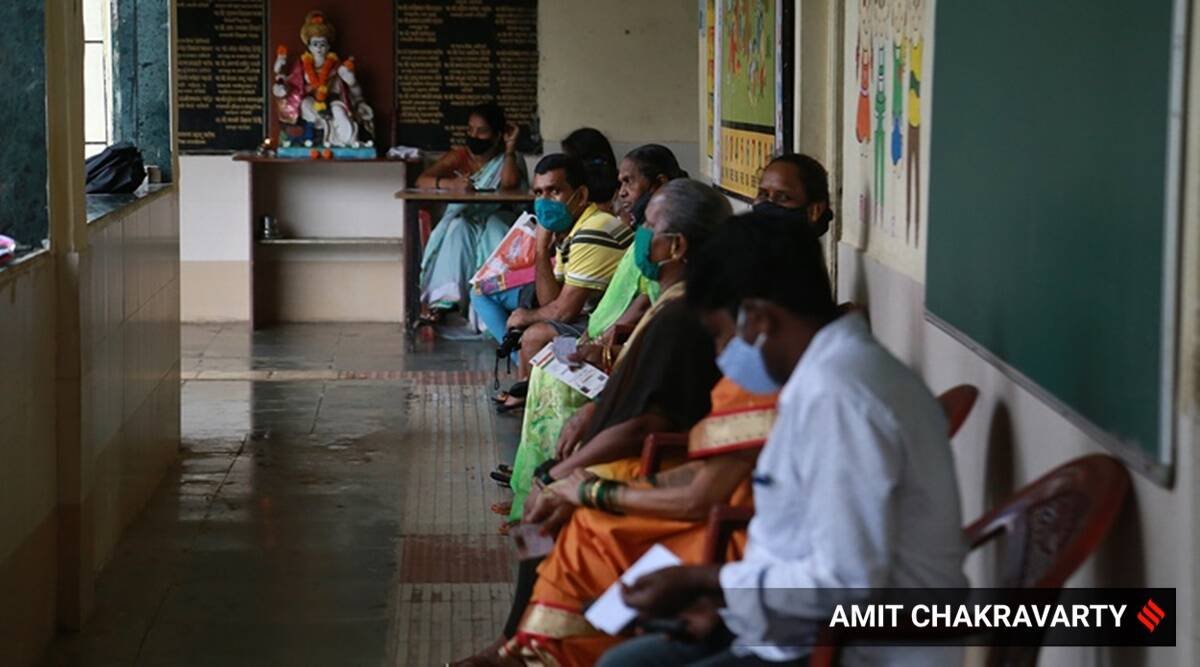
While the second wave of COVID-19 continues to wreak havoc, doctors and experts are predicting the onset of the third wave, a killer for children. MUSBA HASHMI reports on how, in the absence of a paediatric vaccine, children can be protected. But for that a robust paediatric healthcare system is crucial

We are stuck right in the middle of what appears to be a very lethal second wave of COVID-19. With not less than 3.5 lakh cases per day, the curve seems to not flatten any time soon. However, the horror doesn’t end here. Doctors, scientists and experts have started predicting the third wave of COVID-19 which is expected to wreak further havoc. More so, because it may hit children in a hard way.

While this is a major cause of worry, the question here is how prepared are we to tackle the upcoming third wave? The answer might not be what we want to hear.

“Viruses hunt for a susceptible population. With schools closed presently, children will be that group once the educational institutes reopen. This will bring on the third wave which will hit children big time,” Dr Arvind Taneja, MBBS, MD (Paediatrics), Diplomat of the American Board of the Paediatrics, Fellowship — Infectious Diseases and Chief Advisor-Senior Consultant, Paediatrics, Rainbow Children’s Hospital, tells you.

In the absence of an effective vaccine for children, they become the most susceptible group and masking and sanitising is the only way out.

“When 70 to 85 per cent of the population is immunised ‘herd immunity’ kicks in to protect people, especially children. Till then masks, social distancing continues to be the norm for children too,” he advises.

The need, he says, is to speed up vaccine trials in children. “If adults vaccinated are safe so should children be. We have experienced this with polio, measles, mumps, rubella live viral vaccines for 60 years and viral influenza for 40 years in infants as young as months old,” Taneja adds and tells you that pediatric trials of vaccines are expected to be completed by October-December.

“However the onset of the third is wave unpredictable,” he says.

The disappointing fact is that we haven’t emphasised enough on paediatric care and as a result we are lacking in it.

“India’s preparation for paediatric COVID-19 is woefully inadequate. We have very few paediatric hospitals in the country, very few paediatric critical care specialists and pediatric trained nurses. In order to be prepared for the third wave, each major and medium sized city in India should have at least one dedicated children’s hospital to care for this fragile population so that we are ready when and if catastrophe such as COVID-19 strikes. This is expected to happen in the third wave,” he tells you.

However, the silver lining is that we may expect a decline in cases by May end, as per the doctors.

 “According to a study, we may expect a decline in cases by the end of May in most States. There could be one or two more peaks of Coronavirus cases but they may not be as huge as the current wave. Different States may see peaks at different times. The prediction is that we may see a declining trend by end of this week in India all together. But if we are to check as a nation, with all cumulative figures, we are either at our peak or are very close to it. Different states will have different trajectories,” Dr Yash Javeri, Critical Care, Anesthesia and Emergency Medicine, Regency Superspecialty Hospital, Lucknow, tells you.

The third wave, he says, may hit a few States in the next two-three months.

“If we put strict measures in place, the third wave may not happen at all places or might not be as huge as the second wave. It depends on how effectively control measures are implemented at the local level in the States, districts and cities everywhere. In a few months, when the naturally developed immunity of people or the one with the help of vaccination fades, the virus can strike again. The only thing that can stop the virus from bouncing back is how people are guarding themselves,” Arya opines.

He adds that if people follow COVID-appropriate behaviour in the coming months which includes  double masking, using hand sanitiser, maintaining social distancing and avoiding going out unnecessarily then we can probably cut the peak.

“If we are  able to vaccinate a majority of population then the magnitude of third wave will be decreased,” he says,

However, Dr Animesh Arya, Senior consultant in Respiratory Medicine, Sri Balaji Action Medical Institute, is of the opinion that it is hard to predict the declining trend. “There is no definite answer as to when we can expect a decline in cases, but epidemiologists feel that with all peaks there will be a fall after two to three months so decline is expected in June. But we can be way off our predictions as in the past,” he says.

Many scientists, infectious diseases experts and people from economics and modelling background are trying to predict the third wave, but from a scientific point of view which is based on the previous outbreak of severe epidemics especially Spanish flu, the expectations are all in the press and it may be in September-October. “It is also being assumed children in the age group 12-15 are likely to be affected largely in the third wave as they are naive and the new mutant strain is very potent and it challenges the immunity of people not naturally protected or partially protected by immunisation,” Arya explains.

He adds that as we all know building infrastructure of tertiary healthcare is essential to treat sicker patients and prevent mortality, we must not forget that primary aim to contain disease by early detection, extensive testing of all levels of contacts, isolating them and treating them well ahead of time of going into serious complications and mortality remains the key.

With that being said, there are several doctors who believe that children might not get affected as badly as it is anticipated, because all these predictions are based on statistics. Hence, parents need not angst too much. However, this doesn’t mean we can put down our guards. All precautions have to be in place, both in the presence or absence of a vaccine.

“There is no evidence that the third wave will hit children. It can happen, but these are only predictions. Though, the symptoms in children are usually mild till date, but this doesn’t affect the importance of vaccination for them. We can’t anticipate if the symptoms will turn severe in the third wave. However, in the absence of a paediatric vaccine, the only way out is to take precautions. Immunity is another important thing. Children should be given nutritious food, including lots of green leafy vegetables and fruits in their diet. Keep them hydrated. Coconut water, twice a day, can do the job. Avoid junk at all costs. And last, but not the least, increase their Vitamin C intake,” Dr Swetha Reddy P, Consultant Paediatrics, Apollo Telehealth, tells you.

Though several States Governments like Maharashtra have already started prepping up for the third wave by setting up paediatric centres, the need is to increase the number of paediatric hospitals, ICU beds and care centres to tide over the third wave with less fatalities and more recoveries.

“To curb the impact of the third wave, the need of the hour is to increase the number of ICU beds and hospitals for children, get more paediatric nurses on board and also to make sure there are ample doctors to attend to children. Our healthcare infrastructure basically needs a revamp, which is definitely not possible at this hour. Hence, now focus should be on building a robust healthcare system, well-equipped with proper staff so that doctors and nurses don’t have to deal with fatigue. The strategy should be to vaccinate 100 per cent children before the third wave hits. Also according to observations the mutants have been severely affecting the children,” Dr Aashish Chaudhry, Managing Director and Senior Consultant, Dept of Orthopaedics & Joint Replacement, Aakash Healthcare Super Speciality Hospital, Dwarka, says.

One of the many ways to prevent children from the risk of getting infected is to get the parents vaccinated quickly. “It is not the children that carry the virus, it is their parents or families who pass on the virus. There are no reports to back the fact, but this is an observation that is made during the first and second wave. Hence, in order to prevent children from catching the infection, the elders need to get vaccinated with both doses quickly. With the shortage of vaccine, this might seem a Herculean task, however it is the only feasible option to reduce the impact of a possible third wave,” Dr Gitali Bhagawati, Consultant and Head, Department of Microbiology and Infection Control, Dharamshila Narayana Superspeciality Hospital, tells you.

And apart from the rest of the measures, we need to prepare an army of young nurses and doctors on standby to move from one city to the other based on the COVID wave, to support busy hospitals. For this, we need to motivate and encourage them largely, because money alone, won’t motivate young people to risk their lives in COVID ICU wards.

And lastly, mildly symptomatic patients should be isolated immediately, in order to reduce the risk of them spreading infection. “In order to flatten the curve and reduce the exposure to vulnerable population of children who are at the higher risk due to lack of herd immunity or passive immunity, mildly symptomatic patients should be provided isolation facilities till they get infection free since the infection rate this time is high,” Arya tells you.

Youngvaccine

  • While many companies like Bharat Biotech and Pfizer have started the second and third phase vaccine trials on children from two to 18 years, there is still a long way to go for the vaccines to be available in the market for use.
  • The Drugs Controller General of India  has cleared phase II and III clinical trials of Covaxin COVID-19 vaccine for children from two to 18 years.
  • US biotech firm Novavax had also started clinical trials of its proposed Covid-19 vaccine on children.
  • Pfizer is running a trial for children 6 months to 11 years old.
  • Moderna is also running a trial in the United States and Canada for kids between 6 months and 11 years old.

Source: https://www.dailypioneer.com/2021/sunday-edition/young-ones-on-target.html

There could be 2500 cases of Black Fungus daily in India, says health expert

Inputs by Dr. Mubasheer Ali, CEO – Apollo TeleHealth

Black Fungus or mucormycosis, a rare fungal infection with a mortality rate of 50 percent, is being reported from various parts of India among COVID recovered patients.

New Delhi: Black Fungus or mucormycosis, a rare fungal infection with a mortality rate of 50 percent, is being reported from various parts of India among COVID recovered patients.

The disease is caused by a group of moulds known as mucormycetes, which are naturally present in the environment. 

Black Fungus most commonly affects the sinuses or the lungs after inhaling fungal spores from the air. The illness can cause blindness, organ failure, brain stroke and can be fatal.

“Though there is no record of the official number of Black Fungus cases in India, estimation of fungal burden of the country, using computational models by international health experts, predict around 1750 to 2500 cases of mucormycosis daily in india. This is just a predictive model so the actual number may be higher,” says Dr Mubasheer Ali, Senior Internal Medicine Consultant, Apollo Tele Health.

Dr Mubasheer shares the two main reasons why COVID recovered patients are getting infected with mucormycosis. “There are mainly two reasons COVID-19 patients are getting affected with mucormycosis; One is the presence of comorbidities such as uncontrolled diabetes mellitus, chronic obstructive pulmonary disease etc; and the second one is if these COVID patients are treated with corticosteroids,immunomodulators,mechanical ventilation and long standing oxygen therapy.”

Explaining how the use of steroids while treating COVID-19 put people at higher risk of getting  Black Fungus, Dr Bhavika Verma Bhatt, ENT Surgeon and Medical Consultant – ENTOD International shares, “Steroids reduce inflammation in the lungs of COVID-19 patients and appear to help stop some of the damage that can happen when the body’s immune system goes into overdrive to fight off coronavirus. However, the steroids also reduce immunity and push up blood sugar levels in both diabetics and non-diabetic COVID-19 patients. It’s thought that this drop in immunity could be triggering these cases of mucormycosis.”

Source: https://zeenews.india.com/health/exclusive-there-could-be-2500-cases-of-black-fungus-daily-in-india-says-health-expert-2361214

How to maintain positive attitude during covid 19 uncertainties

As telehealth becomes the new normal, data security a front-ranking concern

COVID-19 outbreak has been a massive catalyst of sorts for telehealth in the country. Although it came to prominence in unfortunate circumstances, for a country like India with large swathes of remote and nearly-inaccessible terrain, as well as a large part of the hinterland remaining outside the ambit and reach of regular physical healthcare personnel and services, this has been a much-needed impetus. Particularly for millions of people in the country whose health conditions have been compromised for decades merely due to lack of access to quality professional services and infrastructure, the recent technology-driven push has been nothing short of lifesaving.

Yet, the take off of telehealth in the country has not been without its share of challenges, something which is inherent in any project of this magnitude. And data security and privacy are among the challenges that happen to be at top of the heap. Notably, in a recent instance, the Kerala High Court had to issue directives for protecting the privacy of data of COVID-19 patients, making it incumbent on the state government to anonymise the data before sharing it with a third party.

Private health information outvalues financial data

The ongoing digitisation of the health ecosystem is riddled with a welter of technical, regulatory, logistical and moral concerns. Some of those concerns could be: interoperability of data, integrity of digital platforms and apps, uniformity of EHRs (electronic health record), ambiguities and vulnerabilities around software compliance with data security norms, less-than-friendly user interfaces, presence of mass of untrained and undertrained healthcare personnel and patients, and inadequate foundational IT infrastructure. Of these, security of data and patient privacy has been one of the leading concerns. Remember, the Interpol had issued a purple notice in April last year on a possible cyber attack on critical healthcare institutions. In fact, there have been assertions made in some quarters that the private health information (PHI) outvalues even financial data or other personal information on the black market.

How the govt has sought to provide for health data security

Although the IT Act 2000 and Information Technology Rules 2011 have laid down that medical records and history as well as physical, psychological and mental health conditions constitute a component of ‘sensitive personal data or information’ (SPDI), these were obviously not enough. In 2018, the ministry of health and family welfare had come up with a comprehensive Digital information Security in Healthcare Act (DISHA) with a view to establish National Digital Health Authority and Health Information Exchanges. The Act had stringent provisions for data safety and privacy, barring the use, access or disclosure of data for any commercial purpose whatsoever, except for processing insurance claims by insurance companies. Then, the Personal Data Protection Bill (PDP), 2019, under section 3(36), has provided that the ‘health data’ of an individual constitutes ‘sensitive personal data’. Furthermore, the 2020 telemedicine guidelines have made the registered medical practitioner (RMP)/healthcare service provider largely responsible for the protection and privacy of data. Most recently, as part of the colossal Digital Health Mission, the government has sought to assure people of protecting patient data and privacy through a draft health data management policy. This has been approved by the health ministry after a due public consultation exercise. In this, the government has clearly defined several terms related with data protection such as personal data, personal data identifier (PHI), data principal, sensitive personal data, data fiduciary, consent manager, health information provider, and health information user among others while laying out a method of obtaining consent and securing the rights of data principals. With safeguards, the draft has stipulated that only a prior informed consent through designate consent managers would permit data fiduciaries to access data even as the ownership and control would remain with data principals.

What more could govt do

Yet, there are issues in most of these laws and rules that need to be addressed. For instance, on the most recent draft health data management policy, experts have pointed out drawbacks, ranging from allowing Aadhaar to be used for creation of health Id to excessive collection of personal data and leaving scope for data re-identification through allowing the sharing of anonymised and de-identified data. Similarly, there are seemingly different positions enunciated by DISHA and the PDP Bill. While DISHA takes a more rigorous view of individual’s control and therefore privacy of data in general and specifically in terms of non-consent based processing of data, PDP has a somewhat more lenient approach. DISHA requires consent at every stage of data use unlike the PDP. This impacts the health supervision of patients needing to use wearable technologies. Another difference has been that DISHA takes a more restrictive view of even the government using of an individual’s data, unlike the PDP Bill. So now that telehealth has been in a mode of ascendancy like never before, the authorities need to resolve these divergences through a comprehensive health data protection law. The sooner the PDP Bill becomes an Act and is enforced, the better.

In sum, data security and privacy remains an overriding concern in the field of telehealth. Just as the government has been pretty focused on the issue, the private telehealth players must become a partner of the government in maintaining highest standards of patient data security and privacy.

– By Mr. Vikram Thaploo, CEO, Apollo TeleHealth

Source: https://www.theweek.in/news/health/2021/02/23/as-telehealth-becomes-the-new-normal-data-security-a-front-ranking-concern.html

Mission to take Healthcare to the Masses

Vikram Thaploo is leading Apollo TeleHealth’s noble goal of turning affordability into a non-negotiable privilege from the front – with a signature mix of technology, leadership, and humane-ness.

Meet the Leader

Vikram Thaploo is the CEO-Telehealth at Apollo Hospitals. A result-first digital transformer with a sparkling track record of countless milestones behind him, he has been holding leadership positions in corporate decision making for over a decade. In fact, Mr Thaploo carries nearly twenty years of mission critical experience in setting up, operating and scaling up startups, expanding business for small-medium-large organizations, strategic planning, execution and management of diverse functions and portfolios which include modelling, customer service, administration, feasibility analysis, marketing, branding and more.
 

At different levels and in varying capacities, Mr. Thaploo has been part of winning teams at Jaypee Hotels, Barista Coffee (Lavassa, Italy), Patissier’s (Precision Group), Big Apple (Future Group) and Steeplejack (retail startup), to name some. 

He is currently leading Apollo Hospital’s global portfolio as CEO for the Group’s Remote HealthCare Vertical (TeleHealth & Government Businesses). His mandates include a larger than life duty that comes with the express goal of turning healthcare affordable using the convergence of Technology, Telecom, Medtech ecosystem and Healthcare.

Vikram Thaploo is the recipient of prestigious industry awards and accolades such as ‘CEO of the YEAR 2017’ (by Healthcare Achievers And Leadership Award Healthcare Awards) and ‘Leadership award in 2016’ (by ASSOCHAM) for significant contribution in the field of healthcare through innovation of new & effective business models, amongst many others

A proactive individual who believes that PLANNING must always be complemented by DOING, Mr. Thaploo’s logical approach to targets and challenges lets him take on pressures with calm and poise, organically amplifying outcomes. 
 
Picking a dynamic and values-driven ‘goal-digger’ like Vikram Thaploo as a VOH IDEA LEADER wasn’t difficult, therefore. In the quest of learning more about the man and the influences that shape his multi-dimensional endeavours and winning journeys, we caught up with Mr. Thaploo, armed with a curious mind that was ready to be overwhelmed with a flush of leadership inspiration. Mr. Thaploo didn’t just match up, but exceeded our expectations – kicking off the edifying session by capturing his life’s driving purpose – the force that makes him get up each morning – vividly for our readers: 
 
The fact that someone today will be impacted from the healthcare initiatives that I have been driving, gives me an immense sense of satisfaction and gratitude. Passion has been a powerful driver in my life and my biggest passion has always been about how through my work or otherwise, I can create a real difference in the lives of the needy, the marginalized and the underserved. And in telehealth in a way I have found my higher purpose. When someone’s health in the remote villages of Lahaul and Spiti,up in the Himalayas with no doctors in the vicinity, is stabilised through tele-emergency  or when someone living in an urban slum is effectively diagnosed and nursed back to health through telehealth services, I feel that I have achieved my higher purpose”. 

The Beginnings

Married with two kids, Mr. Thaploo has been living in Hyderabad (India) since 2010 with parents, wife and kids. He completed his Healthcare Management Programme from Indian School of Business (ISB) and PGDBM from Symbiosis, Pune after his Hotel Management. He briefly worked for the hospitality industry before moving on to retail, crowing his eventful journey with his current stint in healthcare, where he has completed over a decade now.

The Moment of Change

An interesting incident altered Mr. Thaploo’s perspectives of life profoundly, giving him a first person peek into the ground reality and bringing the issue of affordability squarely in the centre of his vision. He reminisces, “I think the big turning point came during one of my trips to Kashmir that I had made after joining the digital wing of Apollo Hospitals. I made this trip with a friend of mine who was a doctor by profession and incidentally whom I generally addressed as ‘Doctor’. We were in Gulmarg enjoying ourselves with the place being completely covered in snow. And the so-called turning point came during this one particular incident when I happened to be calling out my friend as ‘doctor.’ Some local people immediately approached us at the mention of the word ‘doctor.’ To our utter astonishment, these local folks came to us unannounced telling us about their individual health issues expecting professional medical advice from us. Someone had a pain in his knee, someone had breathing problem, or mostly chronic ailments. The volley of their questions and requests left me thinking hard and deep. I realized the extent of shortage of doctors and expert physicians in that area and how much these simple people suffered as a consequence. Since I could interact with them in their local language, I could really feel their angst and despair at the abysmal state of affairs. That was what really got me going, or as you call it, the eureka moment for me. I instantly knew that I had to do something. And so I decided to put all my efforts in making telehealth as a tool to make a difference to the lives of those people who until then had suffered for no fault of theirs. Making affordable healthcare accessible became my life goal.”

Exposures that Shaped the Persona

An adversity and learnings filled early life shaped Mr. Thaploo’s character lastingly, outlining it with steely resolve and strengthening it with uncrushable resilience. “I have had my fair share of setbacks that life offers to nearly everyone in this world. From living a happy childhood in Kashmir to being ousted and surviving in a refugee camp, adversity has played a great role in transforming my outlook towards life and gifting me the ability to think big and outside the box. The hardships that I went through have made me realise the immense value of basic necessities such as food, home and health. Adversities remained the best teacher of my life. Those days education was a privilege few could access given our exodus from Kashmir. And all my decisions and the choices that I made flowed from financial considerations or constraints. Yet, I never lost hope. Hope was the only driving factor for my survival. And so my younger days were a story of riches to rags. But as it is said – necessity is the creator of all inventions – I kept on learning, enhancing my skills and finding out ways to solve my problems. This has helped me achieve what I’m today. From being a “refugee” to a “refuge provider”, despite the innumerable personal setbacks, I count my blessings every day. At the same time, I must also express a debt of gratitude to my parents and wife, without whose unstinted support and inspiration, I would never be what I am today. It goes without saying that they have been my pillars of strength, every step of the way.

His Big Mission

We want to dig deeper into the big need-gap his current mission aims to address and disrupt. Mr. Thaploo explains into the nitty gritties of the noble task he has been entrusted to steer forward: “When I joined Apollo Hospitals to set up Apollo TeleHealth as Chief Executive Officer in 2010, it was clear as day that some of the challenges that bedevil the healthcare system in India needed fresh approaches and alternate delivery channels that had never been conceived before. And innovations in Healthcare IT were to form the cornerstone of that approach. 

One of the biggest drawbacks in our current healthcare systems has been the acute shortage of qualified doctors in the country. In order to bridge this gap and improve access to over-all healthcare, we worked towards a gradual transition of care delivery – from curative to preventive care and from hospitals and clinics to homes via virtual care. In these years, patients from across the country have availed of our telehealth services from the comfort of their homes, saving themselves unnecessary expenses and travel time. 

In effect, we conceptualized and executed a first-of-its-kind healthcare service delivery with innovation at its core in India. For instance, through Apollo’s Himachal Pradesh Tele Health Services programmewe provide the much-needed emergency, specialty and super-specialty consultation services to 4 different locations at a height of 14,500 feet in the Himalayan mountain ranges. The objective of this Information and Communication Technology-powered Telemedicine programme was to provide the required healthcare support system in the remotest and the most inaccessible terrains. Through this Tele-Emergency programme, we have stabilized over 1260 patients and performed more than 20,000 consultations thereby providing the much required healthcare support system, saving lives, and improving the quality of life of people. 

Envisaged initially as a proof of principle, technology-enabled service delivery model, this PPP is now a time-tested programme, which can be scaled up in different forms. Our innovative PPP model initiated with the Government of Andhra Pradesh helps to manage & operate 195 UPHCs (Electronic Urban Primary Healthcare Centres) across 9 districts in Andhra Pradesh. UPHCs serve the urban poor families which are below and near the poverty line, thereby catering to the healthcare needs of approximately 20% of the total population of Andhra Pradesh. 

Such innovations demonstrate that Tele Health PPPs that apply technological advancements in healthcare can completely recreate the healthcare landscape, thereby bridging the gap in terms of access to quality healthcare services making it equitable for one and all. Today, our PPP projects have been providing telemedicine access to 350,000 CSCs across India under the Digital India Initiative. Presently, we have over 700 public healthcare centres in Public-Private-Partnership (PPP) mode across India, spread across Andhra Pradesh, Himachal Pradesh, Uttar Pradesh, Jharkhand, etc., touching more than 12 million lives. 

With Covid-19 galvanising the all-round uptake of telemedicine in a huge way, Apollo is ‘carrying the torch’ even further. Adding force to the government’s Digital India movement, today Apollo runs the world’s largest Telehealth services offering over 20,000 tele-consults a day. We are also going to launch smart technology-based health kiosks across the length and breadth of the country. However, I must add that we are already thinking in terms of a post-COVID telemedicine landscape and working vigorously towards it.” 

Cometh the Crisis, Cometh the Leader

The COVID era established the crying need for telemedicine and remote diagnosis, creating a burning demand for good old traits like vision, innovation and humanity. Today most of us are in sync with the idea of consulting a doctor virtually without having to visit the hospital/clinic. This is where Mr. Thaploo and his organization’s vision has been working its miracles of late, rising to the ask and ushering a new age of home-based clinical care to COVID19-positive patients. He expands at length, “Flowing from the very exigent nature of the pandemic that was upon us and the consequent lockdown-driven restrictions on social mobility and distancing in general, there is no doubt that telemedicine did receive the much-needed impetus in the last one year or so. Although for Apollo TeleHealth particularly, this was familiar turf given that we have been operational in the field of telehealth for over twenty years now. Yet, in light of the abrupt halting of routine, non-communicable and lifestyle diseases-related visits to hospitals and healthcare facilities impacting tens of millions in the country on account of Covid-19 outbreak, the enormity and the scale of the challenge was quite unprecedented. As such at Apollo TeleHealth too, we had to scale up our operations several-fold, expand our services to regions and areas formerly uncovered and make provisions for those diseases and disorders which we hadn’t covered before Covid struck. These were truly game-changing initiatives and admittedly, only a pandemic of this nature and magnitude can precipitate such transformational initiatives in such a short span of time. The abysmal urban-rural gap in terms of healthcare infrastructure and services in the country perpetually affecting millions possibly necessitated such a shake-up in the system. Regardless, I am sure that in the coming future, the country as a whole would be better prepared with the help from initiatives like National Digital Health Mission.”

Every Highway has its Roadblocks 

Vikram Thaploo’s journey is no different. So what are the roadblocks he has had to crush along the way, and what have been the learnings and relationships gained thereof? The idea leader collects his thoughts before sharing, “Like everyone else and in most spheres of life, I did face roadblocks from individuals, institutions and even circumstances. Yet, there were several helping hands that did come along the way and enabled me to face and overcome the challenges. For one, Dr Prathap C Reddy, the founder & chairman of Apollo Hospitals Group and the visionary force behind the very idea of Apollo TeleHealth has been like a solid rock behind us for every initiative that we chose to take. However, it was Dr Sangita Reddy who has really mentored us, inspired us and taught us to dream big and shake off the challenges and hurdles almost effortlessly that came our way. So, I express my most sincere gratitude to everyone who has made our journey worthwhile and meaningful.”

Learnings and Takeaways

Looking back, what would he say his greatest  learnings have been? What have been the pearls of wisdom picked up over the years and stashed away in his personal ‘wisdom vault’? The ever-driven individual reflectively responds, “Apollo being the pioneer in telemedicine and by now the largest in the world, of such nature, had long back foreseen the transformative role that telehealth was going to play in addressing the doctor-patient gap in the country. Appreciating it and implementing those learnings on the ground has been my guiding force. We launched our first telemedicine center at our Chairman Dr Pratap C Reddy’s hometown through V-SAT back in 2000, which was inaugurated by no less than Bill Clinton, the then President of USA, who was on his official visit to India. Since then, although we faced challenges from doctors, patients, and even government departments during the implementation but we kept our focus on the larger goal. 

Advice for GEN Next

 
And what advice would he want to leave for the next generation / aspirants in his domain? A true leader builds more leaders, not more followers, and Mr. Thaploo shines as one by saying, “To the next generation, I would say that adaptability and resilience are the biggest attributes one must have. If you have faith in your purpose, don’t allow short-term hitches and hurdles to turn into long-term roadblocks. Work your way towards your goal always keeping the big picture in mind. Also, I would suggest that don’t try and do things single-handedly. Nurture and develop a team of like-minded and driven people. They would facilitate meeting your life’s goals.”

Legacy 

How would he like to be remembered? What would he want his legacy to be? Confronted with a question that can, admittedly, be a little uncomfortable, Mr. Thaploo frames his word characteristic judiciousness: “I have been associated with Telehealth for the past one decade and our initiative has touched more than 12 million lives by now. I share a common vision with our Chairman and our JMD, and that is to bridge the still-existing yawning gap between the number of doctors and the number of patients by way of deploying reliable and high-speed technology. In a country of 130 crore plus population with a woeful doctor patient ratio of about 1: 1450 against WHO-prescribed 1: 1000, I will not rest until every single individual, every single patient requiring a doctor’s expert consultation in the country is able to do so. 
 
To the next generation, I would say that adaptability and resilience are the biggest attributes one must have. If you have faith in your purpose, don’t allow short-term hitches and hurdles to turn into long-term roadblocks. Work your way towards your goal always keeping the big picture in mind. Also, I would suggest that don’t try and do things single-handedly. Nurture and develop a team of like-minded and driven people. They would facilitate meeting your life’s goals. 

Source: https://voiceofhealthcare.org/idealleader.php?id=1165&s=08

Streamlining Workflow

How workflow automation is helping organisations become more efficient by reducing errors and operational costs

When Reliance Jio started building its 4G LTE wireless network, it had the option of using a standard map to decide things such as the customers it will reach out to and places where it will set up its towers. This manual process would have taken several quarters before it could have been streamlined. In order to get going as fast and with as much precision as possible, it built maps based on a geographic information system. While Jio Maps helped find the best sites to set up towers for optimum coverage, Jio used the tool to coordinate materials for just-in-time deliveries and dispatch teams for network construction. Marketing executives, too, used the maps to understand demographics and zero in on areas where their efforts would yield the best results. The company is now leveraging the same systems/workflows to market its fiber-to-home offering.

Jio is not a one-off case. It is part of a trend where thousands of companies, across sectors, are automating workflow to make complicated business processes simpler with workflow system software that can automate manual, repetitive processes to save time and cost, apart from eliminating errors and accelerating execution. Be it scheduling orders and payments or conducting research and audits, workflow automation has brought consistency to processes and helped reduce errors and costs for companies in sectors as diverse as oil (Numaligarh Refinery Ltd or NRL), health (Apollo Hospitals Group and telecom (Reliance Jio).

HP India says the size of the Indian workflow automation market is close to Rs 500 crore. It has been growing at a compounded annual growth rate of 20-22 per cent for the last five years. Capgemini, a Paris-headquartered technology services company, says the global market will grow to $18 billion by 2023 with India having a 5 per cent (Rs 6,300 crore) share.

“Effective workflows can hide complexity from users, minimise mistakes and enhance responsiveness of an organisation to customer requests,” says Agendra Kumar, President, Esri India. Jio had used Esri’s ArcGIS platform to zero in on tower sites.

The Gains

Workflow solutions automate operations at scale, create unified data records and deliver better outcomes and cost savings. They also reduce the time to take a product or service to the market, bring down turnaround time and improve customer experience.

The return on investment (RoI) depends on several factors. “There are two measurements of RoI: hard RoI & soft RoI. Hard RoI refers to cost and/or time savings. Soft RoI refers to general efficiency gains or employee and customer satisfaction which can be difficult to quantify; these can be measured by CSAT (customer satisfaction) surveys,” says Ananth Chandramouli, MD, India Market, Capgemini.

Workflow automation is known to have reduced operational costs by 30-70 per cent in a number of cases, say experts.

Nuts & Bolts

Workflow automation refers to designing, execution and automation of processes based on workflow rules. Human tasks, data or files are routed between people or systems based on pre-defined rules. By automating workflows, especially processes that are primarily handled manually, significant improvements can be made in efficiency, productivity, accuracy and accountability. Being adopted across sectors, workflow automation at its core orchestrates multiple processes – straight-through, human-assisted or case management – of the organisation. Manual workflows, in contrast, are slow and run the risk of disruption. “Lack of transparency and dependence on employees can make businesses vulnerable to a variety of bottlenecks that create inefficiencies. Automating workflow provides a safeguard against potential barriers and empowers the organisation to directly participate in designing business solutions,” says Viswanath Ramaswamy, Vice President, Cloud & Cognitive Software & Services, IBM India/South Asia, a leader in this space. IBM Business Automation Workflow combines business process management and case management capabilities in a single integrated workflow solution. Case management is the work – recording, monitoring and analysis -involved in processing of data, procedures and related content that comprise a case (a case can be an investigation, a service request or any issue that must be resolved).

IBM’s solution unites information processes and users to provide a 360-degree view of work to drive better business outcomes. It even supports a hybrid cloud strategy and can be deployed on private cloud, public cloud or on-premises. It also supports a SaaS environment through Business Automation Workflow on cloud.

Assam-based NRL, as part of its roadmap for accelerating digital transformation, recently created a paperless office solution based on IBM Business Automation Workflow. The objective was end-to-end digitisation of its procurement cycle starting from requisition and tendering to release of payments to vendors and contractors. The application made the procurement process more secure and transparent by ensuring movement of proposals online and accessibility to everyone in the cycle 24×7, thereby making it the single source of information, with all approvals and annexures available in one single location.

Workflow automation is being used in industries too, including healthcare, manufacturing, ITeS and banking and financial services. “Automation of manual processes improves productivity and collaboration, turnaround times, minimises errors and lowers costs. Our customers have slashed costs by 20-25 per cent after moving to a Xerox IWS environment,” says Leo Joseph, Managing Director – India, Xerox. For example, Indraprastha Apollo Hospitals has adopted Xerox ConnectKey-enabled workplace assistants for streamlining document management by optimising document printing and costs. Even Apollo Telehealth, a unit of the Apollo Hospitals group, has adopted a workflow solution for various tasks that, among other things, ensures that while doing teleradiology, doctors don’t have to type the reports (they are printed via voice command). Also, artificial intelligence can be used to create alerts for abnormal fundus images in Tele Ophthalmology (fundus photography involves photographing the rear of an eye).

Apollo Telehealth has even designed an indigenous device integration layer. “This platform acts as a plug and play model for all new devices in the market. Earlier, integrating a new device would take 10-20 days, but with this platform, it takes only two hours,” says Vikram Thaploo, CEO, TeleHealth, Apollo Hospitals Group, India.

The cost and process optimisation is achieved either through faster processing of information or a more secure and less error-prone way of doing so. “The benefits of such exercises are very much dependent on the investment in the process being automated vs cost savings being achieved. This will be unique in each scenario. Moreover, as we move towards a new era of digital transformation, the need for enhancement of automation to support productivity will be crucial to ensure businesses continuity and resilience,” says Kavit Gupta, Director, Print Services & Solutions, HP India.

HP Document Workflow solutions are being used across industries. For example, manufacturing organisations struggling with overwhelming number of invoices as well as shipping and receiving documents are using HP Capture and Route Forms Recognition software to streamline repetitive document-based processes to reduce processing time and associated costs, especially in instances where workflow is controlled by data locked in forms and other content. “Using our Managed Print Services, which utilise document workflow solutions, one of our manufacturing clients was able to achieve 33 per cent reduction in contract approval time, from 45 days to 30 days and savings in paper, supplies and filing/labour costs. This also improved productivity and gave the companies capability to review contracts remotely. The solution also provided searchable/usable data for quicker, easier access and improved auditability and security of every document in compliance with the security policy,” adds Gupta.

The Covid Push

“Adopting workflow automation five to seven years ago would have given businesses a competitive advantage. But if you talk about today, it is a necessity if an organisation wants to innovate and make its operating model more efficient. The pandemic has accelerated adoption of a lot of these technologies,” says Ganeshji Awasthi, Partner, Deloitte India.

With focus on hybrid work, companies are enhancing the digital agility of their employees and actively identifying opportunities for automation and digitisation. As future of work demands more agility from businesses and expects employees to benefit from productive tools, businesses will move from basic workflow automation to complex Enterprise Content Management where content in multiple formats (documents, images, videos, etc.) is brought together to make processes even more efficient.

The future will also see the rise of Intelligent Workflows. “By integrating new-age capabilities like AI, analytics, cloud and skills, workflow automation can fundamentally change how work gets done,” says Ramaswamy. AI will even help in automating workflow decisions. Another key trend is the use of open source-based tools and low-code or no-code workflow software which require minimal or no coding. This will make the solution more accessible to the organisation. As users utilise highly specialised workflow automation tools, customisation will be a key feature of workflow automation software.

Source: https://www.businesstoday.in/magazine/technology/streamlining-workflow/story/431657.html

What you need to know about Heart Failure

Health experts discuss causes, treatment, and ways to reduce the risk of heart failure on Heart Failure Awareness Week.

Heart failure is a serious public health concern, therefore it becomes important to know what it is, how to prevent, diagnose, and manage it. Heart failure is a condition which is caused either by ineffective pumping or inadequate relaxation of the heart. It is the culmination of various other diseases, says Dr. Sunil Kumar, consultant, Interventional Cardiology, Columbia Asia Hospital Hebbal. “Heart failure does not mean that the heart has completely stopped working, but that its capabilities have reduced. Left unaddressed, it can lead to decreased quality of life and complications like irregular heart rhythm (arrhythmias), recurrent hospitalisations, and sudden cardiac death. There are different stages of heart failure and treatment is focussed on slowing its progression into advanced heart failure,” mentions Dr. Divya Marina Fernandes, Interventional Cardiologist, Aster RV Hospital, Bengaluru.

“Heart Failure has a 50% mortality rate in five years. 30% of deaths in the US and 33% of deaths in India are due to heart failure alone. Majorly, there are two types of heart failure, preserved ejection fraction and reduced ejection fraction. In India growing cases of heart failure is of preserved ejection fraction. The reason for rising heart failure in India is due to increased hypertension. Earlier there was a myth, weak heart leads to heart failure which isn’t correct,” says Dr. Sai Ravi Shankar, Consultant Cardiologist, Apollo TeleHealth.

Dr. Kumar points out, “There are various reasons for heart failure but the most common cause is heart becoming weak due to a previous heart attack. Other causes are the development of blocks inside the heart which causes weakness of the heart without causing any heart attack, viral infections which affect the heart muscles, nutritional problems like thiamin and selenium deficiency, uncontrolled diabetes, thyroid problems, excessive alcohol intake, persisting cardiac rhythm disturbance, and uncontrolled hypertension for a long time. Rarely heart failure can also occur due to stress, which is called stress cardiomyopathy.”

“Heart failure is often connected to lifestyle factors, therefore it is important to follow a healthy diet and lifestyle from a young age. Management of diabetes, obesity, and hypertension is of utmost importance. A healthy diet with lots of vegetables, grains, pulses, lean meat, sufficient hydration, supported by cardio exercises such as walking, jogging, swimming, playing sports, etc, basically any activity that gets the heart rate up is good to maintain a healthy heart. Fluid and salt restriction is usually advised for these patients. Unhealthy fats, salty and oily foods, excessive consumption of sugar, alcohol and smoking among others can all damage the heart over the long run, so it’s best to quit these as soon as possible, adds Dr Fernandes.

TREATMENT OPTIONS FOR HEART FAILURE

Dr Shankar says, “The treatment for heart failure has stages. First is identifying and treating the cause. The major cause for health failure is heart blockage which is treated by CABC, angioplasty with stent and valve replacement. The new drugs that are proven helpful for heart failure are ARNI, SGLT2 and Beta-Blockers that have been available in India as well. The non-surgical treatments that are available in India are New Assist Device i.e ICD, CRT, LVAD, TAH (total artificial heart). These are called the bridge to transplant. If the heart patient has reduced ejection fraction we take help of non-surgical treatments before going for the surgical options. But the cost is Rs 25 lacs approximately so lots of people can’t afford it.”

Dr. Ashish Agarwal, Head & Senior Consultant, Department of Cardiology, Aakash Healthcare suggests some non-transplant surgical options in heart failure:

Coronary revascularisation: This treats ischemic cardiomyopathy, the most common cause of heart failure across the world, and events it may cause, such as myocardial hibernation, myocardial stunning, and myocardial cell death. For patients with ischemic cardiomyopathy, coronary revascularization should be the first treatment modality.

Mitral reconstruction: This treats mitral regurgitation (MR), a common event in heart failure patients. Along with another surgical intervention termed percutaneous mitral valve repair system, MR can better restore left ventricular remodeling, and gives patients a better quality of life.

Stem-cell regeneration of myocardium: The process replaces myocytes lost from the injured cardiac region and is a viable nontransplant treatment for heart failure. The myocardium could be regenerated by injecting stem cells such as peripheral blood stem cells, skeletal myoblasts, and bone marrow stem cells, into the damaged heart.

Geometric ventricular reconstruction: This is another nontransplant surgical means to treat heart failure.

PRE-EXISTING CVD, COVID-19, AND RISK OF HEART FAILURE

Are patients with pre-existing cardiovascular disease infected with Covid-19 at higher risk of heart failure? Dr Shankar replies, “Patients with Covid-19 and pre-existing heart disease can lead to more heart muscle damage which eventually weakens the heart, the virus can lead to more blockage in the heart, heart rate irregularity, and sudden cardiac deaths. The people with heart disease should take utmost care, that is wearing a mask, sanitising, and social distancing followed by regular medications and immediate consultations with the doctor in the case of an emergency. Also, Covid-19 vaccine is proven to be safe for heart disease patients.”

Dr. Agarwal opines, “People with pre-existing cardiovascular disease (CVD) are more likely to have a more severe form of the infection. It may lead to heart failure as their hearts are weaker than normal. However, not all CVD patients who contracted Covid-19 have died, many have recovered as well.” He suggests one should take precautions to not get infected by Covid-19 such as wearing a mask, maintaining the medicine schedule, avoiding outside exposure unless mandatory, washing hands, and maintaining social distancing.

Ways to lower the risk of heart failure

Heart failure risk can be reduced if we address and treat the risk factors effectively. Since the most common cause of heart failure is heart attack, reducing the risk of heart attack will help in reducing the risk of heart failure. Some of the measures to do so: · Having a healthy diet (low calorie and low-fat diet) · Regular exercise · Effective management and treatment of the risk factors such as diabetes, hypertension, and high cholesterol levels · Taking medications and regular check-ups · Nutritional deficiency can be treated with a healthy diet. If there is any cardiac rhythm disturbance, consulting the cardiologist and treating them would reduce the risk of heart failure.—By Dr. Sunil Kumar, consultant, Interventional Cardiology, Columbia Asia Hospital Hebbal

Source: https://thedailyguardian.com/what-you-need-to-know-about-heart-failure/

World Cancer Day: Understanding role of nutrition, lifestyle changes to control cancer

World Cancer Day: Understanding Role Of Nutrition, Lifestyle Changes To Control Cancer

People across the globe need to be aware regarding nutrition and other lifestyle changes that can be implemented to help them recover and potentially reduce the risk of the same cancer recurring or a new one developing.

World Cancer Day, which is observed to spread awareness, inspire change and reduce the global impact of cancer, is celebrated on February 4, every year. On this World Cancer Day, let’s dive into the role of nutrition and lifestyle changes in order to reduce the risk of the deadly disease.

An unplanned commitment towards monetary expenditure between couples can ruin the relationship

Budget reaction: Vikram Thaploo, CEO, Apollo TeleHealth

The finance minister announced an allocation of Rs 64,180 crore over the next six years for the healthcare sector in the 2021 Union Budget. The budget allocated is in addition to the National Health Mission which is already in effect. One of the key initiatives proposed in this year’s budget is the addition of 17,000 rural and 11,000 urban health and wellness centres which is a supportive move for better patient care and will also pave way for more public-private partnerships. Also, the government has proposed to set up integrated public health labs in each district with 3,382 block public health units across 11 states. Another welcoming move is the outlay of Rs 1.41 crore for the Swach Bharat 2.0 mission which will help improve sanitisation and transform the lives of millions. Considering the government’s effort to curb the pandemic of COVID-19, it has also planned to set aside Rs 35,000 Crore for COVID-19 vaccine in FY22. Though it must be admitted that the government has red-shifted its focus on healthcare in this budget, considering the rapid integration of digital technology into healthcare, no major developments around digital healthcare or telemedicine was announced. 

Source: https://indiamedtoday.com/budget-reaction-vikram-thaploo-ceo-apollo-telehealth/

The Finance Minister has kept the focus of the budget on economic revival and healthcare

The significant increase in budget outlay for healthcare has been particularly promising at a time when the COVID 19 pandemic has severely affected healthcare goals. With COVID 19 consuming the entire focus of the healthcare sector, a series of important health goals such as NCD prevention, disease screening, malnutrition control and even regular immunization programmes had taken a backseat last year. While more than doubling the budget allocation for healthcare this year, the Finance Minister has committed to improve primary, secondary and tertiary healthcare services. The increased expenditure has also been committed to strengthen critical care in the country and on supporting the massive vaccine roll out.

A sharp increase in capital expenditure is another notable aspect of the budget as it promises to infuse significant spending in building infrastructure projects and public transport systems that will help generate much-needed economic activity and employment in an economy struggling with a recessionary phase.

While the focus on easing tax compliance and improving dispute resolution mechanisms is welcome, we had hoped to see a greater rationalization of GST and its compliance structure.” said Mr. Madhusudhan HK, President, India and South Asia at Alma Medical India.

“Healthy India is core to India’s economic growth reflects in the 137% increase in outlay for health at Rs 2,23,846 crore in budget 2021. The focus on healthcare with ‘Atmanirbhar Swasth Bharat Yojana’ with an outlay of Rs 64,180 crore over 6 years shows that healthcare capacity building is now a key priority for the Government. The Rs. 35,000 crore earmarked for COVID 19 vaccination drive will create the safety net for the country. The overall capital expenditure increase of 26% should drive infrastructure acceleration, the much needed GDP growth driver. Insurance sector which is an important pillar for any country should see an exponential growth with enhancement of FDI limit to 74% from 49%. Overall a forward looking budget to drive the 11% GDP growth for India in FY22 as pegged in the Economic survey 2020” said Mr. Vishal Bali, Executive Chairman, Asia Healthcare Holding.

“The Finance Minister, Nirmala Sitharaman announced an allocation of INR 64,180 crore over the next 6 years for the healthcare sector in the 2021 Union Budget. The budget allocated is in addition to the National Health Mission which is already in effect. One of the key initiatives proposed in this year’s budget is the addition of 17,000 rural and 11,000 urban health and wellness centres which is supportive move for better patient care and will also pave way for public-private partnerships. Also, the government has proposed to set up integrated public health labs in each district with 3,382 block public health units across 11 states. Another welcoming move is the outlay of INR 1.41 crore for the Swach Bharat 2.0 mission which will help improve sanitisation and transform the lives of millions. Considering the government’s effort to curb the pandemic of COVID-19, it has also planned to set aside INR 35,000 Crore for Covid-19 Vaccine in FY22. Though, it must be admitted that the government has re-shifted its focus on healthcare in this budget, but considering the rapid integration of digital technology into healthcare, no major developments around digital healthcare or telemedicine was announced.” said Mr. Vikram Thaploo, CEO, Apollo Telehealth.

Source: https://ehealth.eletsonline.com/2021/02/the-finance-minister-has-kept-the-focus-of-the-budget-on-economic-revival-and-healthcare/

Budget 2021 Reactions LIVE: Who said what about Nirmala Sitharaman’s announcements – Top quotes from India Inc.

Budget 2021 Reactions LIVE: Modi added that this was one of the rare Budget speeches that elicited so many positive reactions from experts.

Union Finance Minister Nirmala Sitharaman on Monday presented the Union Budget 2021-22. FM Nirmala Sitharaman has made a number of announcements pertaining to textiles, manufacturing, railways, startups, health, infrastructure, income tax and other domains. Welcoming the announcements made by FM Sitharaman, PM Narendra Modi said that Union Budget 2021-22 contains the vision of self-reliance as well as inclusiveness. Modi added that this was one of the rare Budget speeches that elicited so many positive reactions from experts.

Here are all the LIVE updates on top quotes, reactions of India Inc. about their take on Budget 2021:-

  • Budget 2021 Reactions LIVE UPDATES: Chandru Kalro, Managing Director of TTK Prestige
    “There were great expectations around this budget and I am pleased to say that it delivered. This was a positive investment oriented budget demonstrating fiscal responsibility. Investment in infrastructure and new labour codes are particularly noteworthy as it will result in more jobs. The affordable housing push will definitely see an increase in the consumption of kitchen appliances. We appreciate the measures announced by the Finance Minister to improve ease of doing business, re-invigorating improving human capital and focusing on innovation.  It is commendable to see an increase in revenue without higher taxes.’’
  • Budget 2021 Reactions LIVE UPDATES: Sanjiv Navangul, MD & CEO, Bharat Serums and Vaccines Ltd, (BSV) 
    “The union budget has given a substantial increase to bolster the healthcare sector in India. INR 35000 cr for COVID-19 vaccine and the commitment to the pneumococcal vaccine to be rolled out nationwide to avert child deaths is a massive boost.  A well spent allocation of INR 64,000 cr under the new Atmanirbhar Swasthya Bharat Yojana scheme will show significant results thus labelling #healthyindia as an encouraging effort. And, the infrastructural push will certainly create many more skilled jobs revitalizing the overall ecosystem”
  • Budget 2021 Reactions LIVE UPDATES: Dr. Ajay Data, Founder and CEO, VideoMeet
    The announcement by the Honorable Finance Minister regarding the startups was much required at the moment and will help the fledgling startups with meager resources to continue with their business operations without worrying about the compliance with complex taxes. The announcement comes soon after Prime Minister announced setting up of Rs 10,000 crore fund for seed funding of startups. These moves by the government make the intent of government clear that it wants to promote entrepreneurship and help the enthusiastic young entrepreneurs in the country.The setting up of separate administration structure to promote ease of doing business is a laudable move by the FM. Also, as predicted startups were given importance under this budget and the industry is poised to be greatly benefited with the Tax holiday extended by another year till 31 March, 2022.
  • Budget 2021 Reactions LIVE UPDATES: Dr. Harish Pillai- CEO, Aster India, Aster DM Healthcare
    “The increased investment towards Health Infrastructure and focus on a holistic approach to health is seen as a testimony of the commitment to building stronger health systems. The launch of the Atmanirbhar Swasthya Bharat Yojana with an outlay of Rs. 64,180 crores will boost the healthcare ecosystem. The investment will aid in developing capacities of healthcare systems, develop institutions for detection and cure of new and emerging diseases. This in addition to the National Health Mission, will support rural and urban health care centres. The all-inclusive approach through the launch of Mission Poshan 2.0 to improve nutritional outcomes and continued focus on cleanliness through Swachh Bharat Mission & potable drinking water through Urban Jal Jeevan Mission will subsequently bolster public health. The commitment to Rs. 35, 000 crores for the COVID-19 vaccination program and the promise to further provide funds if required, will accelerate the vaccination across the population. Strengthening of the National Centre for Disease Control (NCDC) & setting up of a National Institution for One Health, Bio-Safety Level III laboratories and regional National Institutes for Virology will provide a thrust for the improvement of the healthcare sector in India, which is commendable. Overall, it is a landmark budget to help fill-up the growing needs of improved healthcare in the country.”
  • Budget 2021 Reactions LIVE UPDATES: Ashish Bhutani, MD, Bhutani Group
    It is to be seen what kind of easing government will carry out in InvITs/REITs. Hopefully, there will be changes in the mandated time gap between two institutional placements, and changes will be made with respect to pricing of units by REITs and InvITs for preferential issues. In view of the pandemic, we expect that there will be relaxations for raising of equity capital. Having said that we hope that the relaxations will be good for the market, and people will see more REITs moving in.
  • Budget 2021 Reactions LIVE UPDATES: Samir Sathe, Executive Vice President, Wadhwani Advantage at Wadhwani Foundation
    “ The current budget has a thrust on globalising supply chains in manufacturing and increased investment in hard infrastructure, which together is a welcome step for SMEs, albeit indirectly and with a lag, since the SMEs will need to experience on the benefits of such investments only in the latter part of 2021 or 2022. I am hopeful and happy about the changes on the healthcare, which is an important area for India, for the Foundation and for the Advantage program. The key is in its implementation.

    Also. the act of increasing the threshold limits of the small company definitions is symbolic not fundamentally disruptive. While this will make more companies beneficiaries of the sops and concessions that the government has with a view to protect them, this does not change fundamental competitiveness of the small companies unless they build management capabilities to address and make the best use of the concessions or protection they will enjoy. It is like offering more playground without skilling the players how to win. I was hopeful of deeper, capability building budgetary changes for them.”
  • Budget 2021 Reactions LIVE UPDATES: Sanjay Borkar, CEO and co-founder, FarmERP
    “The Finance Minister has proposed to increase the agricultural credit to INR 16.5 lakh crores which was the highlight centring the Agricultural Budget. This credit can be used by smallholder farmers for CapEx, may it be their vehicles or cold storage and other facilities that they require and also as working capital during the crop cycle.  

    One of India’s major concerning factors when it comes to agriculture is the infrastructure. The Agriculture Infrastructure and Development Cess (AIDC) proposed in this year’s budget can bring in good revenue to help farmers overcome these shortcomings by allowing them to store their produce in cold storages, stores or typical warehouses and get better value for their produce. This will play a vital role in strengthening the agricultural supply chain which can ultimately benefit the farmers and the stakeholders. 

    The ‘Digital India’ movement initiated by the Government can help the farmers greatly. Though this movement is not directly focused on farmers, focusing on digital projects will promote the use of technology. This can be revolutionary for the rural sector including farmers as it can aid to improve the standard of living, manage finances, help provide better services and products to the end consumers.”
  •  Budget 2021 Reactions LIVE UPDATES: Sanjay Jain, Director, Elan Professionals Pvt. Ltd
    “We are delighted that the government has recognised and considered strengthening the healthcare system for betterment of individuals, healthcare workers and hospitals along with the required infrastructure. It is an opportunity for a brand like ours to step forward and support the government’s initiative by fully utilizing our portable vaccine carrier which will not only ease the transportation but will also lower the wastage of COVID-19 vaccine. Along with this, I think it is important to consider our industry under the PLI scheme to boost Atma Nirbhar Bharat packages. The manufacturing of commercial refrigerators is important and it will help in improving the agricultural industry as it would help avoid the wastage of vegetables and fruits due to lack of improper cold chain facilities. Also, almost 50% of cold chains are still import dependent. Hence, I look forward to the Government considering this.”
  • Budget 2021 Reactions LIVE UPDATES: Rohit Sarin, Co-Founder of Client Associates
    “It’s a growth focussed budget which is the need of the hour. The Government has done well to bite the bullet of expansionary fiscal policy with 6.8% fiscal deficit in FY22 after 9.5% deficit in FY21. This would bring in much needed investment in healthcare, manufacturing and infrastructure which shall show up in higher growth of the GDP in the years to come. This has been balanced with staying away from populist schemes and tinkering with direct tax structure as distractions. Overall a growth oriented and focused budget.”
  • Budget 2021 Reactions LIVE UPDATES: Harvinder Singh Sikka, MD, Sikka Group
    Long pending demand of the real estate sector has not been met. We have been asking for industry status for the whole sector and single window clearance for smooth functioning, the government did not comment on these requirements. Overall, the budget announcements made by Hon’ble FM seems to be a mixed bag from the real estate perspective. While the proposed easing of InvITs/REITs and the extension of tax holiday for affordable housing one more year are some of the positives for the sector.
  • Budget 2021 Reactions LIVE UPDATES: Vinay Jain, Founder and CEO, Grafdoer
    The Union Budget FY 21-22 has brought a ray of hope for the general public as the government has extended eligibility of tax SOP on home loan, which is beneficial for the sanitary-ware industry, and will also provide tax exemption for affordable rental housing projects. Moreover, the new custom duty structure that has been introduced on the steel products is somewhat a relief as it has reduced duties on copper from 5% to 2.5%, it has also cut duty on copper scrap from 5% to 2.5%, and exempted duty on steel scrap for a specified period. The industry has seen a hike in the products comprising of metal constituents but this will now, somehow help the manufacturers to see stability in the pricing of the products and is a matter of relief for the people
  • Budget 2021 Reactions LIVE UPDATES: Ashwani Rawat & Amarsh Chaturvedi, Co-Founder & Director, Transerve.
    “The Union Budget 2021 can be rightly considered as path breaking as it was the ground-level of the country and not just sector specific. The budget laid much-needed importance to the country’s healthcare system considering the recent and ongoing Covid pandemic by allocating Rs 64,180 crore for Atmanirbhar Swasthya Yojana, thus strengthening healthcare in India. We also appreciate an outlay of Rs 1.41 lakh for Urban Swachh Bharat 2.0 Mission, Rs 2.87 lakh crore for Jal Jeevan Mission Urban, Rs 1.41 lakh crore for Urban Clean India Mission and announcement of 5 new Smart Cities under PPP mode in collaboration with states, to reinforce the Urban India. Technology being the core suite to build on a successful business ecosystem, we welcome allocation of Rs 8,000 crore for National Mission on Quantum Computing & technology and building data centre parks. The honourable Finance Minister has left no stones unturned to give a boost to new age technology like AI, ML and Data Analytics across sectors with the launch of MCA Version 3.0 which shall target simplification of E-Scrutiny, E-Adjudication and Compliance management.”
  • Budget 2021 Reactions LIVE UPDATES: Dhiraj Jain, Director, Mahagun Group
    “The Union Budget presented today by Finance Minister Niramala Sitharaman paves the way for faster recovery in the real estate sector which was badly impacted by the corona pandemic. The measures announced today will provide the right impetus and help the industry rebound across the country. Although the real estate sector has shown tremendous resilience in the last 10 months or so, such a step by the government was much required by the government. The real estate industry is standing at a crucial juncture at the moment and the extension of deduction of the home loan interest will definitely do wonders for the sector. The luxury housing sector does not have much to rejoice though
  • Budget 2021 Reactions LIVE UPDATES: Prof (Dr.) Sanjiv Marwah, Director, JK Business School
    “The budget presented by the honorable Finance Minister tried to address many facets of the educational sector. The overall allocation of Rs. 93224 Cr for the education sector is a welcoming announcement. The budget emphasized the recent trend of tinkering at the edges of the problems that confront Indian Education System. Madam Finance Minister announced strengthening of more than 15,000 schools, starting 750 Eklavya schools and 100 new Sainik schools which will have a great impact on the school education. On the other hand, Legislation of the Higher Education Commission of India will resolve the various challenges faced by higher education in our country. The budget consists of the apt strategies which will help in speedy implementation of National Education Policy (NEP).

    Another point which deserves huge appreciation in the budget is the development of the National Research Foundation, which outlayed Rs.50,000 Cr over 5 years. It will strengthen the overall research ecosystem of the country and help India emerge as the R&D epicentre of the world.”
  • Budget 2021 Reactions LIVE UPDATES: Sagar Saxena, Project Head, Spectrum Metro
    “The real estate has been provided the right kind of impetus today by the Finance Minister. The measures announced by her will make the industry more resilient and also help the industry to blossom further. The intent of the government is clear, it wants to lend a helping hand for the sector to grow and achieve the twin objective of providing housing to the masses as well generating more jobs in the sector through increased sales of houses. The retail and commercial real estate was also looking at some support measures but has to contend with little though.
  • Budget 2021 Reactions LIVE UPDATES: Teo – Shaan Sarin Founder and CEO
    “Needless to state, pandemic impact on every sector. This Union budget 2021 should look into the need of an hour i.e., GST relief. As Finance Minister Nirmala Sitharaman said that the budget is going to boost Indian economy. Being one of the largest industry sector members we are looking forward towards spurt in our sector. After pandemic restaurateur’s industry and lease in certain areas of management of restaurants and bars. Mr. Shaan adds, upgrading in the regulations is required as time passes so that recovery can be done in this sector. States to get 41 per cent share of taxes as per the 15th Finance Commission recommendation. The government has accepted the recommendation. Yes, on exports seems to be fruitful for this financial year.”
  • Budget 2021 Reactions LIVE UPDATES: Ricky Sethi Co-founder, Talli Station
    “We are expecting that the rusty dusty clouds of pandemic are going to clear the sky and sunshine will secure the land in restaurateurs’ industry as well. Highlighting the need for a sharp sun beam amidst licensing and other compliances Mr. Sethi said the boost is indeed to take back the restaurateur industry to the growth track in FY21-22. Budget 2021 relies on 6 pillars, says Finance Minister Nirmala Sitharaman. As it is India’s largest hospitality industry, we are hoping to get an opportunity to optimize our offerings and boost revenue too. Competition spike is a fierce point in this arena as consumer demand and preferences are transforming towards digitally under account of the government’s Digital Bharat Scheme.”
  • Budget 2021 Reactions LIVE UPDATES: Deepak Kapoor, Director, Gulshan
    The Finance Minister has come out for a robust roadmap for the real estate sector which will help the government vision to achieve ‘Housing For all’ by 2022. The steps announced by the FM give a sense of the seriousness and intent of the government to support the important realty industry that can provide jobs to millions of people and strength to the GDP. Various announcements by the FM today to improve the infrastructure today will also go a long in improving the real estate industry as these measures will help formation and sustenance of new micro markets on the back of new highways and expressways
  • Budget 2021 Reactions LIVE UPDATES: Kanz- Dilpreet Singh Wasan, Partner, Kanz
    “It is very encouraging to see the focus on healthcare in the budget and a 137 per cent increase in outlay in healthcare and wellness over last year. Budget 2021 provides every opportunity for economy to capture pace and grow sustainably. Govt proposes capital expenditure for FY22 at Rs 5.54 lakh crore. We are looking forward to attain good results from Union Budget presented by Finance Minister Nirmala Sitharaman. “

Read More: https://www.zeebiz.com/india/news-budget-2021-reactions-live-who-said-what-about-nirmala-sitharamans-announcements-top-quotes-from-india-inc-148147

Industry calls Union Budget 2021-22 ambitious but awaits implementation

BioSpectrum brings to you the post-budget reactions of the pharma & healthcare industry

Soon after the Union Budget 2021-22 was presented by the Finance Minister Nirmala Sitharaman where she strongly positioned Health & Wellbeing as one of the 6 crucial pillars of Aatma Nirbhar Bharat, industry’s responses started pouring in.

BioSpectrum brings to you the post-budget reactions of the pharma & healthcare industry-

“I am happy to see the investment in healthcare increase to such a level because it has been long overdue.”

Kiran Mazumdar Shaw, Executive Chairperson, Biocon, Bengaluru

“Setting up of rural and urban health and wellness centres could be an opportunity to create a PPP model. The partnership-driven approach is a sure step for the entities to bring to these hospitals their inherent areas of strength, thus building a quality model of care. This also allows the private sector to take part in addressing the health needs of the country more effectively.

Overall, we feel that the budget is encouraging as it will strengthen access to healthcare in India. And we look forward to partnering with the government on the disease surveillance project and establishing innovative lab solutions for the healthier future of the country.

Narendra Varde, Managing Director, Roche Diagnostics India and Neighboring Market, Mumbai

“The FY22 Budget is in line to support recovery of Indian economy while keeping the overall policy stability and fiscal discipline in perspective. COVID 19 pandemic is an unprecedented time and has brought importance to healthcare in India. The focus on healthcare infrastructure in FY22 Budget is a positive step towards growth with a 137% increase in allocation to the sector at Rs 2,23,846 crore. All these initiatives are pointers to increased investment in healthcare infrastructure and will strengthen the sector going forward.” 

Sudarshan Jain, Secretary General, Indian Pharmaceutical Alliance, Mumbai

“It’s a great step ahead, and far-reaching budget announcement, providing Rs 35,000 crore for Covid-19 vaccination in 2021-22. The Finance Minister commitment providing more funds in order to contain the Coronavirus pandemic spread in the country and provide an effective, smooth path for the vaccination scheme will help contain, and lead our nation towards accomplishing a covid-19 disease free Bharat. With this landmark budget the Government of India has signalled its intention to make health a cornerstone of the future success of our country. The allocation to vaccines signals a shift to preventive health care, a validation of the fact that vaccines are the most cost effective health care interventions.”

Dr Krishna Ella, Chairman & Managing Director, Bharat Biotech, Hyderabad

“On innovation and R&D, the additional allocation of Rs 50,000 crore over five years through the National Research Foundation marks a good beginning in improving the research eco-system in the country.”

Satish Reddy, Chairman, Dr. Reddy’s Laboratories, Hyderabad

“It is very encouraging to see the focus on healthcare in the budget and a 137 percent increase in outlay in healthcare and wellness over last year. There appears to be an integrated attention to epidemiology, diagnostics and treatment at all levels including district and blocks.”

Charu Sehgal, Partner and Leader, Lifesciences and Healthcare, Deloitte India, Gurugram

“The ground-breaking focus on health which will provide access to medical care for all in our country, fuel job creation and boost economic momentum.

 India’s efforts in managing the pandemic have been exemplary – our frontline workers and scientists have been working tirelessly to save lives and develop indigenous vaccines. Now the allocation of Rs. 35,000 crores for COVID-19 vaccines and more if required, makes our glorious nation stand tall as a model for the world.

We must now look at the next crisis of Non Communicable Diseases, which will be responsible for 80% of deaths and cause a 3.8 trillion USD burden to the country by 2030.  It is important to focus on prevention, early detection and possible cure to protect Indian families from grief, financial burden and to help the GDP grow.  India having proven its clinical excellence, should now focus on clinical trials, research, innovation and technology. There is potential for India to become the largest global health technology center.  As an additional opportunity, India can generate employment and be a healthcare service provider for the world.”

Dr. Prathap C Reddy, Chairman, Apollo Hospitals Group, Chennai

“We are happy to see the alignment with the 6 pillars defined in the budget and wish to partner with the government and other players to strengthen and bring to reality the newly launched Atmanirbhar Swasth Bharat Yojna. We continue our promise to be a partner to the government’s effort for a self-reliant India especially during early intervention in the areas of mother & child, cardiology, oncology and trauma & stroke.”

Dr. Shravan Subramanyam, Managing Director, Wipro GE Healthcare, Bengaluru

“The union budget has given a substantial increase to bolster the healthcare sector in India. Rs 35000 cr for COVID-19 vaccine and the commitment to the pneumococcal vaccine to be rolled out nationwide to avert child deaths is a massive boost.  A well spent allocation of Rs 64,000 cr under the new Atmanirbhar Swasthya Bharat Yojana scheme will show significant results thus labelling #healthyindia as an encouraging effort. And, the infrastructural push will certainly create many more skilled jobs revitalizing the overall ecosystem”.

Sanjiv Navangul, MD & CEO, Bharat Serums and Vaccines, Mumbai

“Making specific funds available for the vaccination for COVID-19 as well as pneumococcal will help to combat the pandemic and save precious lives. It is really encouraging that the government is trying to promote the growth of hospital infrastructure through PPP mode.”

Dr. K Anand Kumar MD, Indian Immunologicals, Hyderabad

“A record total outlay of Rs 2,23,846 crore for health and wellbeing aimed to boost the health and well-being of the nation, is also a well-thought announcement in this budget, with focus on preventive, and curative health. It’s encouraging to note the creation of 9 Bio-Safety Lab-III (BSL-3) in this Budget, that will boost research & scientific discoveries.”

Suchitra Ella, Joint Managing Director, Bharat Biotech, Hyderabad

“Healthcare in India is at the cusp of transformation.  Advancements in biotechnology, smart medicines, virtual & augmented reality, AI & IoT in healthcare are likely to gain momentum. This calls for patient-focused healthcare ecosystem wherein community health, mental health and other such critical areas are properly represented.  The Government’s focus on self-reliance, especially with the attention on scaling production capabilities of vaccines and other medicines,  demonstrates its commitment to build a healthy India.  While 2020 has accelerated the foundation for a digital transformation and innovation of the healthcare system, 2021 will support in further widening access and increasing digital inclusion in the remotest corners of the country.

Having said this, there is a need to further bolster the research and innovation ecosystem in the country in order to ensure that Indian patients receive new treatments and cures. An increased collaboration between stakeholders from industry, academia, governments, non-governmental organizations (NGOs), regulators and patients’ organizations is essential to promote a robust research framework which recognizes and rewards innovation.”

Rehan A Khan, Managing Director- India Region, MSD, Mumbai

“The proposals made in the Budget 21-22, would make quality healthcare accessible and affordable, besides standardizing healthcare infrastructure across the country. We await the on ground implementation and operational details of the scheme now.”

Dr. Alok Roy, Chair, FICCI, Health Services Committee and Chairman Medica Group of Hospitals, Kolkata

“Healthcare spend is proposed to more than double and this  will help in rolling out the vaccination program as well as strengthen the delivery system and build better capability and capacity to combat any future pandemics. India is rolling out the world’s second largest vaccination program and the Government has provided for almost $5 billion in the next year’s budget to make it happen. Besides curative care the focus on preventive and well being will usher in a more holistic approach to reduce morbidity and mortality.”

Dr. Rana Mehta, Partner and Leader Healthcare, PwC India, Gurugram

On the flip side

While many industry players are calling the Union Budget 2021-22 a progressive and ambitious one, others are raising their doubts and disappointments-

138% increase in healthcare expenditure is good and shall boost health infrastructure.  However, there should have been more allocation than Rs 50k cr (in 5 yrs) for research & innovation.

Ravindra Boratkar, President, Maharashtra Economic Development Council, Nagpur

“The Indian Medical Device Industry is disappointed not to notice any changes in custom duty as done for other sectors and are very hopeful that the fine print of the Union Budget would have possibly acted upon our recommendations on a Predictable Tariff Policy for a Make in India push for Phased Manufacturing Plan for Components and Finished Medical Devices and allocations for Testing infrastructure as well as for Med Tech Parks and Cluster developments. Supporting Policies are needed so that Indian Medical Devices Industry can make quality healthcare accessible and affordable for common masses, aim to place India among the Top 5 Medical Devices manufacturing hubs worldwide and help end the 85% import dependence forced upon us and an ever increasing import bill of over Rs 42000 Crore.”

Rajiv Nath, Forum Coordinator, Association of Indian Medical Device Industry (AiMeD), New Delhi

“India’s health challenges are huge and require a high degree of collaboration between the public and private health sectors to improve healthcare access, increase insurance cover, bring down out of pocket expenses and ensure a good supply of new innovative drugs. The Indian pharmaceutical industry needs strong incentive to invest in making India a pharma research hub for the country and the world.”

Suresh Pattathil, MD, Allergan India, Bengaluru

“Healthcare budget increase is a great move by the government. Especially like the move away from sick care to a more holistic well being with a focus on preventive care. However the proof of the pudding will lie in implementation which hasn’t been great in the past. Would love to see how the government thinks of accountability and non performance.”

Karan Chopra, Co-Founder, Doc On Call, New Delhi

“Though, it must be admitted that the government has re-shifted its focus on healthcare in this budget, but considering the rapid integration of digital technology into healthcare, no major developments around digital healthcare or telemedicine was announced.” 

Vikram Thaploo, CEO, Apollo Telehealth, Hyderabad

“The budget focuses on improving healthcare services in a holistic manner tackling prevention and treatment, as also primary, secondary, and tertiary care. However, some areas have not been addressed in the budget. There were expectations regarding additional tax incentives on insurance premiums for senior citizens, providing deductions for R&D expenditure to encourage innovation, measures to encourage and expand insurance coverage to missing middle classes, etc. These additional initiatives could have accelerated sectoral development making Indian healthcare stronger. The government, with limited resources, has tried to balance long-term infrastructure and capability development along with immediate needs such as vaccination.”

Ravindranath Menon, Senior Business Adviser, APAC Healthcare, SKP Group, Bengaluru

“The Union Budget announcement with an increased 137% in the Healthcare budget is a very progressive and bold move, especially for the recovery and economic growth of the nation. It will be much appreciated by the rural and also the urban population alike. This is considering GOI’s intent on borrowing instead of raising taxes on high-income individuals and substantially investing in the Health infra sector. I was expecting that this budget would focus on personal health insurance adoption that would necessitate mandating health insurance subscription for every voter in the country. I hope that in the future, they revisit this policy and help reduce the burden and out of pocket expense of the common man.”

Dr. G. Surender Rao, Managing Director, Yashoda Hospitals, Hyderabad

“On the taxation side, the government did not meet the expectations of the industry which looked forward to tax benefits on R&D investments in pharma and lower GST for life-saving drugs.”

Parvathavardhini Natarajan, Associate Director, Ratings, Chennai

Source: https://www.biospectrumindia.com/news/17/18021/industry-calls-union-budget-2021-22-progressive-ambitious.html

Healthcare honchos give a thumbs up to the union budget

But also highlight some areas where the budget fell short of expectations …

Charu Sehgal, Partner and Leader, Lifesciences and Healthcare, Deloitte India

No boost to encourage private investment in healthcare infrastructure, medical devices

The budget 2021 has provided the much expected increase in public expenditure on Healthcare.   The FM has announced an outlay of Rs 64180 crores over six years though, on Atma Nirbhar Swasthya Bharat scheme in addition to the National Health Mission budget.

There appears to be an integrated approach whereby both the short term and immediate needs as well as the longer term measures have been proposed. While the provision of Rs 35000 crores for COVID-19 vaccine and focus on disease control and surveillance will help cope with the immediate needs brought forth by the pandemic, the setting up of National Institutes for virology and Integrated Health Labs, an updated Health Information portal will all prepare us for future such eventualities.

The pandemic had brought to the fore the stark shortage in infrastructure and medical and paramedical medical resources. The budget announced setting up and upgradation of primary, secondary and tertiary health units across districts and blocks as well as a focus on allied healthcare professionals and that is a welcome step.

The budget has also looked at healthcare holistically and focused on other determinants of health such as nutrition, water and sanitation and air quality. Prevention and wellness have thus been a key focus. The total outlay on healthcare and wellness has been Rs 2.24 lakh crores including the above mentioned allied departments. This has been increased from Rs 91,000 crores last year.

What seems to be missing was the support and boost that was expected to encourage private investment in healthcare infrastructure as well in manufacture of medical devices.

There was also no mention of specific support and incentives for R&D and innovation for the Pharma and Medical technology.

It was the private sector that really rose to the challenge during the last year whether it was on innovation or manufacture of drugs, devices and vaccines or on testing and treatment and it was expected that it will be provided a boost.

Dr Rana Mehta, Partner and Leader Healthcare, PwC India

Focus on preventive and well-being will usher in a more holistic approach to reduce morbidity and mortality

Healthcare spend is proposed to more than double and this will help in rolling out the vaccination programme as well as strengthen the delivery system and build better capability and capacity to combat any future pandemics. India is rolling out the world’s second largest vaccination programme and the Government has provided for almost $5 billion in the next year’s budget to make it happen. Besides curative care the focus on preventive and well-being will usher in a more holistic approach to reduce morbidity and mortality.

Vishal Bali, Executive Chairman, Asia Healthcare Holding

Rs 35000 crore earmarked for COVID-19-19 vaccination drive will create the safety net for the country

Healthy India is core to India’s economic growth reflects in the 137 per cent increase in outlay for health at Rs 2,23,846 cr in budget 2021. The focus on healthcare with Atmanirbhar Swasth Bharat Yojana with an outlay of Rs 64, 180 crore over six years shows that healthcare capacity building is now a key priority for the Government. The Rs 35000 crore earmarked for COVID-19-19 vaccination drive will create the safety net for the country. The overall capital expenditure increase of 26 per cent should drive infrastructure acceleration, the much needed GDP growth driver. Insurance sector which is an important pillar for any country should see an exponential growth with enhancement of FDI limit to 74 per cent from 49 per cent. Overall a forward looking budget to drive the 11 per cent GDP growth for India in FY22 as pegged in the Economic survey 2020.

Vikram Thaploo, CEO, Apollo Telehealth

No major developments around digital healthcare or telemedicine was announced

The Finance Minister, Nirmala Sitharaman announced an allocation of Rs 64,180 crore over the next six years for the healthcare sector in the 2021 Union Budget. The budget allocated is in addition to the National Health Mission which is already in effect. One of the key initiatives proposed in this year’s budget is the addition of 17,000 rural and 11,000 urban health and wellness centres which is a supportive move for better patient care and will also pave the way for public-private partnerships. Also, the government has proposed to set up integrated public health labs in each district with 3,382 block public health units across 11 states.

Another welcoming move is the outlay of Rs 1.41 crore for the Swach Bharat 2.0 mission which will help improve sanitisation and transform the lives of millions. Considering the government’s effort to curb the pandemic of COVID-19, it has also planned to set aside Rs 35,000 Crore for COVID-19 vaccine in FY22. Though, it must be admitted that the government has re-shifted its focus on healthcare in this budget, but considering the rapid integration of digital technology into healthcare, no major developments around digital healthcare or telemedicine was announced.

Parvathavardhini Natarajan, Associate Director, Ratings, Brickwork Ratings

No tax benefits on R&D investments in pharma and lower GST for life-saving drugs

As BWR expected, Union Budget had reinforced the commitment of providing good and sufficient healthcare to its citizens with a whopping increase of 137 per cent in budgetary allocation from Rs. 94,452 crores in FY 2020-21 to Rs. 2,23,846 crore in FY 2021-22 to the health care sector. The proposed budget allocation of 1.8 per cent on GDP to health care is very much in with BWR expectations (2 per cent to 2.5 per cent)

On the healthcare segment, the budget focussed on a holistic approach – Preventive, Curative and well-being from grass root level by launching Atmanirbar Swasthik Yojna Scheme with an outlay of Rs.64,180 crore for a period of 6 years which shall focus on developing capacities of healthcare systems, develop institutions for detection and cure of new and emerging diseases.

The government also proposes to spend Rs 35,000 crore on COVID-19 vaccines and also plans to rollout pneumococcal vaccine across the country, which is expected to reduce 50,000 child deaths every year.

The government has also laid other host of initiatives -Supplementary Nutrition Programme and Poshan Abhiyan 2.0 to be merged and launched as Mission Poshan 2.0, Setting up of Integrated Public Health Labs, establishing critical care hospital blocks, strengthening NCDC, expanding integrated health information portal, etc.

The Union government is also proposing for Introduction of the National Commission for Allied Healthcare Professionals Bill.

However, on the taxation side, the government did not meet the expectations of the industry which looked forward to tax benefits on R&D investments in pharma and lower GST for life-saving drugs.

On the whole, healthcare remained undoubtedly the core theme of Union Budget 2021 and fulfilled the nation’s Sankalp on Healthy India.

Poonam Muttreja, Executive Director, Population Foundation of India

We welcome vision but concerns remain

The announcement of the PM Atma Nirbhar Swasthya Bharat Yojana is a step in the right direction towards strengthening our healthcare capacities and infrastructure. The increased investment of 50,000 crores over 5 years to strengthen research and development will surely put India’s innovation on the global map.

However we must not lose our focus on maternal, child and adolescent health, including family planning. Prioritising social sector spending on women and young people’s health is central to all our futures. It will spur economic growth and recovery by ensuring a healthy population and ensure that the current health crisis does not increase existing gender disparities in access to affordable and quality healthcare.

Rohitashwa Prasad, Partner, J Sagar Associates

If this growth were to be extrapolated, GoI should achieve target healthcare spend of 2.5 – 3 per cent of GDP well before target date

For FY 21 GoI had budgeted Rs. 69,000 crore for healthcare, which was 1.6 per cent of GDP. The budgeted amount for FY 22 shows a significant increase. If this growth were to be extrapolated, the GoI should achieve the target of healthcare spend of 2.5 – 3 per cent of GDP (as envisaged in the National Health Policy 2017) well before its target date. This is quite promising and clearly illustrates the importance that the GoI is placing on the sector spurred by the COVID-19 pandemic.

What is also very commendable is that the GoI has allocated Rs. 35,000 crore for the COVID-19 vaccine as a separate line time. This shows that the GoI has avoided the pitfall of focussing all its resources on tackling communicable diseases at the cost of building healthcare systems generally because of the COVID-19 pandemic, which notwithstanding its materially adverse impact on the health and economy, is an extraordinary event. The GoI has thus avoided the saliency bias which the Economic Survey had warned against.

Prabal Chakraborty, Practice Leader, Healthcare, Praxis Global Alliance

Would expand reach of quality healthcare to a wider population base

Budget 20-21 is growth-oriented. There is a great focus on infrastructure, CAPEX, asset monetisation, and disinvestment. This is extremely encouraging. On the healthcare front, there is a growth of 137 per cent in the overall outlay and is intended to strengthen the healthcare infrastructure at primary, secondary, and tertiary levels. This would expand the reach of quality healthcare to a wider population base. Overall a very positive budget.

Girish Rao, CMD, Vidal Health 

FDI limit in insurance which has increased to 74 per cent is also a positive move

This is clearly the most forward thinking budget in recent times. The fact that healthcare plans were taken up first by the FM shows the importance the government is giving to health of our citizens. Far reaching recommendations will transform public health. The increase in allocation to Rs 2.37 lakh crore was long overdue and we welcome this.

PM-JAY has been a resounding success in bringing awareness and health coverage to large masses. The new Pradhan Mantri Atmanirbhar Swasth Bharat Yojana (PM-ASBY) with a special focus on building primary, secondary and tertiary care capabilities in rural India will bring attention to much neglected sector. Rs. 64,000 crore allocation over six years is a great beginning and will transform rural India.

There is a need to build technology platforms to bring in large masses under the health care delivery platform. FDI limit in insurance which has increased to 74 per cent is also a positive move. This allocation will allow for more investment in this space.

Special focus in nutrition deficient districts is another excellent initiative. Also the Rs 35,000 crore allocation for COVID-19 vaccination is ensuring equitable distribution of vaccination to all segments of our population.

Anmol Arora, CEO, DocVita

Our country’s digital health ecosystem will leapfrog into the future

137 per cent increase in health budget, and allotment of ₹64,180 crore towards PM Atmanirbhar Swasth Bharat Yojana will provide the much-needed boost to our country’s health infrastructure. With healthcare at the forefront, and health and wellness taking a centre stage, the 17000 rural and 11000 urban centres are expected to pave the way for a new era in preventive health for India.

As a result of this investment, our country’s digital health ecosystem will leapfrog into the future, and empower every Indian – whether living in rural or urban areas to access healthcare. The new health systems and integrations will help unlock the opportunities for telemedicine as well. This will be one of the world’s largest digital health ecosystems. With this impetus and motivation to health systems, we have the opportunity to lead and set an example for the rest of the world.

Dr Pradeep Mahajan, CMD, StemRx BioScience Solutions

This year’s budget by the Hon’ble Finance Minister is indeed very positive, and committed to the healthcare sector which needed a much needed deliberate boost post unprecedented virus outbreak last year. The announcement of a centrally funded scheme – Aatmanirbhar Health Yojana – with an outlay of Rs 65,000 crore over six years in addition to the National Health Mission is a welcome step towards strengthening primary, secondary and tertiary healthcare in the country.

It is appreciable that the government has been very thoughtful regarding healthcare thereby focussing on curative and preventive health and wellbeing. The allocation this year is a whopping over 130 per cent rise from the budget last year. The proposals would make quality healthcare accessible and affordable, besides standardising, enhancing and elevating healthcare infrastructure across the country

Vivek Sagar, Founder & CEO, HopeQure.com

Hope sizeable amount would be allocated for implementation of Mental Health Act 2017

Health, Hope and Growth, with this in mind, 2021 Budget will be remembered as the Y2K moment in healthcare with FM’s announcement of spending of Rs 2 lakh crore in healthcare. While, we await the fine print, we hope sizeable amount of this would be allocated for implementation of Mental Health Act 2017 as the Budget 2021 focuses on health and well-being, physical and financial capital and infrastructure, inclusive development, reinvigorating human capital, innovation and research and development.

Source: https://www.expresshealthcare.in/news/healthcare-honchos-give-a-thumbs-up-to-the-union-budget/427061/

vision mission

Mission Poshan 2.0 launch will tackle malnutrition problems in India: Here’s what experts say on health budget

New Delhi: Health experts have welcomed the government’s increased allocation for the healthcare sector which has seen a substantial rise this time. Unveiling the Union Budget 2021 in the Lok Sabha on Monday, Finance Minister Nirmala Sitharaman proposed Rs 2,23,846 crore budget outlay for health and well-being for 2021-22, compared to Rs 94,452 crore in the current fiscal, which is an increase of 137 per cent.

India currently spends about 1 per cent of the gross domestic product on health, which is among the lowest for any major economy. Sitharaman announced that Rs 64,180 crore will be invested over six years to improve primary, secondary and tertiary healthcare. Read on as some health experts and healthcare providers hailed the announcements made by the Finance Minister to give a push to the health sector, from the allocation of Rs. 35,000 crores for COVID-19 vaccine to the announcement of the Mission Poshan 2.0 launch.

Here are some reactions from some health experts and healthcare providers

“It’s a great step ahead, and far-reaching budget announcement, providing Rs 35,000 crore for Covid-19 vaccination in 2021-22. The Finance Minister commitment to providing more funds in order to contain the coronavirus pandemic spread in the country and provide an effective, smooth path for the vaccination scheme will help contain, and lead our nation towards accomplishing a covid-19 disease-free Bharat,” expressed Dr Krishna Ella, Chairman & Managing Director, Bharat Biotech, which developed Covaxin, India’s first indigenous vaccine against the SARS-CoV-2.

“The layout plan of a ₹64,180 crore spending plan for healthcare over the next six years to be spent on primary, secondary and tertiary healthcare, in addition to the National Health Mission is also a welcome move, which will strengthen public health services as 17,000 rural and 11,000 urban health and wellness centres and integrated public health labs to be set up in each district. The government focus, on three areas –  preventive health, curative health and well-being, is also very reassuring,” Dr Ella added.

“India’s efforts in managing the pandemic have been exemplary – our frontline workers and scientists have been working tirelessly to save lives and develop indigenous vaccines. Now the allocation of Rs. 35,000 crores for COVID-19 vaccines and more if required, makes our glorious nation stand tall as a model for the world,” said, Dr Prathap C Reddy, Chairman, Apollo Hospitals Group, commenting on the budget.

“After witnessing a health pandemic like never before, the Union Budget 2021-2022  had to be the most crucial one in terms of monetary allocations to the healthcare sector. We applaud the government’s approach of focusing on health and innovations which will play a key role in paving the way for advancements in the seamless delivery of preventive healthcare. The focus on developing capacities for the healthcare systems, robust infrastructures for detection and cure of new and emerging diseases will enable a faster response system to prevent any heath crisis and aid access to quality healthcare across the lengths and breadths of our nation, thus reducing the gap of accessibility,” said Dr (Prof) Deepak Agrawal, senior professor at AIIMS, New Delhi.

“The increase in budget outlay for health and welfare by 137 per cent as compared to the previous year will boost the public health and pharmaceuticals sector. The PM Aatmanirbhar Swasth Bharat Yojana to develop capacities of health care systems, develop institutions for detection and cure of new and emerging disease is the first step to boost rural health and keep the country ready for emergency handling of pandemic situations. The decision to include the pneumococcal vaccine is also a welcome decision, along with the announcement of Mission Poshan to improve nutritional outcomes for children. The Government has taken a much-needed step to be moving in a direction of strengthening healthcare and promoting preventive healthcare. A robust monitoring and implementation plan in place will see the initiatives achieve great success,” said Dr Minnie Bodhanwala, CEO Wadia Hospitals.

“Health, Hope and Growth, with this in mind, 2021 budget will be remembered as the Y2K moment in healthcare with FM’s announcement of spending of Rs 2 lakh crore in healthcare. While we await the fineprints, we hope sizeable amount of this would be allocated for implementation of Mental Health Act 2017 as the Budget 2021 focuses on health and well-being, physical and financial capital and infrastructure, inclusive development, reinvigorating human capital, innovation and research & development,” said Vivek Sagar, Founder & CEO, HeopeQure.com.

“The government’s focus on setting up health emergency centres, urban health and wellness centres and Integrating public health labs will go a long way towards ensuring better healthcare and treatment options. I am also happy that the Government of India has announced Rs 35,000 crore for the Covid-19 vaccine which will help lakhs of poor and middle-class citizens. I am positive that all the measures taken in this budget to make healthcare available to all, will yield a positive impact on the economy. Lastly, let’s not forget the Mission Poshan 2.0 launch that will tackle the malnutrition problems in India especially with the underprivileged and migrant population. Overall, the health and nutrition have received the focus it deserves in the budget,” added Dr Somesh Mittal, Managing Director & CEO, Vikram Hospital Bengaluru.

“One of the key initiatives proposed in this year’s budget is the addition of 17,000 rural and 11,000 urban health and wellness centres which is a supportive move for better patient care and will also pave the way for public-private partnerships. Also, the government has proposed to set up integrated public health labs in each district with 3,382 block public health units across 11 states. Another welcoming move is the outlay of Rs 1.41 crore for the Swach Bharat 2.0 mission which will help improve sanitisation and transform the lives of millions. Though it must be admitted that the government has re-shifted its focus on healthcare in this budget, but considering the rapid integration of digital technology into healthcare, no major developments around digital healthcare or telemedicine was announced,” said Mr Vikram Thaploo, CEO, Apollo Telehealth.

“Budget 2021 will be remembered as the game-changer for healthcare spending in India. The outlay has been more than doubled and the good news is that this will be the new normal for years to come. There is a sense of balance with an emphasis not only on strengthening the healthcare infrastructure but also on building platforms for Research & Innovation in public sector. There is focus on wellness, preventive and on curative care and also on immunization (beyond Covid). Programmes on nutrition (Mission Poshan)  and sanitation (Swachh Bharat) will further strengthen health outcomes. We will have to study the detailed papers to see the envisaged role for the private sector in these initiatives – for instance in the Covid vaccination programme and in building a stronger base for innovation. Investments in digital health infrastructure is, perhaps, the only notable omission in the budget today,” said Mr Akshat Seth, COO, CK Birla Healthcare.

Source: https://www.timesnownews.com/health/article/mission-poshan-2-0-launch-will-tackle-malnutrition-problems-in-india-here-s-what-experts-say-on-health-budget/714562

union-budget

Some takeaways from Union Budget 2021-22-A jugglery?

Union Finance Minister Nirmala Sitharaman delivered her third Union Budget in Lok Sabha on Monday, February 1.

The FM announced an allocation of Rs 71269 crore for the healthcare sector in the 2021-22, in 2021- 21 the outlay was Rs 69,000 crore (a 3.28 percent increase over last year) and Rs 62,659.12 crore in 2019-20. And since the pandemic ended up increasing last year’s budget expenditure to Rs 78,866 crore, technically, the allocation proposed for the upcoming fiscal year is lower than 2020-21.

The FM speech said,

“The total budget outlay for healthcare is Rs. 2.23 lakh crore. This is an increase of 137 percent from last year. Rs 64,180 crore will be invested over 6 years to improve primary, secondary, and tertiary healthcare. This is in addition to National Health Mission.

The government stretched its resources for the benefit of the poorest of the poor. Health outlay to be used to establish critical care units and hospital blocks. Rs 2,217 crore outlay for 42 urban centers to tackle air pollution.

Vaccines will be rolled out across the country. This will prevent over 50,000 child deaths annually. Rs 35,000 crore for COVID-19 vaccines.

Healthcare, the foremost agendum of Finance Minister Nirmala Sitha­raman’s Budget speech, saw an allocation of Rs 223,846 crore —an increase of around 118 percent over the Revised Estimate — to cover “health and wellbeing” with a large chunk, Rs 35,000 crore, going tow­ard COVID-19 vaccination, a move widely cheered by the industry”.

The increase in allocation pegged at 137 percent by the finance minister was calculated over the Budget Estimate of 2020-21. Much of the increase in this year’s allocation for health and wellbeing is largely attributed to expenditure set aside for COVID vaccination and the finance commission grants for water, sanitation and health, and overall allocation to drinking water and sanitation.

If the cost per dose of vaccine is estimated to be around Rs 250, the government cannot cover more than 200 million people. This has probably been done keeping in mind the low turnout for the national vaccination program.

For the health ministry itself, which spearheaded the pandemic response of India, the allocation has gone down by almost 11 percent. The expenditure budget for the departments of health & family welfare and research has dropped. However, the Revised Estimate itself was about 24 percent more than the budgetary allocation for 2020-21.

The announcement of the launch of a new centrally sponso­red scheme, PM Atmanirbhar Swa­sth Bharat Yojana, with an outlay of about Rs 64,180 crore over six years is likely to boost healthcare infrastructure at the grassroots. “This will develop capacities of primary, secondary, and tertiary care health systems, strengthen existing national institutions, and create new institutions to cater to detection and cure of new and em­e­rging diseases,” Sitharaman said.

The scheme also plans to set up 15 health emergency operation centres and two mobile hospitals and expand the integrated health information portal to all states and Union Terr­itories to connect public health laboratories. The government will also set up a national institution for One Health, a regional research platform for WHO Southeast Asia Region, nine bio-safety level III laboratories and four regional Nati­onal Institutes for Virology as part of the yojana.

The FM announced that it will support 17,788 rural and 11,024 urban health and wellness centres. Building critical care hospital blocks in 602 districts and 12 central institutions is also part of the plan, along with operationalizing 17 new public health units and strengthening 33 existing ones at various points of entry, including 32 airports, 11 seaports, and seven land crossings.

The Centre approved an outlay of Rs 3,800 crore for the hospital in Monday’s Budget when it had allotted Rs 3,490 crore last year. All India Institute of Medical Sciences got a hike of over Rs 310 crore in the Union Budget 2021-22. Apart from AIIMS, Centre has increased the Budget outlay of other major hospitals in Delhi too. Safdarjung has been allocated Rs 1,515 crore, an increase of Rs 227 crore from last year’s Rs 1,318 crore. Ram Manohar Lohia has been allocated Rs 950 crore. The Budget outlay for Lady Hardinge Medical College and Sucheta Kriplani Hospital are Rs 600 crore and Rs 145 crore, respectively.

Though the allocation to the department of research under the health ministry reduced by over 34 percent from Rs 4,062 crore in 2020-21 to Rs 2,663 crore in the Budget 2021-22, the FM announced an outlay of Rs 50,000 crore for the National Research Foundation over five years to “ensure that the overall research ecosystem of the country is strengthened with focus on identified national-priority thrust areas”.

The government also proposed to merge the supplementary nutrition program and the Poshan Abhiyaan to launch the Mission Poshan 2.0 to improve nutritional outcomes across 112 aspirational districts. The Centre will take steps to strengthen the five regional branches and 20 metropolitan health surveillance units of the National Centre for Disease Con­trol, which has played an important role in conducting the sero surveys in the country to understand the spread of coronavirus in the population.

The finance minister also announced pneumococcal vaccine, also known as pneumonia vaccine, will be rolled out across the country from just five states at present. The vaccine is expected to avert more than 50,000 child deaths annually.

Stalwarts respond

P Chidambaram, Member of Parliament, Rajya Sabha: “Finance Minister Nirmala Sitharaman has deceived the poor, the working class, the migrants, the farmers, the industrial units that had been closed down permanently, and those who had lost their jobs, and there is no heart behind the budget. The opposition parties expressed anguish with the way budget has been structured in the backdrop of a slowdown.

Chidambaram dubbed the claims of increased allocation for health a “conjurer’s trick”. She (Union Finance Minister Nirmala Sitharaman) added the one-time cost of vaccination (₹35,000 crore) and the Finance Commission grants amounting to ₹49,214 crore and included the allocations to the Department of Water and Sanitation. Shorn of these add-ons, the allocations for health were ₹72,934 crore in 2020-21 and ₹79,602 crore in 2021-22. Given inflation, the increase is practically nil.

Intentions only
He said people will look through the promises made for States such as Tamil Nadu, Kerala and West Bengal where elections are round the corner.

The voters are not fools. They know that these are outlays. These outlays will not be backed by any money in this budget. I challenge the government to show me one line of entry in the expenditure budget providing one rupee for these programs. It will not be there.

The increase in FDI in the insurance sector was inevitable. He reminded the BJP that it had voted against the Bill allowing 20 per cent FDI in insurance in 1997 and then Prime Minister IK Gujral had to withdraw it. Today they have allowed 74 per cent FDI in insurance, which is okay in terms of capital mobilisation. They are also going to privatise one of the major insurance companies. I would like to see the reaction of the employees of the insurance companies and the people.

Missing in middle
If spending takes place on roads and ports, big business will benefit. We welcome spending on infrastructure. But after 12 quarters of slowdown, equal emphasis should have been given to the poor, to the working class, the migrants, agriculture labour and the daily worker. That is completely missing. The budget may have had a mind behind it, but there is certainly no heart behind it.

West Bengal Finance Minister and Trinamool Congress leader Amit Mitra said the Budget is not only visionless but also confused. “The only clarity lies in how to sell off government resources and as a result, inequalities have risen. Informal and unorganised sector has not even been mentioned in the Budget.There is nothing innovative for small and medium units.

He said the Centre has put a cess for agriculture infrastructure, petrol and diesel cess for agriculture. The minute you do cess, you do not have to give the money to the States. From 2.5 per cent of cess and surcharges in the Union Budgets till this government assumed power, it has been raised to 16 percent.

CPI(M) general secretary Sitaram Yechury said the budget is neither for the people nor for much publicised V-shaped revival of the economy, but for a K shaped- rich becoming richer, poor poorer. “Budget projecting self reliance, promotes self subservience to corporate profits through a loot of national assets and large scale privatisation. FDI limits in LIC and financial sector hiked for profit maximisation”.

Dr Alok Roy, Chair, FICCI, Health Services Committee and Chairman Medica Group of Hospitals: “India Inc. and especially the healthcare industry which has been battling the demon of COVID-19 and its aftermath should consider this year’s budget a blessing. Quite rightly, the budget has focused on health and well-being, infrastructural reforms, development of human capital and minimum government and maximum governance. The very fact that government has put health as the first pillar shows that finally it is being considered as the prerequisite to ensure economic well-being of the country. Budget 21-22 seems realistic, constructive, and Hon’ble Finance Minister showed her commitment toward the healthcare sector, which needed a boost urgently. The Aatmanirbhar Health Yojana in addition to the National Health Mission with an outlay of Rs. 64,180 crore over six years is a welcome move, towards strengthening primary, secondary and tertiary healthcare in the country, addressing the preventive, curative, and wellbeing of the population. This will also intend to develop capacities of health care systems, develop institutions for detection and cure of new and emerging disease as the first step to boost rural health and keep country ready for emergency handling of pandemic situations. Further, increasing access to pneumococcal vaccine to all states and budget outlay for health and welfare by the allocation this year of Rs. 2,23,846 crore in the healthcare sector a rise by 137 percent as compared to previous year will prove to be a major increase in the public health and pharmaceuticals sector. This will definitely strengthen the National Centre for Disease Control and make India future ready for any further health crises. With the incorporation of 17,788 rural and 11,024 urban health and wellness centers, the budget rightly addresses the need to reach the last mile population. The decision to set up integrated public health labs in all districts and 3382 block public health units in 11 states along with critical care hospital blocks in 602 districts and 12 central institutions is creditable but more might be required in a country where the patient doctor ratio is abysmally poor. Expansion of the Integrated Health Information Portal to all States/UTs to connect all public health labs is a step ahead toward digitization and is a positive move. India has done exceptionally well considering the density of populace in talking the pandemic. Setting aside INR 35,000 crore and more if required for COVID-19 vaccination drive is laudable and shows that government has prioritized the sector. India unfortunately has the highest mortality rate for children, the decision to launch Mission Poshan 2.0 is a praiseworthy move to prevent over 50,000 child deaths annually. The Rs. 2217 crore outlay for 42 urban centers to tackle air pollution, one of the deadliest pandemic which is obliterating mankind for years and acts as slow poisoning is also commendable. The resolution to set up integrated public health labs in each district about 3,382 block public health units in 11 states is noteworthy. Establishing critical care blocks in hospitals is essential from our learning from the recent pandemic and a right move by the government. Overall the proposals made in the Budget 21-22, would make quality healthcare accessible and affordable, besides standardizing healthcare infrastructure across the country. We await the on ground implementation and operational details of the scheme now.”

Kapil Banga, Assistant Vice President, ICRA Limited: “The budgetary allocation for healthcare sector for FY2022 will translate into 10 percent drop in the allocation, if compared to the RE for FY2021. Nonetheless, the allocation translates to growth of 11 percent, if it is compared to the BE for FY2021. The government has launched PM Atmanirbhar Swasth Bharat Yojana (PMANSBY) and has also allocated Rs. 35,000 crore towards cost of vaccine. However, as the total allocation towards the healthcare sector has come down vis-a-vis RE for FY2021, this could translate into cutting of expenditure on other avenues within the sector. The continuing modest allocation toward the healthcare sector would make it challenging for the Government to meet its target of public sector healthcare investment of 2.5 percent of the GDP by 2025″. 

Rajiv Nath, Forum Coordinator, Association of Indian Medical Device Industry (AiMeD): “Sometimes a crisis helps to come out with bolder decisions. Major fillip to Healthcare through PM Atmanirbhar Swastha Bharat Yojna, PLI scheme, health infra allocation, focus on new and emerging diseases and health labs will surely address major gaps. Finally we may have something to help accelerate medical devices manufacturing as a Make in India enabler so that Indian National Healthcare security concerns are addressed – the inadequacy of which is being exposed in the crisis to address the coronavirus epidemic preparedness. We look forward to read the fine print.

We had been hoping that this will be a Make in India push budget for an Atmanirbhar Bharat and though the FM has highlighted the need to support manufacturing sector to be part of global supply chain and need for it to grow on double digit sustained basis. We, the Indian Medical Device Industry, are disappointed not to notice any changes in custom duty as done for other sectors and are very hopeful that the fine print of the Union Budget would have possibly acted upon our recommendations on a predictable tariff policy for a Make in India push for phased manufacturing plan for components and finished medical devices and allocations for testing infrastructure as well as for MedTech Parks and cluster developments. Supporting policies are needed so that Indian medical devices industry can make quality healthcare accessible and affordable for common masses, aim to place India among the top 5 medical devices manufacturing hubs worldwide and help end the 85 percent import dependence forced upon us and an ever increasing import bill of over Rs. 42000 crore.”

Sanjay Bhutani, Director, MTaI: “The Budget 2021 was presented amidst the unprecedented times of COVID-19 pandemic recovery. In the previous fiscal, entire fiscal management was shaken with the COVID-19 related lockdowns, job losses, financial stimulus and negative GDP growth. In this backdrop the government was faced with doing the balancing job between stimulating economy back to high growth trajectory, job creation and at the same time keeping check on inflation and fiscal deficit (9.5% in 2020-21). From the budget proposal, it seems that the government has done well in keeping with the investment focus and job creation through capital buildup. We also welcome the move towards raising healthcare spends by almost 137 percent, although a good part of this will go towards managing COVID vaccination etc. We are also happy to note that the government has announced the launch of ‘PM Atmanirbhar Swasth Bharat Yojana’ with a total outlay of Rs 64,180 crore over a period of next 6 years. This will help us with the much needed development of public healthcare systems. The government has done well at showing restrain and not looked at introducing short term tax measures linked to tax mop up like cesses etc. though it was expected that it will take measures at rationalizing some high tax brackets to improve disposable income and boost spending. In terms of finding funds for the investment ramp up which is vital for revival of economy, the government is relying on funds from divestment, high GDP growth estimated with economic buoyancy post with COVID-19 slowdown and better degree of tax compliance and has also taken a longer-term target to reign in fiscal deficit with 2021-22 estimated at 6.8 percent. If these do not go as expected, the affect could be inflationary. A lot will depend therefore on the efficacy of execution, actual GDP growth, disputes settlement and government meeting its privatization targets. Overall, we feel it is a balanced budget that should provide long term tax rate stability, reduce cost of compliance and litigation and goes to building the infrastructure to support high growth.”

Pavan Choudary, Chairman & Director General, MTaI: “The government (DOP, MoHFW, DPIIT and MOF) gave us an equitable hearing and we we are thankful for that. Though we still need to go through the fine print, the budget has put on hold any further increase on customs duty on most medical devices & equipment. The rolling back of the health cess is our other demand which will help us preserve jobs, jobs which are instrumental in making the Healthcare workers become patient ready at the time of a healthcare crisis like this. In similar expression of patient interest, we have also sought that the GST slab for medical devices be brought down from 12 percent to the rate of preferential products i.e. 5 percent. Though these demands have not been accepted yet, we are pleased to note that the budget is reflective of the realization that healthcare is a vital sector and the government is going in a thorough fact finding mode to make evidence based fiscal policyWe are quite sure that this mode will automatically throw up the real performances of various industry groups against their promises. Our performance as a cohort, despite the unintended consequences we faced is evident in this resurging tally of FDI especially since January 1, 2020.

Post pandemics the real estate and healthcare sectors come creatively together and therefore the stress on the former is also salubrious for the emerging epicenters of healthcare like homes, micro-hospitals and step up and step down facilities which will start dotting the healthcare landscape.

Both MTaI and our member companies like Medtronic and Stryker, just to name two, have responded to the clarion call of our PM and have substantially enabled the MedTech startup ecosystem in India through open sourcing vital designs or providing legacy technical knowhow, and we are really gratified to see meaningful support coming for startup finance in the budget. Overall it is a visionary budget.

To bring the health care system fully back on track we need to first of all protect our healthcare workers because it is through them the elective surgeries will come back on course. Part of this frontline team are the MedTech executives who visit Operation theaters and Emergency rooms and other facilities in hospitals daily as part of the procedure and demonstration teams. Due to the nature of their job, these frontline Medical Device workers may even be more susceptible to contracting the coronavirus than some of the other beneficiary groups chosen for vaccination, as they end up working in environments where the treatment of COVID patients is actually happening. When the security guard at the hospital is provided vaccination – which by the way is a commendable and inclusive step – these workers should also be included in the initial vaccination drives. The funding of this drive can come from the healthy Rs. 35,000 crores allocated, or even from the companies which employ them”. 

Charu Sehgal, Partner and Leader, Lifesciences and Healthcare, Deloitte India: “It is very encouraging to see the focus on healthcare in the budget and a 137 percent increase in outlay in healthcare and wellness over last year. There appears to be an integrated attention to epidemiology, diagnostics and treatment at all levels including district and blocks.”

Satyam Shivam Sundaram, Partner, Government and Public Sector, EY India:“Allocation of Rs 2,23,846 crore (137% increase compared to FY 2020-21) toward healthcare is not only in line with the immediate requirement to deal with pandemics like COIVD-19 but also consistent with the National Health Policy 2017, which aspires to increase expenditure on healthcare to 2.5 percent of GDP. Further, the new centrally sponsored scheme ‘PM Aatmanirbhar Swasth Bharat Yojana’ would provide an additional impetus and complement the NHM budgets to accelerate the development of primary, secondary, and tertiary health care infrastructure. It is also heartening to see that there is a special focus with substantially increased allocation on social determinants of healthcare including launch of Mission Poshan 2.0 to improve nutritional outcomes, Jal Jeevan Mission ensuring universal water supply, Urban Swachh Bharat Mission focussing on solid and waste water treatment, source segregation of garbage, reduction in single-use plastic, reduction in air pollution, among others. This increased allocation would not only improve the health outcomes but also go a long way in the achievement of 5 out of 17 sustainable development goals (zero hunger, good health & wellbeing, clean water & sanitation, sustainable cities & communities & climate action).” 

Dr Prathap C Reddy, Chairman, Apollo Hospitals Group: “The COVID-19 pandemic was an unprecedented medical crisis and it underlined the importance of building a resilient healthcare infrastructure. Today, the Hon’ble Finance Minister’s said health was her first pillar and her announcements to develop primary, secondary and tertiary healthcare systems, greatly gladdened my heart. This ground-breaking focus on health which will provide access to medical care for all in our country, fuel job creation and boost economic momentum. 

India’s efforts in managing the pandemic have been exemplary – our frontline workers and scientists have been working tirelessly to save lives and develop indigenous vaccines. Now the allocation of Rs. 35,000 crore for COVID-19 vaccines and more if required, makes our glorious nation stand tall as a model for the world.

We must now look at the next crisis of non-communicable diseases, which will be responsible for 80 percent of deaths and cause a USD 3.8 trillion burden to the country by 2030. It is important to focus on prevention, early detection and possible cure to protect Indian families from grief, financial burden and to help the GDP grow. India having proven its clinical excellence, should now focus on clinical trials, research, innovation and technology. There is potential for India to become the largest global health technology center. As an additional opportunity, India can generate employment and be a healthcare service provider for the world.”

Dr Ashutosh Raghuvanshi, Managing Director and CEO, Fortis Healthcare: “This year’s budget celebrates India’s commitment to being ‘Atmanribhar’ and Fortis Healthcare lauds the Hon’ble Finance Minister, Nirmala Sitharaman for the ‘Atmanirbhar Swastha Bharat Yojana’ for which Rs. 64180 crore are being earmarked over 6 years, in addition to National Health Mission, focusing on primary, secondary and tertiary healthcare. The 137 percent increase in the healthcare budget from last year is notable. Further, an infusion of Rs. 35,000 crore for vaccine development and distribution, ensuring preventive health and frontline health and allied workers’ skills building along with surveillance on infectious building, reinforces Government’s assurance on public health programs. We feel that the steps are necessary to boost healthcare infrastructure and the private healthcare sector will continue to stand with India and support the government initiatives”.

Dr K. Hari Prasad, President, Apollo Group – Hospitals: While health is a primary prerequisite for any human being, it never received the importance it deserved. The pandemic has propelled health into the forefront and this is aptly reflected in the budget presented today. The outlay toward prevention, treatment, and wellness is welcome and should impact the health indices positively. Almost the entire budget is targeted at public healthcare infrastructure and facilities and talks about enhancing primary, secondary, and tertiary care. This must improve public healthcare infrastructure and services which is a welcome phenomenon. However the budget has been silent on certain critical aspects of healthcare which we hope will be addressed in due course. Health insurance premiums are increasing and increasing the premium amount for tax exemption would have been a great initiative to increase the number of people covered by health insurance. This would have helped the huge middle-income population in our country. Private health sector which is a significant provider in India has shared the responsibility of fighting COVID with the government. Many private providers particularly the single doctor clinics, nursing homes and smaller hospitals are struggling for survival and deserved some relief in the budget. India was always self-sufficient in terms of availability of high quality healthcare services. Patients from over 200 countries travel to India for healthcare and this adds to the wealth of the nation. Facilitating medical travel into India is another opportunity which should have been leveraged. It is practically impossible to achieve everything in one budget, but it is gratifying to note that a good beginning has been made. I believe this lays the foundation for many other required interventions to improve the health of the nation”.

Vikram Thaploo, CEO, Apollo TeleHealth: “The Finance Minister, Nirmala Sitharaman announced an allocation of Rs. 64,180 crore over the next 6 years for the healthcare sector in the 2021 Union Budget. The budget allocated is in addition to the National Health Mission which is already in effect. One of the key initiatives proposed in this year’s budget is the addition of 17,000 rural and 11,000 urban health and wellness centres which is supportive move for better patient care and will also pave way for more public-private partnerships. Also, the government has proposed to set up integrated public health labs in each district with 3,382 block public health units across 11 states. Another welcoming move is the outlay of Rs. 1.41 crore for the Swach Bharat 2.0 mission which will help improve sanitisation and transform the lives of millions. Considering the government’s effort to curb the pandemic of COVID-19, it has also planned to set aside Rs. 35,000 crore for COVID-19 Vaccine in FY22. Though, it must be admitted that the government has re-shifted its focus on healthcare in this budget, but considering the rapid integration of digital technology into healthcare, no major developments around digital healthcare or telemedicine was announced”.

Cdr Navneet Bali, Regional Director, Northern India, Narayana Health: “The Union Budget this year has clearly announced the paradigm shift in the way we look at the health and wellness in our country. From 137 percent increase in healthcare budget allocation to Rs. 64180 crore spending in next 6 years towards the ‘PM Atmanirbhar Swasth Bharat Yojana, this is a movement towards making our country more aware about wellness and ensuring that our citizens are more productive. When a country has more productive and healthy citizens it manifests into everything that we do and this budget typically has shown a direction towards how we are headed in the next five to 10 years. Setting up of health and wellness centers in rural and urban India, having integrated public health labs, having a nationwide pneumococcal vaccine which will prevent deaths of over 50000 children to the announcement of Rs. 35000 crore towards vaccines, I think these are very important and critical steps toward that direction. Along with that thinking about clean air missions in 42 urban areas with a million plus population, setting up of critical care hospital blocks 602 districts in India; I think these all are very important steps which will strengthen our healthcare. I think this budget points out that along with spending on treating illness it is also better for the country to work towards wellness and make the citizens healthy and productive. In that way I think this is an extraordinary and great Budget”.

Dr Harish Pillai, CEO, Aster India, Aster DM Healthcare:“The increased investment towards health infrastructure and focus on a holistic approach to health is seen as a testimony of the commitment to building stronger health systems. The launch of the Atmanirbhar Swasthya Bharat Yojana with an outlay of Rs. 64,180 crore will boost the healthcare ecosystem. The investment will aid in developing capacities of healthcare systems, develop institutions for detection and cure of new and emerging diseases. This in addition to the National Health Mission, will support rural and urban health care centres. The all-inclusive approach through the launch of Mission Poshan 2.0 to improve nutritional outcomes and continued focus on cleanliness through Swachh Bharat Mission and potable drinking water through Urban Jal Jeevan Mission will subsequently bolster public health. The commitment to Rs. 35, 000 crore for the COVID-19 vaccination program and the promise to further provide funds if required, will accelerate the vaccination across the population. Strengthening of the National Centre for Disease Control (NCDC) and setting up of a National Institution for One Health, Bio-Safety Level III laboratories and regional National Institutes for Virology will provide a thrust for the improvement of the healthcare sector in India, which is commendable. Overall, it is a landmark budget to help fill-up the growing needs of improved healthcare in the country”.

Akshat Seth, COO, CK Birla Healthcare: “Budget 2021 will be remembered as the game changer for healthcare spending in India. The outlay has been more than doubled & the good news is that this will be the new normal for years to come. There is a sense of balance with emphasis not only on strengthening the healthcare infrastructure but also on building platforms for research and innovation in public sector. There is focus on wellness, preventive and on curative care and also on immunization (beyond Covid). Programs on Nutrition (Mission Poshan) & Sanitation (Swachh Bharat) will further strengthen health outcomes. We will have to study the detailed papers to see the envisaged role for private sector in these initiatives – for instance in the COVID vaccination program and in building a stronger base for Innovation. Investments in Digital health infrastructure is perhaps the only notable omission in the budget today.”

Dr Shravan Subramanyam, Managing Director, Wipro GE Healthcare: “It is heartening to see the government’s focus on health and wellness for a Atmanirbhar Bharat. With 137 percent increased budget allocation healthcare has taken center stage for the benefit of citizens of India. We applaud the new budget which takes a holistic view of healthcare to move towards Atmanirbhar Bharat with emphasis on preventive, curative and wellbeing, reducing rural urban divide and capacity enhancement interventions across the value chain. Our endeavor for the past 30+ years have been to ensure quality and affordable healthcare is accessible to the doorsteps of people through our local manufacturing, R&D, digital and skilling efforts delivered through the wide network of sales and services personnel and partners. We wish to partner with the government and other players to strengthen and bring to reality the newly launched Atmanirbhar Swasth Bharat Yojna. We continue our promise to be a partner to the government’s effort for a self-reliant India especially during early intervention in the areas of mother & child, cardiology, oncology and trauma & stroke.”

Suresh Vazirani, Founder Chairman & Managing Director, Transasia Bio-Medicals Ltd.: “This is a great budget which recognizes the importance of health and healthcare in a country. The government has made a determined effort to increase India’s current pitiful spending on healthcare to a global standard. Launch of the new Atmanirbhar Swasth Bharat Yojna with allocation of Rs 64,180 crore. is indeed a laudable step to focus on prevention of disease rather than just its cure. Hopefully this scheme will enable every Indian whether in a city or in a village for a free health check-up at 17,788 rural and 11,024 urban health centres equipped with diagnostic labs. This would go a long way in helping people prevent disease and thereby help make a Healthy India. A Healthy India can gain at least 2% of GDP which at present is lost due to loss of work days of millions of people. With a huge 137 percent increase in healthcare sector allocation to Rs 2.23 lakh crore, the Finance Minister has shown the Government’s resolve to create a Healthy India. This is something every Indian should feel proud about. As our Hon. Prime Minister had earlier said that “Jaan hai to Jahan hai”, he is now enabling people in India to take care of their Jaan. I do hope that our Finance Minister will not stop at just these two measures, important as they are. Creation of healthy India should be further enabled by reducing the out-of-pocket spend of 70% citizens which is amongst the highest in the world. This can be taken care by reducing the currently very high GST of 12-18 percent, which hospitals and clinics have to pay on purchases of medical devices.

Another crucial area that needs government’s support is to make healthcare affordable for every citizen. But one can’t make a Healthy India, if India remains dependent on imports to a level as high as 70 percent. The only way to make healthcare affordable is to have ‘Make in India’ medical devices. Government needs to change this by incentivizing ‘Make in India’ efforts so that 70% of medical devices are Made in India.”

Himanshu Baid, Managing Director, Poly Medicure Ltd: “Considering that the budget was created in a difficult economic scenario, it is overall a good budget for the healthcare industry. The government has outlaid a budget of Rs. 2.23 lakh crore for healthcare sector, resulting in an increase of 137 percent relative to previous year’s budget. The budget is focused on improving healthcare infrastructure and access to medical care across the nation. It extends support to the various wellness centers and public health labs in small districts. These will lead to better access to basic and quality healthcare facilities to the people in rural areas. Critical care hospital block in 202 districts and 3382 block public health units in 11 states are to be set up which will lead to timely access of urgent care to patients. Rs. 35000 cr. has been allocated for the COVID-19 vaccine which will help contain the disease and lead us towards COVID-19 free nation. Under the “PM Atmanirbhar Swasthya Yojana”, investment on health infrastructure in Budget 2021 has increased substantially. The scheme will focus on developing capacities of healthcare systems, develop institutions for detection and cure of new and emerging diseases. Budget for this scheme has been set at 64,180 cr. over a period of next 6 years which should have been 3 years instead. The government has not taken into consideration to rationalize import duties and GST which could have given boost to local manufacturers. According to the budget, it will be considered from 1st Oct, which should have been done earlier by 1st April. Also, the government has not given any incentives to the domestic players or taken any steps to further local innovation and bolster R&D. We hope that these points pertaining to boost local manufacturing would be addressed by the government in the near future”.

Anand K., CEO, SRL Diagnostics: “I congratulate the Finance Minister Nirmala Sitharaman for presenting a dynamic budget that is holistic and integrated with focus on health and well-being, inclusive development, human capital, innovation and R&D, along with primary, secondary and tertiary healthcare. The budget allocation of Rs. 2,23,846 crore for the healthcare sector in the present pandemic context will give the much required impetus to the sector and its very encouraging to see that the government has showcased a positive intent towards strengthen healthcare sector. With a clear thrust on vaccination drive, the additional budget allocation of Rs 35,000 crore for COVID vaccine is expected to strengthen our nation’s battle against the virus. Further, the announcement with regards to setting up integrated public health labs in each district will help in building a cohesive healthcare system. All of these initiatives showcase the government’s commitment to driving an integrated, sustainable, and humane approach to economic growth, that will have long term impact on the health and well-being of generations to come.” 

Arindam Haldar, CEO, Thyrocare Technologies: “We applaud the government for the budget announcement, highlighting Rs 64,180 crore investment over a period of six years to improve primary, secondary and tertiary healthcare, in addition to the National Health Mission. The critical announcement of building 17,000 rural and 11,000 urban health and wellness centres with integrated public health labs in each district marks for a monumental decision and the first step to making healthcare affordable and accessible to all. Healthcare has been bucketed under the six pillars of the Union Budget 2021-22 which underscores the importance of focus on healthcare. Preventive healthcare, is one of the critical areas called out in the budget under health infra, where the investment allotted will further encourage preventive healthcare, which is the need of the hour for our country. We at Thyrocare Technologies encourage preventive health check-ups and screenings to reduce the burden of sick care delivery which proves to be more cost heavy for citizens.”

A Ganesan, Group Vice Chairman, Neuberg Diagnostics: “The honorable finance minister has presented a very progressive budget. With a substantial increase in healthcare outlay, the government has given a much needed shot in the sector’s arm. With a substantial increase in healthcare outlay and key emphasis on public-private partnerships, the entire value-chain in the healthcare sector will gain new momentum and will see major collaborations amongst stakeholders. The announcements of centrally funded – Aatmanirbhar Health Yojana will strengthen our primary, secondary and tertiary healthcare, and setting up of 15 health emergency centers with a focus on curative and preventive health and wellbeing will scale up the delivery of affordable healthcare services”.

Dinesh Chauhan, CEO, CORE Diagnostics: “We hail the Government’s continued commitment towards healthcare & well-being with the new Atmanirbhar Swasthya Yojana, as an addition to the National Health Mission, with outlay of Rs 64,180 crore. This will provide the necessary impetus to the development of primary, secondary and tertiary healthcare and further support the nation to come out of the distress caused by COVID-19. Since it will also be used towards creating modern institutions & labs to cater for detection and cure of new and emerging diseases – the diagnostics industry will have a major role to play and work toward making healthcare more accessible and sustainable . This is a great move towards making healthcare services more democratised and we are committed towards bringing a significant change in the diagnostics space with early diagnosis and outcome-based line of treatment for patients.”

Dr Krishna Ella, Chairman & Managing Director, Bharat Biotech: “ It is a great step ahead, and far-reaching budget announcement, providing 35,000 crore for COVID-19 vaccination in 2021-22. The Finance Minister commitment providing more funds in order to contain the Coronavirus pandemic spread in the country and provide an effective, smooth path for the vaccination scheme will help contain, and lead our nation towards accomplishing a covid-19 disease free Bharat.

The lay out plan of a 64,180 crore spending plan for healthcare over the next six years to be spent on primary, secondary and tertiary healthcare, in addition to the National Health Mission is also a welcome move, which will strengthen public health services as 17,000 rural and 11,000 urban health and wellness centres and integrated public health labs to be set up in each district.The government focus, on three areas – preventive health, curative health and well-being, is also very reassuring. With this landmark budget the government of India has signalled its intention to make health a cornerstone of the future success of our country. The allocation to vaccines signals a shift to preventive health care, a validation of the fact that vaccines are the most cost effective health care interventions”. 

Sanjiv Navangul, MD & CEO, Bharat Serums and Vaccines Ltd, (BSV): “The union budget has given a substantial increase to bolster the healthcare sector in India. Rs. 35000 crore for COVID-19 vaccine and the commitment to the pneumococcal vaccine to be rolled out nationwide to avert child deaths is a massive boost. A well spent allocation of Rs. 64,000 crore under the new Atmanirbhar Swasthya Bharat Yojana scheme will show significant results thus labelling #healthyindia as an encouraging effort. And, the infrastructural push will certainly create many more skilled jobs revitalizing the overall ecosystem”.

Ashok Patel, Founder & CEO, Max Ventilator. “Keeping in mind the learning curve from COVID-19, the government has done well to finally take the bull by its horns. Raising the healthcare budget by 137 percent at more than Rs. 2.23 lakh crore signals that resolve of the government and was a much-needed measure. More importantly, the government’s inclusion of preventive medicine, curative medicine, and well being implies that it is taking a comprehensive view of health and not adopting an ad-hoc policy stance. The allocation of Rs. 64,000 crore plus funds for Atmanirbhar Health Yojana is also welcome signifying the intent and the will to make the country self-reliant for health. The expansion of PLI scheme with an allocation of Rs. 1.97 lakh crore for the next five years will also impart a boost to the medical device manufacturing in the country”.

Dr Alok Khullar, CEO, Gleneagles Global Health City: “The budget’s focus to strengthen the Indian healthcare infrastructure is really welcoming as it will help us to be well-prepared to handle disease outbreaks/pandemic. This move will reduce the burden on the healthcare workers and ensure increased accessibility for receiving critical and emergency care. Initiatives to promote fitness and sanitation will help in preventing lifestyle issues and reduce the probability of disease outbreak among the rural areas. The proposed set-up for a viability gap funding window to set up hospitals in PPP mode will help healthcare institutions to expand their network to smaller districts. The PM Jan Arogya Yojana would be a real boost that would help the Indian population to receive advanced technology care in their hometowns and reduce their burden of travelling to metro cities. However, the decision to levy a 5 percent cess on import of medical equipment could have been avoided, as it’s used for advanced life-saving measures and helps India to be abreast with high technologies used around the world for healthcare.”

Dr Rohinton Dastur, Director Medical, Bhatia Hospital: “In the aftermath of the COVID-19 pandemic, the country’s healthcare sector that has been badly affected, required some major boost. Amidst the huge expectations on that front, we must say that the government has delivered positively. The Atmanirbhar Health Yojana that was unveiled will have a financial allocation of Rs. 64,180 crore over six years as announced by the FM. This is a momentous achievement for preventive healthcare. There have also been announcements for the setting up of wellness centres across rural as well as urban parts of the country which is a welcome move. Another very important requirement that the pandemic brought to the fore was the provision for greater investment for preparedness against other health emergencies that may arise in the future, by strengthening diagnostic testing capacities and contact tracing mechanisms. The government has lived up to this expectation where integrated public health laboratories have been announced in various districts and public health units in 11 states. Overall, the allotment of ₹2.35 lac crore is a welcome move especially considering the adverse circumstances caused by the pandemic. Of this, Rs. 35,000 crore has been earmarked for the COVID-19 vaccine, which is of course the need of the hour. Currently, the primary focus has to be on fighting the pandemic by making the vaccine available to all and then building the right infrastructure towards good health and to empower healthcare professionals. One just wishes that it hadn’t taken a pandemic to create this awareness about the importance of the healthcare sector. Had it been realised much before; we would have had a stronger healthcare infrastructure to deal with the pandemic. However, Budget 2021 has definitely brought some positive news for the sector”.

Amol Naikawadi, Joint Managing Director, Indus Health Plus: “The 2021 Union Budget looks optimistic for the healthcare sector. With Aatma Nirbhar Health Yojana, the sector will get a boost from a public health infrastructure standpoint. The initiative will enhance the quality of healthcare and strengthen the national center for diseases control in the country. In addition, due to this, most of the health needs of the low-income group in both urban and rural areas will be taken care of. Besides, Mission Poshan 2.0 and Jal Jeevan Mission will also help in improving public health and wellness. In my opinion, the budget should have also given some preference to private healthcare segment as well that has been a strong pillar of support during the pandemic. Apart from that, the focus should have been more on the prevention of NCDs, which are mostly asymptotic at the early stages but eventually treatment becomes difficult and expensive.

The further fortification by setting up additional 17,000 rural and 11,000 urban health and wellness centers along with integrated public health labs is also a good decision. However, emphasis on the preventive healthcare segment would have lowered the NCDs burden and the overall health expenses of the country.”

Hasmukh Rawal, MD, Mylab Discovery Solutions: “We welcome the FM’s allocation of Rs 64180 crore for the healthcare sector in the Union Budget 2021. The sector has received the focus in the budget it much deserved for so long. With the strengthening of disease control, healthcare information portals, expansion of labs at points of entries, level 3 labs and VRDLs, we believe India is on road to create infrastructure that will serve us for decades. this will help in developing capacities of primary secondary and tertiary care health systems, strengthen existing institutions and create new institutions to cater to detection and cure of new and emerging diseases.”

Dr Shuchin Bajaj, Founder & Director, Ujala Cygnus Group of Hospitals: “The health allocation in the first digital Union Budget presented in the Parliament after the coronavirus pandemic, which has killed over 150,000 people so far, reflects that the government is serious about the steps needed to reach that level of health preparedness. The announcement of the new centrally funded scheme, PM Swasthya Yojana with an outlay of Rs 64,180 crore, will strengthen and develop primary, secondary and tertiary healthcare facilities even in the last miles of our nation. Even the budget outlay of Rs 2,23,846, a 137 per cent increase from the previous year, in health and welfare shows that our budget has no doubt focused on the preventive, curative and holistic healthcare. The allotment of Rs 35,000 crore for COVID vaccine research shows that more vaccines will be rolled out for the common masses and soon we will have a corona-free nation.”

Dr Rajat Arora, Founder Director – Genestrings Diagnostics Center & Yashoda Hospital: “The healthcare community in India is happy to see the long-overdue focus on the sector finally taking an important part in the budgetary outlay. The increase of 137 percent in the healthcare sector budgetary outlay is unprecedented, not only in the history of India but anywhere in the world. The Rs 35,000 crore outlay for COVID-19 vaccines will certainly boost the confidence of healthcare workers as well as common people and is a decisive step toward resuming economic activities and tread on the path of growth. The capability-increasing measures such as setting up of integrated public healthcare laboratories in 11 states, a country-specific Indian center for disease control and prevention, 9 biosafety 3-level laboratories, and 4 regional National Institute of Virology across the country will play a significant role in not only addressing the current disease scenario but will also help in addressing the emerging challenges and the future pandemics. The focus on digitization in the form of expansion of health information portals is also a welcome step and will pave the way for the National Digital Health Mission (NDHM)”.

Dr Anand Bansal, Medical Director at Action Group of Hospitals: “Amid COVID 19 pandemic the sudden and unprecedented changes the world had to go through, this budget was keenly awaited especially for the announcements in regards to the health sector. Healthcare is certainly a top priority of this budget as 137 percent hike in health & wellness budget has been announced. Our health sector needs more expenditure and infrastructure development. With the announcement of PM Atmanirbhar Health Yojana worth around Rs. 64000 crore we are certainly going to witness more inclusive growth in our healthcare in upcoming years, which is full of challenges in the current scenario. Also the amount of Rs. 35000 crore announced for COVID 19 vaccine will strengthen this fight against pandemic. As per health concerns this budget is satisfactory and full of vision, considering the challenges our healthcare is facing, things will surely need time to reflect results on a larger scale”.

Dr Dharminder Nagar, Managing Director, Paras Healthcare: “The Budget 2021 has certainly focused more on healthcare than the previous budget. With an objective to improve healthcare infrastructure, the government allocated Rs. 64,180 crore will be invested over a period of six years to improve primary, secondary and tertiary healthcare in addition to National Health Digital Mission. This can lead to bringing in more hospitals under Ayushman Bharat more in Tier 2 and Tier 3 cities for the benefit of the poor in these areas. One of the key initiatives proposed in this year’s budget is the addition of 17,000 rural and 11,000 urban health and wellness centres which is again a great move towards enhancing access to healthcare. Also, the government has proposed to set up integrated public health labs in each district with 3,382 block public health units across 11 states. The outlay of Rs. 1.41 crore for the Swachh Bharat 2.0 mission which will further help in the enhancement of sanitisation standards across the country. To effectively curb the pandemic of COVID-19, the government has also planned to set aside Rs. 35,000 crore for COVID-19 Vaccine in FY22. Overall, it’s been an encouraging move from the government to promote healthcare in India with a holistic vision”.

Dr Swadeep Srivastava – Founder & CEO – HEAL Health Connect Solutions: “Owing to the unprecedented COVID-19 pandemic and the public health emergency created, a significant increase of 137 percent in the healthcare budget was very much expected. The pandemic has taught us that there are no choices other than large scale public investment in building primary health centres, hospitals at the district and grassroots levels. The allocation of Rs. 2.24 lakh crore for healthcare in the budget 2021-22 will be the hallmark as Health and well-being is one of the key pillars of this year’s budget proposal. Government’s three focus areas in the health segment as mentioned by the finance minister were preventive, curative and well-being, which is the need of the hour. The allocation of Rs. 35,000 crore for COVID-19 vaccines is another big step to curb the rate of infection. The proposal in the budget for PM Atmanirbhar Swastha Bharat with an outlay of Rs. 64,180 crore over six years in addition to the Centre’s National Health Mission program is another visionary step to build the capacity of primary, secondary and tertiary level health care facilities, to handle new emerging diseases. The proposal to launch an improvised Mission Poshan 2.0, and to merge some of the other nutrition-related programs to give this initiative a boost considering malnutrition as one of the primary concerns in India because of which many health-related indicators are still not improving, is another welcome move”.

Kamal Narayan Omer, CEO, IHW Council: “The most noteworthy aspect of the healthcare outlay this year is a distinct integration of health and wellbeing with causative factors such as nutrition and clean air. This is a marked departure from the previous budget where curative features received the lion’s share of the outlay. This change in approach, driven by the once-in-a-century pandemic, augurs well for the overall healthcare landscape of India. The massive 137 per cent increase in the budgetary outlay with a dedicated corpus of Rs 35,000 crore for COVID-19 vaccines was a much needed step and I congratulate the government on stepping away from the stock approach to healthcare. Recognizing the interlinking of health and socio-economic and environmental factors such as malnutrition, safe water and air pollution also deserves a special mention — it will help reduce the burden of infectious diseases as well as fatal non-communicable diseases such as lung cancer which has been tightening its grip on the Indian population for some time now.”

Dr Tushar Grover, Medical Director, Vision Eye Centre: “On the back of the ongoing battle against COVID, there is no doubt that by raising the healthcare budget by 137 percent, the government has sent a huge signal. This was a long pressing need. Besides the National Health Mission, the Atmanirbhar Health Yojana with Rs. 64,000 crore plus funds is again commendable. The establishment of central institutions, the connection of public health labs and 15 health emergency operation centers will go a long way in addressing the needs of the health sector. The fact that the government has spoken of preventive health, curative health and well being altogether implies that all grounds have been covered. The Rs. 35,000 crore allocation to vaccines again reaffirms government’s commitment to stem the Covid challenge.”

Dr Somesh Mittal, Managing Director & CEO, Vikram Hospital Bengaluru: “We see this budget as a positive step in the right direction for healthcare sector. The allocation for Aatmanirbhar Health Yojana with an outlay of Rs 64,180 crore over six years in addition to the National Health Mission, is a welcome move. The government’s focus on setting up Health Emergency Centres ,Urban Health and Wellness centres and Integrating public health labs will go a long way toward ensuring better healthcare and treatment options. I am also happy that the Government of India has announced Rs 35,000 crore for Covid-19 vaccine which will help lakhs of poor and middle class citizens. I am positive that all the measures taken in this budget to make healthcare available to all, will yield a positive impact on the economy. Lastly, let’s not forget the Mission Poshan 2.0 launch that will tackle the malnutrition problems in India especially with the underprivileged and migrant population. Overall, the health and nutrition has received the focus it deserves in the budget.”

Vishal Bali, Executive Chairman, Asia Healthcare Holding: “Healthy India is core to India’s economic growth reflected in the 137 percent increase in outlay for health at Rs 2,23,846 crore in budget 2021. The focus on healthcare with ‘Atmanirbhar Swasth Bharat Yojana’ with an outlay of Rs 64,180 crore over 6 years shows that healthcare capacity building is now a key priority for the government. The Rs. 35,000 crore earmarked for COVID 19 vaccination drive will create the safety net for the country. The overall capital expenditure increase of 26 percent should drive infrastructure acceleration, the much needed GDP growth driver. Insurance sector which is an important pillar for any country should see an exponential growth with enhancement of FDI limit to 74 percent from 49 percent. Overall a forward looking budget to drive the 11 percent GDP growth for India in FY22 as pegged in the Economic survey 2020.”

Varun Sheth CEO & Co-founder Ketto.org: “The proposed healthcare budget is a big move to boost the country’s healthcare infrastructure. The pandemic has brought the healthcare system to the center stage, the allocation of Rs 2,23,846 crore, which is 137 percent higher than the previous budget is a major move. Additionally, the announcement of PM AtmaNirbhar Swasth Bharat Yojana with an outlay of Rs. 64,180 crore to develop the capacities of primary, secondary, and tertiary care Health Systems to build better capacity to combat future pandemic is a welcome step. However, it was surprising to see the government’s significant schemes such as the Ayushman Bharat and Pradhan Mantri Jan Arogya Yojana (PMJAY) remained severely underfunded. The recent economic survey has emphasized a hike in public spending on healthcare services to reduce out of pocket expenditure (OOPE) from the current level of 65 percent to 35 percent. India has one of the highest levels of OOPE in the world, contributing to high medical expenditure which drives millions of families into the depths of poverty every year. In recent years, medical crowdfunding has played an instrumental part for such families, enabling them to afford quality medical care for their loved ones. It is encouraging to see that the government is prioritizing preventive care and well being, however, India needs a long term policy to build a healthcare ecosystem that enables quality and affordable healthcare to all.”

Dr Gautam Sen, Chairman & Founder, Healthspring:“This Government ever since it came to Power has been giving importance to basic health issues like Public Health in “Swatccha Bharat” addressing better sanitation for all, Ayushman Bharat by Financing Tertiary Care Expenses for those who are below the poverty line, the ‘Pradhan Mantri Jana Aushadhi Yojana” where Generic Medicines are made extremely affordable and culminating into “Health Policy 2017” where it rightly gives importance to Wellness and Health and invites all section of Healthcare Providers to participate in Nation’s Health Outcomes. The present Budget brings back the focus on Preventive Health again which should not be misinterpreted as a signal to build more and more sophisticated hospitals sophisticated equipment with diminishing returns in health outcomes of a nation instead, focus on keeping an individual healthy and spending money on it. This can only happen if we have a Robust Primary Care System in the midst of a community and not a downgraded and neglected PHC as is present today. Performance Linked Incentive is another ingenuine method of financing which should be applied to the health sector as well. Any healthcare provider who provides better health outcomes in the community it serves which can be measured- must be incentivised and rewarded for better performance with the Accountability principle for all the stakeholders- the receiver, the provider and the institution which is financing the system. With these positive inputs in the present budget, we are in the path of Atmanirbhar Bharat”.

MB Bureau

Source: https://www.medicalbuyer.co.in/union-budget-2021-22-announcement/

India needs to stay vigilant, say health experts

With reports now showing the new UK COVID-19 strain to be associated with a higher degree of mortality, Health experts said, India needs to stay vigilant

New Delhi: With reports now showing the new UK COVID-19 strain to be not just more infectious but also associated with a higher degree of mortality, health experts have cautioned that Indians need not panic over the mutations, but the country needs to stay vigilant.

So far 150 people in India have tested positive for the UK variant of coronavirus, according to the Union Health Ministry on Saturday. This is despite India temporarily suspending all flights from the UK for about a week earlier in the month and also increasing screening measures for travellers from that country later.

However, India’s total active case-load has continued to show downward movement over the past few weeks as the numbers on Saturday dropped to 1.85 lakh.

India’s present active case-load consists of just 1.74 per cent of India’s total positive cases. But the fear of the new UK strain spreading faster in the country has become a cause for concern in some quarters.

“We have now learned that, in addition to spreading more quickly, the new variant of the virus may also be associated with a higher degree of mortality,” UK PM Boris Johnson said in a tweet on Friday.

However, health experts here have said that Indians have no reason to panic. “The new strain of the COVID virus is among one of the new strains that will come up in the future. So the approach to ensure prevention of infection from these strains is to always be vigilant and maintain measures of social distancing, hand hygiene and wearing a mask,” Richa Sareen, Consultant, Pulmonology and Critical Care Medicine, Fortis Hospital Vasant Kunj, New Delhi said.

“The new vaccine is known to be protective against these new strains, as well. So there is no need to panic,” Sareen said, advising people to just keep calm and adopt preventive measures.

The government is “taking adequate measures of quarantining the people who come in from outside and of doing gene sequencing, and then isolating these patients separately,” she pointed out.

The UK prime Minister also said that the current vaccines are still effective against the new variant.

“We should be vigilant about it (the new UK variant) as we have done in the past, but we need not panic as vaccination process also started and from what we have learnt from the experts, the present vaccine is good enough for the new variants also,” said Arun Kumar P, Senior Consultant at Apollo Telehealth.

He said that new variants are common in this group of viruses as is the case with influenza virus. “The right approach to deal with this is to have regular monitoring of new cases and to be alert if there are any large clusters of cases at single place and taking samples from there for genomic sequencing and to impose strict measures in such areas till results are out to avoid further spread of new strain if one such is existent,” he said.

“It is also important to complete the process of the vaccination at the earliest which will achieve the desired goal of elimination of virus from the community.” Puneet Khanna, HOD and consultant, Respiratory Medicine, HCMCT Manipal Hospitals in Dwarka, New Delhi, however warned that if the new strain spreads in the community, it will definitely lead to a surge of COVID cases again.

“The approach to dealing with these threats is that we should be having the same kind of precautions which had earlier,” Khanna said.

“That is that we should observe strict social distancing, frequent hand washing and cover our face and mouth while sneezing and talking. Also, always wear masks in public places or in closed places.” (IANS)

Source: https://www.sentinelassam.com/national-news/farm-agriculture-bill-farmer-protest-live-update-522582?infinitescroll=1

Covid-19 likely to bring a sharper focus on health care in upcoming Budget

The pandemic is expected to bring a sharper focus on health care in the upcoming Budget (2021-22) from a meagre spend of 0.3 per cent of the gross domestic product (GDP). This could be driven by the rollout of the coronavirus vaccine in the country — the biggest such exercise in the world.

Together with states, the share of public health expenditure remained stagnant at around 1.15 per cent of GDP over the years. The National Health Policy of 2017 envisioned this expenditure at 2.5 per cent of GDP by 2025. How­ever, the Centre’s share remained aro­und 0.3 per cent of GDP 

Read More: business-standard.com/budget/article/covid-19-likely-to-bring-a-sharper-focus-on-health-care-in-upcoming-budget-121011300005_1.html

Budget 2021 Expectations: Medical companies want redressal of taxation policy from FM Nirmala Sitharaman

Budget 2021 Expectations: As Finance Minister Nirmala Sitharaman is getting ready for the Union Budget presentation on 1st February 2021, she will have to come across a huge number of demands from all sectors, as it would be the first budget post-COVID-19 lockdown. During lockdown, PM Modi has batted strongly for an ‘Aatmanirbhar Bharat’ and medical companies have demanded from the FM to keep that in mind while making this years’ budget. They have redressal of taxation policies like raising import duties on medical devices, abolition of custom duties on raw material imported to be used in the manufacturing of medical devices domestically, abolition of healthcare cess, etc.

Speaking on his wish list from FM Nirmala Sitharaman in Budget 2021; Ashok Patel, Founder & CEO, Max Ventilators sid, “In continuity with the spirit to promote indigenization with the larger goal of moving towards an Atmanirbhar Bharat, the government could consider raising import duties on medical devices valued at less than 50 lakhs to a flat 25 per cent from the existing 0 to 10 per cent. As a corollary, it should also abolish custom duties on raw material imported to be used in the manufacturing of medical devices domestically. With the 5 per cent healthcare cess and social welfare surcharge amounting to anything between 1.5 to 2 per cent, the cost of the raw material in total rises by about 7 per cent rendering the final domestic product somewhat less competitive.”

Demanding attention for telemedicine and home healthcare; Vikram Thaploo, CEO, Apollo TeleHealth said, “The present taxation policies and regulations do not cover telemedicine, home healthcare and the cost of diagnostic tests along with other at-home aspects continue to come directly from out of pocket expenses. This is another area that will require the necessary attention in the upcoming budget.”

Source: https://www.zeebiz.com/india/news-budget-2021-expectations-medical-companies-want-redressal-of-taxation-policy-from-fm-nirmala-sitharaman-145745

Here’s how you can protect your health against air pollution, Covid-19

NEW DELHI: Although the vaccination drive for Covid-19 is all set to begin in the country from January 16, the highly contagious virus is still posing a threat towards the immunity of individuals including their respiratory systems which is its main target in the human body.

The air quality of the city, on the other hand, is slipping to severe categories further attacking the respiratory systems of the people living in the city.

With the smog situation coupled with the threat of coronavirus, people in the National Capital Territory (NCT) of Delhi are at a higher risk of developing respiratory ailments.

ANI spoke to a few doctors and health care experts to get some tips on how people can keep up with their health amid the growing health concerns.

Read more at:
https://timesofindia.indiatimes.com/home/science/heres-how-you-can-protect-your-health-against-air-pollution-covid-19/articleshow/80198021.cms