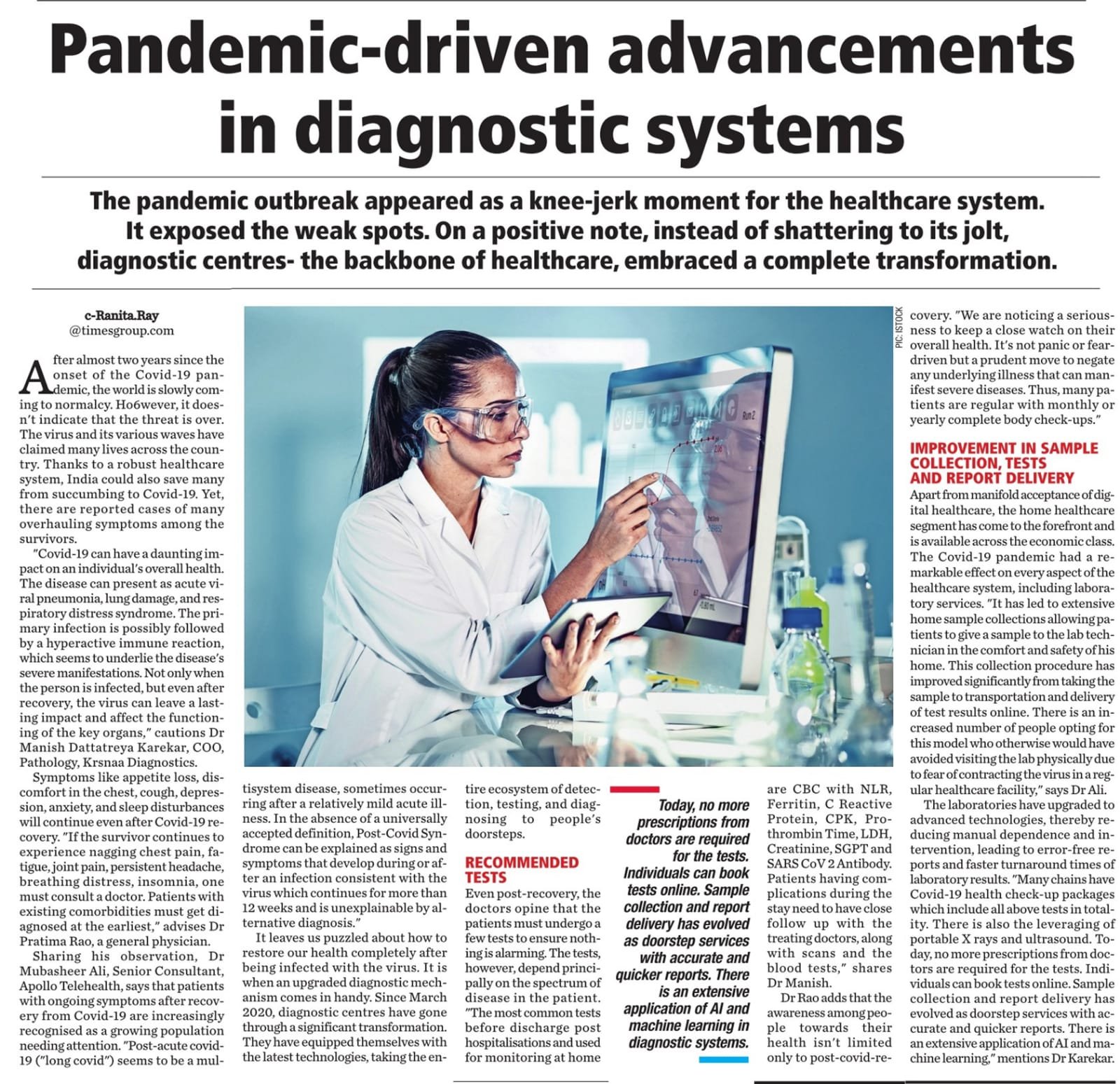
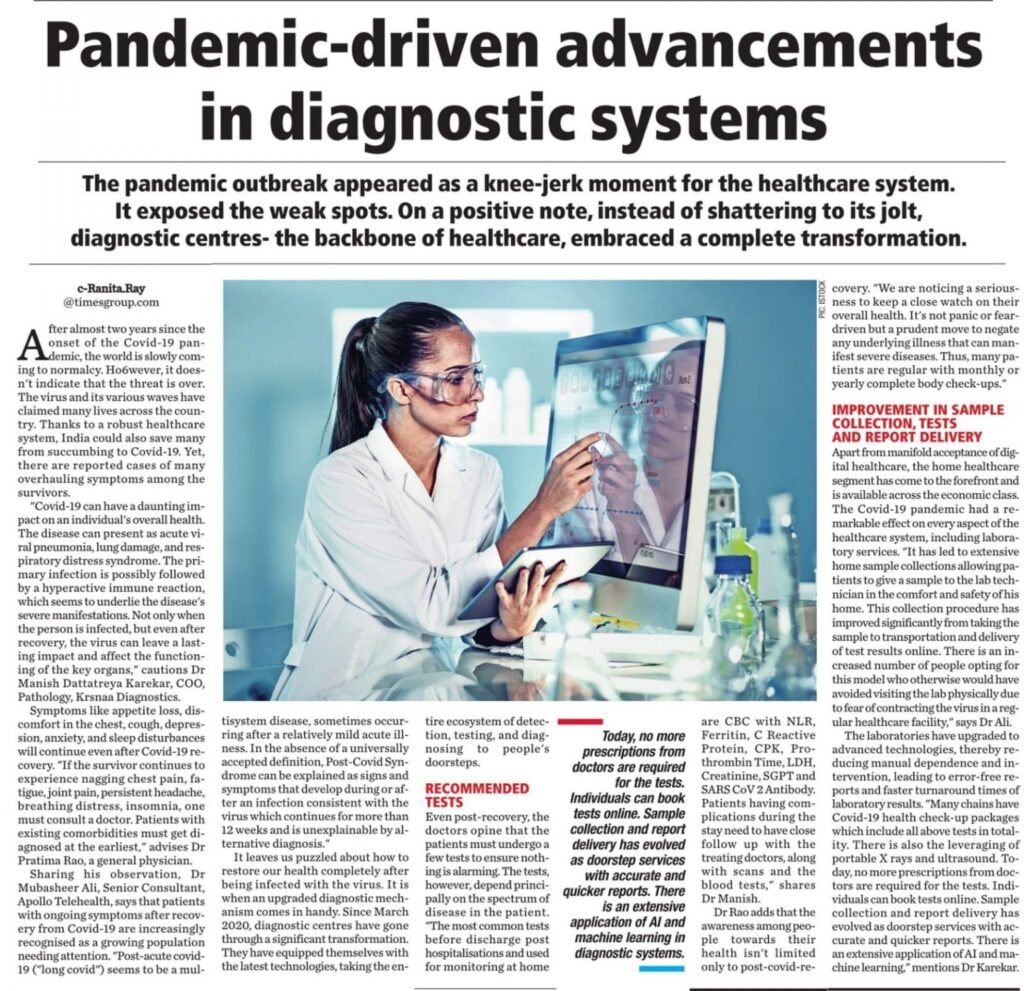
MailChimp Consulting and Training

Teleclinic Locator

Trends Expected in Healthcare, Telemedicine, Medtech & Pharma Industry in 2022

Mr. Vikram Thaploo, CEO, Apollo Telehealth (largest and oldest multi-specialty telemedicine network in the world. A unit of Apollo Hospitals Group,)

The COVID-19 pandemic resulted in massive disruptions across different industries and the healthcare industry has definitely been hit hard. But thankfully, the healthcare industry effectively managed the outbreak owing to full support from the central and state governments. Although there has been slow adaptation of digital tools in the healthcare industry, everything changed with the outbreak of the pandemic. The effect of healthcare technology and digital solutions was felt in many different ways than we could have expected. During the lockdown, both the patients and the healthcare practitioners realized the importance of digitisation.
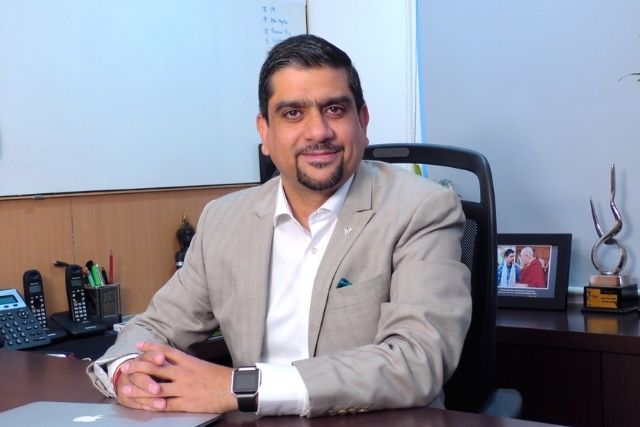
Vikram Thaploo CEO Apollo telehealth

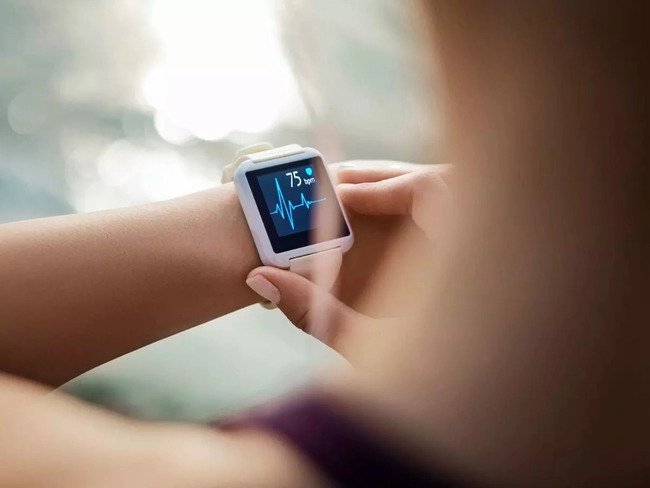
The pandemic has almost entirely changed how the healthcare industry in India operates. With telehealth, hospitals are now also concerned about reaching patients online, how to deliver and protect patient information. Telemedicine and remote patient monitoring are being increasingly adopted by service providers to virtually manage patients, predict and prevent illnesses, and improve clinical outcomes. There’s been almost an 80 per cent rise in consumption of digital healthcare services after COVID-19. Digital technologies like extended reality, cloud systems, big data, and artificial intelligence are taking the center stage to enhance user- experience and increase process efficiency. These technologies have accelerated digital Health, remote patient monitoring and timely clinical protocols.  In the coming years too, digital health applications & therapeutics, personal health wearables, and AI, NLP(neural language processing), robotics process automation or the RPA-enabled process accelerators in clinical prediction, operational transformation and compliance improvement will further drive and shape the future of healthcare.

Mr. Nikkhil K Masurkar, Executive Director, Entod Pharmaceutical (specializes in Ophthalmology, Dermatology and ENT)

The healthcare market can increase three-fold to Rs. 8.6 trillion (US$ 133.44 billion) by 2022. In 2020, in a very short period, Covid-19 became an unparalleled disruption to every area of the healthcare industry. The overall response to the pandemic witnessed both the private and government sector working in tandem. The private Indian healthcare players rose to the occasion and have been providing all the support that the government needs, such as testing, isolation beds for treatment, medical staff and equipment at government COVID-19 hospitals and home healthcare. The healthcare industry, along with the central and state governments, undertook a robust response plan to tackle the pandemic by setting up dedicated COVID-19 hospitals, isolation centers and tech-enabled mapping of resources. Despite initial hiccups, the healthcare system in India managed to withstand the pandemic.
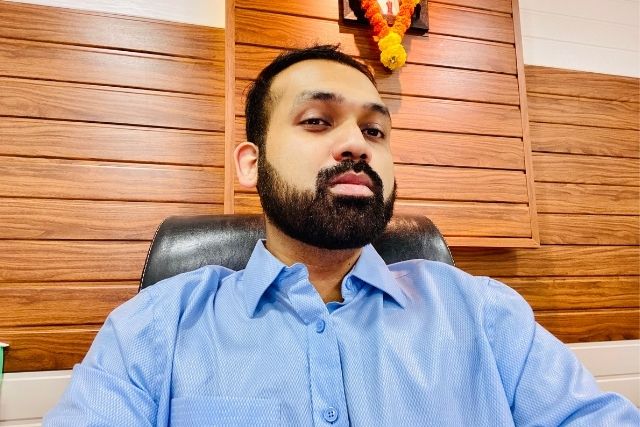
Mr Nikkhil K masurkar Executive Director entod

The different efforts in manufacturing of medical equipment, disposables, drugs and the most recent vaccine efforts made by India has placed us as a global leader. Primary healthcare has become accessible to the needy and poor through digital interventions. Even in areas like clinical trials, there is less intervention in terms of human repetitive reviews due to use of technological tools like Artificial Intelligence (AI). The Indian healthcare sector is diversifying and opportunities are emerging in every segment, be it providers, payers or medical technology. With growing competition, organizations are cognisant of new challenges and are looking to explore the latest business dynamics and trends impacting their segment. India is full of opportunities for players in the medical devices industry. The country has also become one of the leading destinations for high-end diagnostic services with tremendous capital investment for advanced diagnostic facilities, thus catering to a greater proportion of population. The country’s competitive advantage lies in the increased success rate of Indian companies in getting Abbreviated New Drug Application (ANDA) approvals. India also offers vast opportunities in R&D as well as medical tourism. After the pandemic, governments and organizations are more focused towards building digital infrastructure and preventive healthcare which will surely pave the way to a brighter future for the healthcare industry in the years to come. ENTOD has grown by 45% year on year (YOY) in the Ophthalmic and Otological market as per the IQVIA MAT Nov 21 data. We have also gained the maximum market share 0.93% in this segment during this period. We expect to maintain the same growth in the next financial year too due to the momentum generated in the market and the launch of our new divisions, new innovative products and proposed increased field force numbers.

Mr. Ashok Patel, CEO and Founder, Max Ventilator(India’s leading ventilator manufacturer)

Doctors say that the pandemic will always be there till at least  6 years. So all the businesses are prepared to deal with it. Even as Covid-19 has led to the rise of diagnostics and equipment along with an impressive rise in virtual and homecare-driven device segments, there has been an increased emphasis on making low-cost lifesaving devices such as ventilators and oxygen concentrators. Speaking especially of ventilators, from now onwards, the rule of 4 beds per ventilator will become more of a reality.
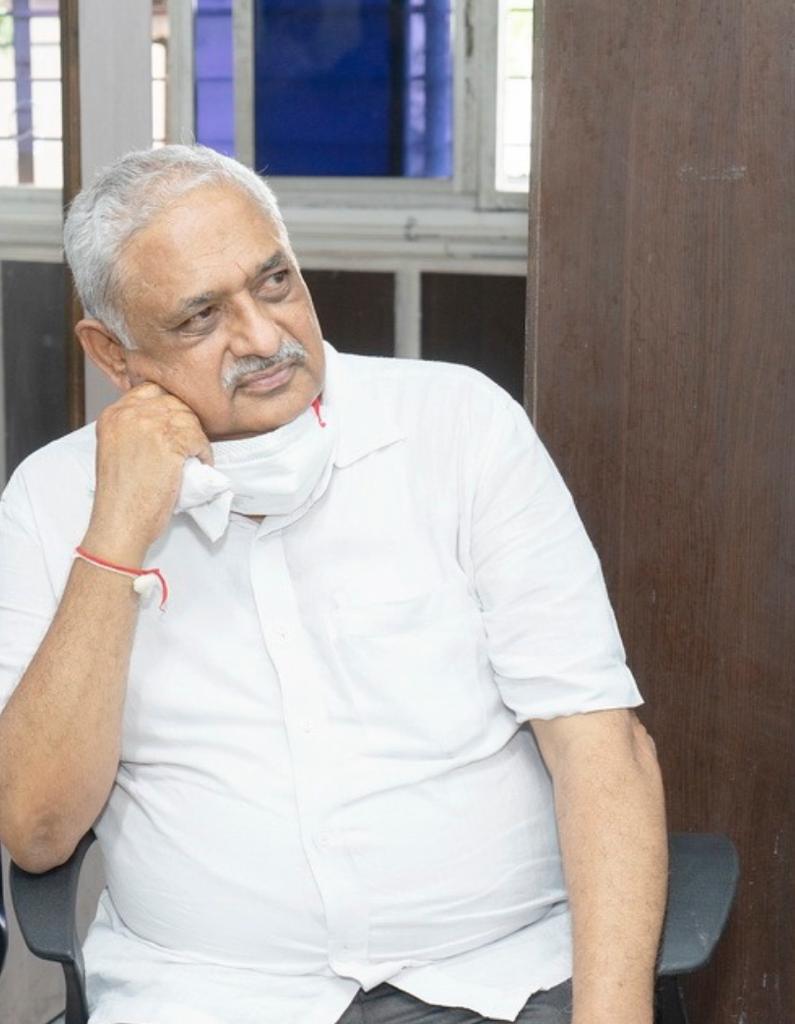
Mr. Ashok Patel, Founder and CEO, max Ventilator

With telemedicine and app-based online pharmacies becoming more of a constant surrounding our daily lives spurring innovations in related devices and equipment, the coming year will also see more action in big data, AI and machine learning-based disease prediction technologies, apart from a push to more sophisticated surgical devices meant for a range of conditions such as neurological, cardio-vascular, oncological, orthopedic or musculosketal conditions. However I must add that for AI-based ventilators to become a reality, more time would be needed. While make-in-India has gained momentum with the view to become more self-reliant, the Chinese products have received a setback. This means that quality will determine the entry of new products and more rigorous quality checks will increasingly become a norm. The coming year will also see major investment and focus on medical device components and parts in the country. At the same time, given the surging omicron cases outside India and a repeat of the same not totally being out of question in India, Covid-related devices and equipment will continue to remain a focus of attention of manufacturers in the country in the coming year.

Dr H S Chhabra, Director, Indian Spinal Injuries Centre
“The year 2021 was a challenging one for India’s health sector, as the lethal second wave of coronavirus struck. As a result, an unprecedented number of people lost their lives and there was unparalleled suffering for countless others. It did, however, serve as a valuable lesson for the entire healthcare industry, leading to the resurrection and upgrading of health infrastructure in both the public and private sectors.
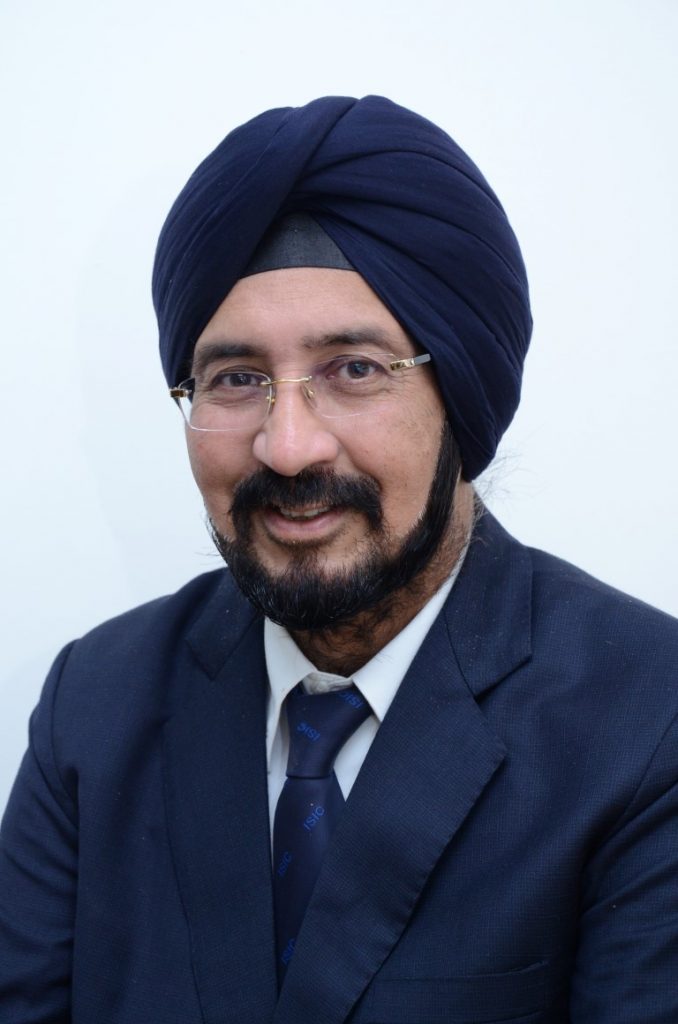
Dr H S Chhabra, Director, Indian Spinal Injuries Centre

We not only have a completely functional oxygen plant but are also now fully equipped to face new challenges, such as Omicron, with a team of experienced doctors and paramedical staff. As we approach 2022, I strongly advise everyone to take both the doses of the vaccine, if already not taken. Also, continue to observe social distancing measures, wear masks, practise hand hygiene and adhere to all the guidelines issued by the Indian government.”

Dr Aashish Chaudhry, Managing Director, Aakash Healthcare, Dwarka
“Aakash Healthcare is ready for 2022, with a solid infrastructure in place to help counteract the possibility of Covid’s third wave. Since last year, the hospital has been working in close collaboration with the government to provide critical care to COVID-19 patients in the pandemic, and has earned the reputation of being one of the most sought-after centres for personalized care during COVID times. As the New Year approaches, we hope to complete the trials for the children’s Covid vaccine.
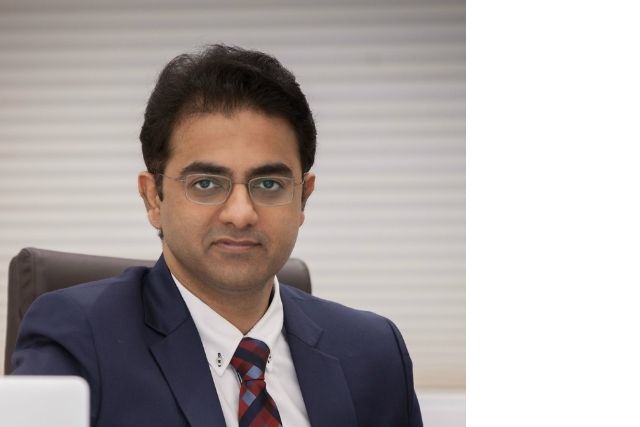
Dr. Aashish Chaudhry, Managing Director, Aakash Healthcare

As a  part of our overall development and expansion plans, we will establish a World Class Bone and Joint program/hospital in Gurgaon by next year. The new venture will serve as an Orthopedics, Joint Replacement, and Spine Hospital. In addition, we intend to open a new Cancer Hospital in Dwarka. which will provide comprehensive cancer care  including Radiation and BMT (Bone Marrow Transplant).
We are almost about to launch our State of the art Liver Transplant Program at our existing Dwarka Hospital, Multiple clinics as well as Super Speciality Hospitals are about to crop up in North India. A couple of our international projects  are also in the pipe line for 2022.”
 

Outlook 2022: Healthcare leaders call for imbibing cutting-edge tech advancements

New Delhi: “The COVID-19 pandemic exposed the fault lines in the public health system of the country. As hospitals ran out of beds, oxygen cylinders, ventilators, and key drugs used in managing the disease, both the private and government sector worked in tandem to tackle the situation,” says Dr. Shankar Narang, COO, Paras Healthcare.

Dr Narang adds further: “In order to effectively manage the outbreak, the Indian government also leveraged technology and developed various applications both at the central and state-levels. Digital transformation in healthcare such as telemedicine, artificial intelligence (AI)- enabled medical devices and blockchain electronic health records are reshaping how we interact with health professionals, besides data sharing among providers, decisions about our treatment plans and overall health outcomes. This is going to be the future of healthcare. There has also been an increased awareness of health insurance products in the past few years and more people are investing in health insurance with each passing year. Health insurance and healthcare delivery synergies are going to be prominent in the coming year. The ever-evolving situations and the ongoing pandemic eventually helped healthcare providers cover their journey from digitisation to digitalisation. Imbibing cutting-edge technological advancements has thus become critical for the sector to keep abreast with the ever-evolving world.”

“The year 2021 was a challenging one for India’s health sector, as the lethal second wave of coronavirus struck. As a result, an unprecedented number of people lost their lives and there was unparalleled suffering for countless others. It did, however, serve as a valuable lesson for the entire healthcare industry, leading to the resurrection and upgrading of health infrastructure in both the public and private sectors. We not only have a completely functional oxygen plant but are also now fully equipped to face new challenges, such as Omicron, with a team of experienced doctors and paramedical staff. As we approach 2022, I strongly advise everyone to take both the doses of the vaccine, if already not taken. Also, continue to observe social distancing measures, wear masks, practise hand hygiene and adhere to all the guidelines issued by the Indian government, says Dr. H S Chhabra, Director, Indian Spinal Injuries Centre.

Sharing his Dr Aashish Chaudhry, Managing Director, Aakash Healthcare says, “As the New Year approaches, we hope to complete the trials for the children’s Covid vaccine. As a  part of our overall development and expansion plans, we will establish a World Class Bone and Joint program/hospital in Gurgaon by next year. The new venture will serve as an Orthopedics, Joint Replacement, and Spine Hospital. In addition, we intend to open a new Cancer Hospital in Dwarka. which will provide comprehensive cancer care  including Radiation and BMT (Bone Marrow Transplant). We are almost about to launch our State of the art Liver Transplant Program at our existing Dwarka Hospital, Multiple clinics as well as Super Speciality Hospitals are about to crop up in North India. A couple of our international projects  are also in the pipe line for 2022.”
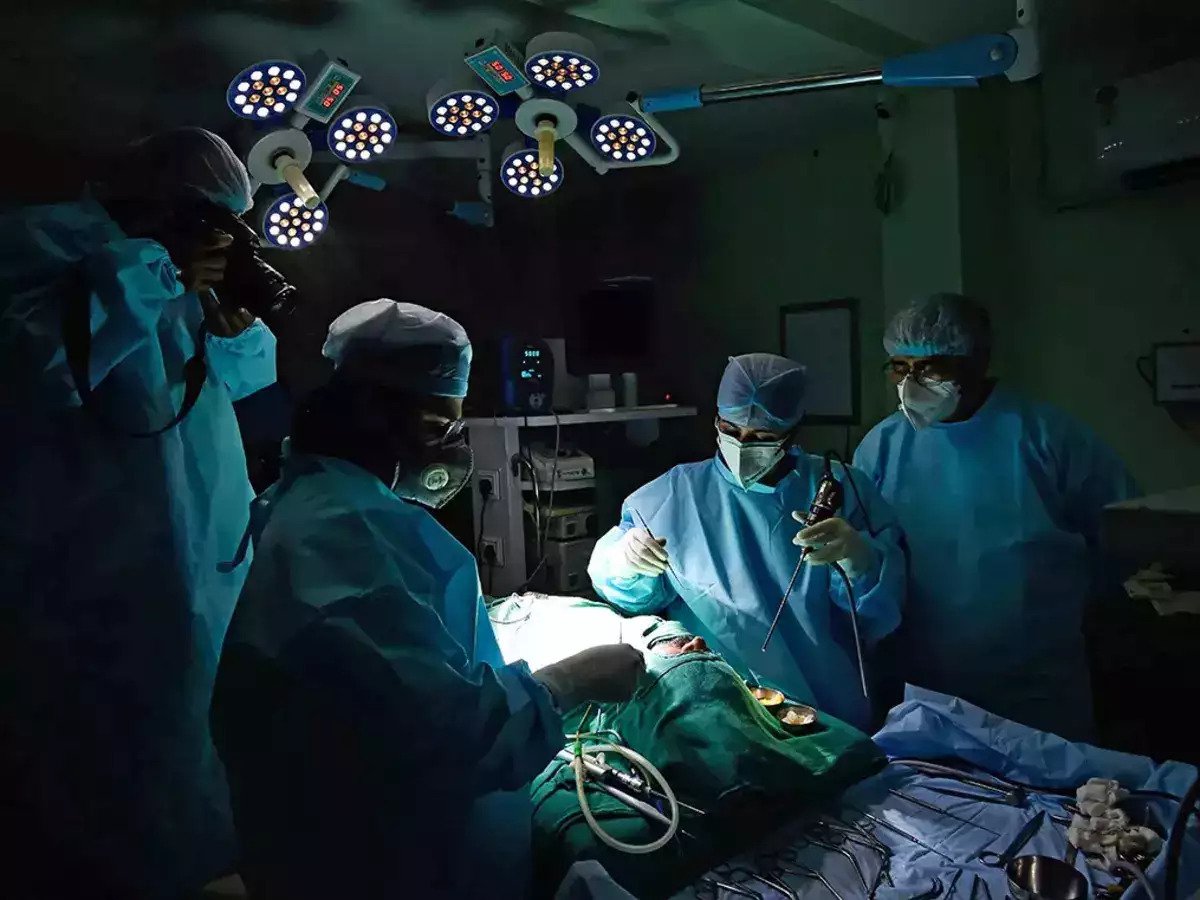
Vikram Thaploo, CEO, Apollo Telehealth, a unit of Apollo Hospitals Group in his outlook statement says: “During the lockdown, both the patients and the healthcare practitioners realized the importance of digitisation. The pandemic has almost entirely changed how the healthcare industry in India operates. With telehealth, hospitals are now also concerned about reaching patients online, how to deliver and protect patient information. Telemedicine and remote patient monitoring are being increasingly adopted by service providers to virtually manage patients, predict and prevent illnesses, and improve clinical outcomes. There’s been almost an 80 per cent rise in consumption of digital healthcare services after COVID-19. Digital technologies like extended reality, cloud systems, big data, and artificial intelligence are taking the center stage to enhance user- experience and increase process efficiency. These technologies have accelerated digital Health, remote patient monitoring and timely clinical protocols.”

“In the coming years too, digital health applications & therapeutics, personal health wearables, and AI, NLP(neural language processing), robotics process automation or the RPA-enabled process accelerators in clinical prediction, operational transformation and compliance improvement will further drive and shape the future of healthcare,” adds Thaploo.

Nikkhil K Masurkar, Executive Director, Entod Pharmaceutical  says: “The healthcare market can increase three-fold to Rs. 8.6 trillion (US$ 133.44 billion) by 2022. In 2020, in a very short period, Covid-19 became an unparalleled disruption to every area of the healthcare industry. Despite initial hiccups, the healthcare system in India managed to withstand the pandemic. The different efforts in manufacturing of medical equipment, disposables, drugs and the most recent vaccine efforts made by India has placed us as a global leader. Primary healthcare has become accessible to the needy and poor through digital interventions. Even in areas like clinical trials, there is less intervention in terms of human repetitive reviews due to use of technological tools like Artificial Intelligence (AI). The country’s competitive advantage lies in the increased success rate of Indian companies in getting Abbreviated New Drug Application (ANDA) approvals. India also offers vast opportunities in R&D as well as medical tourism.”

Sharing his outlook, Masurkar adds: “After the pandemic, governments and organizations are more focused towards building digital infrastructure and preventive healthcare which will surely pave the way to a brighter future for the healthcare industry in the years to come. ENTOD has grown by 45% year on year (YOY) in the Ophthalmic and Otological market as per the IQVIA MAT Nov 21 data. We have also gained the maximum market share 0.93% in this segment during this period. We expect to maintain the same growth in the next financial year too due to the momentum generated in the market and the launch of our new divisions, new innovative products and proposed increased field force numbers.”

“With telemedicine and app-based online pharmacies becoming more of a constant surrounding our daily lives spurring innovations in related devices and equipment, the coming year will also see more action in big data, AI and machine learning-based disease prediction technologies, apart from a push to more sophisticated surgical devices meant for a range of conditions such as neurological, cardio-vascular, oncological, orthopedic or musculosketal conditions. However I must add that for AI-based ventilators to become a reality, more time would be needed,” says Ashok Patel, CEO and Founder, Max Ventilator (India’s leading ventilator manufacturer).

“While make-in-India has gained momentum with the view to become more self-reliant, the Chinese products have received a setback. This means that quality will determine the entry of new products and more rigorous quality checks will increasingly become a norm. The coming year will also see major investment and focus on medical device components and parts in the country. At the same time, given the surging omicron cases outside India and a repeat of the same not totally being out of question in India, Covid-related devices and equipment will continue to remain a focus of attention of manufacturers in the country in the coming year,” adds Patel.

As per Dr. Ankit Gupta, Managing Director, Park Group of Hospitals “2021 was one of the most challenging years for the Indian healthcare system as the country was plagued by the devastating second wave of Covid. This put an additional strain on the healthcare infrastructure, but the country rallied and triumphed. This was also the year when India ramped up its Covid vaccination campaign, reaching 85%with one dose and 50% with both doses. Taking a cue from the second wave, the private and public sectors have both improved their healthcare infrastructure. As we enter the new year, we should focus even more on increasing immunization rates. This is also the year that children should begin receiving Covid vaccinations. This will aid us in our fight against various Covid variants, including Omicron. People should also maintain a vigilant mindset, wearing masks, using hand sanitizers, and keeping social distance.”

Telemedicine, PPP amongst top Healthcare trends observed in the year 2021

Telemedicine, PPP amongst top Healthcare trends observed in the year 2021New Delhi : From adoption of new digital technologies, more Public Private Partnership (PPP) and compliance with the new normal, the healthcare industry has undergone robust transformation owing to the COVID-19 and its variants. Healthcare experts cite that digitisation will play a big role in 2022.

Year 2021 was a roller coaster year for the healthcare sector as India faced the devastating second wave of the COVID virus. The healthcare sector was overwhelmed with the number of cases that India faced and the rising number of people who needed assistance from healthcare service providers to survive. The domain overcame challenges with the help of technology and Public-Private Partnership.

One of the major transformations in the way healthcare services were provided was seen with the emergence of teleconsultation services. Seeking patient care online was already on the rise when pandemic struck the country, further amplifying the reach of telehealth services. Government’s telemedicine programme e-Sanjeevani registered record numbers of users seeking healthcare services, reaching remotest regions of the country. As we see more services being provided remotely with the onset of digitization, Telehealth is set to witness a further rise in usage.

Speaking on the rise of digital healthcare services fuelled by the pandemic, Vikram Thaploo, CEO, Apollo Telehealth said, “The pandemic has almost entirely changed how the healthcare industry in India operates. With telehealth, hospitals are now also concerned about reaching patients online, how to deliver and protect patient information. Telemedicine and remote patient monitoring are being increasingly adopted by service providers to virtually manage patients, predict and prevent illnesses, and improve clinical outcomes. There’s been almost an 80 percent rise in consumption of digital healthcare services after COVID-19. Digital technologies like extended reality, cloud systems, big data, and artificial intelligence are taking the center stage to enhance user- experience and increase process efficiency. These technologies have accelerated digital Health, remote patient monitoring and timely clinical protocols. In the coming years too, digital health applications and therapeutics, personal health wearables, and AI, NLP (Neural Language Processing), robotics process automation or the RPA-enabled process accelerators in clinical prediction, operational transformation and compliance improvement will further drive and shape the future of healthcare.”

The onset of the pandemic also highlighted that the government and private sector has to work in coordination to tackle healthcare challenges like they did during the pandemic. The private healthcare service providers ramped up their production, technology and manpower to help patients recover from COVID. Private sector’s collaboration with the government could be seen in the development of medical equipment, testing, medical kits and now can be witnessed in the development and administration of COVID vaccines.

Speaking on the Public-Private Partnership (PPP) that helped healthcare sector provide better patient care, Nikkhil K Masurkar, Executive Director, Entod Pharmaceutical said, “The healthcare market can increase three-fold to Rs. 8.6 trillion (US$ 133.44 billion) by 2022. In 2020, in a very short period, COVID-19 became an unparalleled disruption to every area of the healthcare industry. The overall response to the pandemic witnessed both the private and government sector working in tandem. The private Indian healthcare players rose to the occasion and have been providing all the support that the government needs, such as testing, isolation beds for treatment, medical staff and equipment at government COVID-19 hospitals and home healthcare. The healthcare industry, along with the central and state governments, undertook a robust response plan to tackle the pandemic by setting up dedicated COVID-19 hospitals, isolation centers and tech-enabled mapping of resources. Despite initial hiccups, the healthcare system in India managed to withstand the pandemic. The different efforts in manufacturing of medical equipment, disposables, drugs and the most recent vaccine efforts made by India has placed us as a global leader.”

Talking about the growing opportunities and rising inculcation of technologies in healthcare, he added “Primary healthcare has become accessible to the needy and poor through digital interventions. Even in areas like clinical trials, there is less intervention in terms of human repetitive reviews due to use of technological tools like Artificial Intelligence (AI). The Indian healthcare sector is diversifying and opportunities are emerging in every segment, be it providers, payers or medical technology. With growing competition, organizations are cognisant of new challenges and are looking to explore the latest business dynamics and trends impacting their segment. India is full of opportunities for players in the medical devices industry. The country has also become one of the leading destinations for high-end diagnostic services with tremendous capital investment for advanced diagnostic facilities, thus catering to a greater proportion of population. The country’s competitive advantage lies in the increased success rate of Indian companies in getting Abbreviated New Drug Application (ANDA) approvals. India also offers vast opportunities in R&D as well as medical tourism. After the pandemic, governments and organizations are more focused towards building digital infrastructure and preventive healthcare which will surely pave the way to a brighter future for the healthcare industry in the years to come.”

Elucidating on how India produced the required number of medical devices and used technology to overcome shortage challenges, Ashok Patel, CEO and Founder, Max Ventilator said, “Even as Covid-19 has led to the rise of diagnostics and equipment along with an impressive rise in virtual and homecare-driven device segments, there has been an increased emphasis on making low-cost lifesaving devices such as ventilators and oxygen concentrators. Speaking especially of ventilators, from now onwards, the rule of 4 beds per ventilator will become more of a reality. With telemedicine and app-based online pharmacies becoming more of a constant surrounding our daily lives spurring innovations in related devices and equipment, the coming year will also see more action in big data, AI and machine learning-based disease prediction technologies, apart from a push to more sophisticated surgical devices meant for a range of conditions such as neurological, cardio-vascular, oncological, orthopedic or musculosketal conditions.”

Highlighting that the healthcare sector is now looking towards deploying better quality medical devices, he added, “For AI-based ventilators to become a reality, more time would be needed. While make-in-India has gained momentum with the view to become more self-reliant, the Chinese products have received a setback. This means that quality will determine the entry of new products and more rigorous quality checks will increasingly become a norm. The coming year will also see major investment and focus on medical device components and parts in the country. At the same time, given the surging omicron cases outside India and a repeat of the same not totally being out of question in India, Covid-related devices and equipment will continue to remain a focus of attention of manufacturers in the country in the coming year.”

The pandemic brought the healthcare sector into sharp focus, also highlighting its shortcomings and the lack of prepared infrastructure for an emergency situation. Hospitals and healthcare services however, significantly expanded their range of their services to enable better patient care and ensure a safer health infrastructure for future emergencies.

Commenting on the improved patient care at hospitals and its future, Dr. Avinash Supe, Director Clinical Governance and Head, P.D. Hinduja Hospital and Medical Research Centre said, “Offerings of hospitals have significantly expanded- in terms of lifestyle modification, dedicated cardiac care post Covid recovery and expanding the testing facilities at hospitals for Covid-19. This has also led to re-aligning the hospital infrastructure to ensure the required isolation protocols and make room for innovative and safe patient care delivery. From the Government perspective, there definitely is an urgent need to increase the budget allocation for healthcare from the current 1.3 percent to a minimum of three percent of GDP, if not more. In terms of outlook, the year 2022 seems very promising for healthcare where the sector will witness planned investments, re-alignment of priorities and robust innovation which will be the way forward for the industry’s consistent progress and sustainability.”

The challenges in front of the health sector were huge and are still rising with the discovery of new variants and the surge in cases. The healthcare infrastructure however is now better prepared to tackle a possible third wave than it was during the months of April-May, when the second wave caught the health sector off-guard.

Speaking on lessons learnt by the healthcare sector from the pandemic, Dr H S Chhabra, Director, Indian Spinal Injuries Centre said, “The year 2021 was a challenging one for India’s health sector, as the lethal second wave of coronavirus struck. As a result, an unprecedented number of people lost their lives and there was unparalleled suffering for countless others. It did, however, serve as a valuable lesson for the entire healthcare industry, leading to the resurrection and upgrading of health infrastructure in both the public and private sectors. We not only have a completely functional oxygen plant but are also now fully equipped to face new challenges, such as Omicron, with a team of experienced doctors and paramedical staff.

Dealing with the pandemic has been a mixed bag for healthcare experts and as the new year approaches, health experts advise against taking the COVID virus and its variants lightly and following all precautions to prevent the overburdening of the healthcare system. The continuous observation of social distancing measures, wearing masks, practicing hand hygiene and adhering to all the guidelines issued by the government can not only reduce the burden of medical workers, but can also help in getting out of the pandemic together.

Read more at:
https://health.economictimes.indiatimes.com/news/industry/telemedicine-ppp-amongst-top-healthcare-trends-observed-in-the-year-2021/88563631


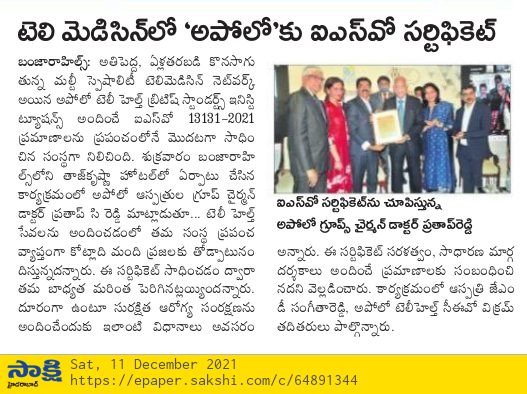
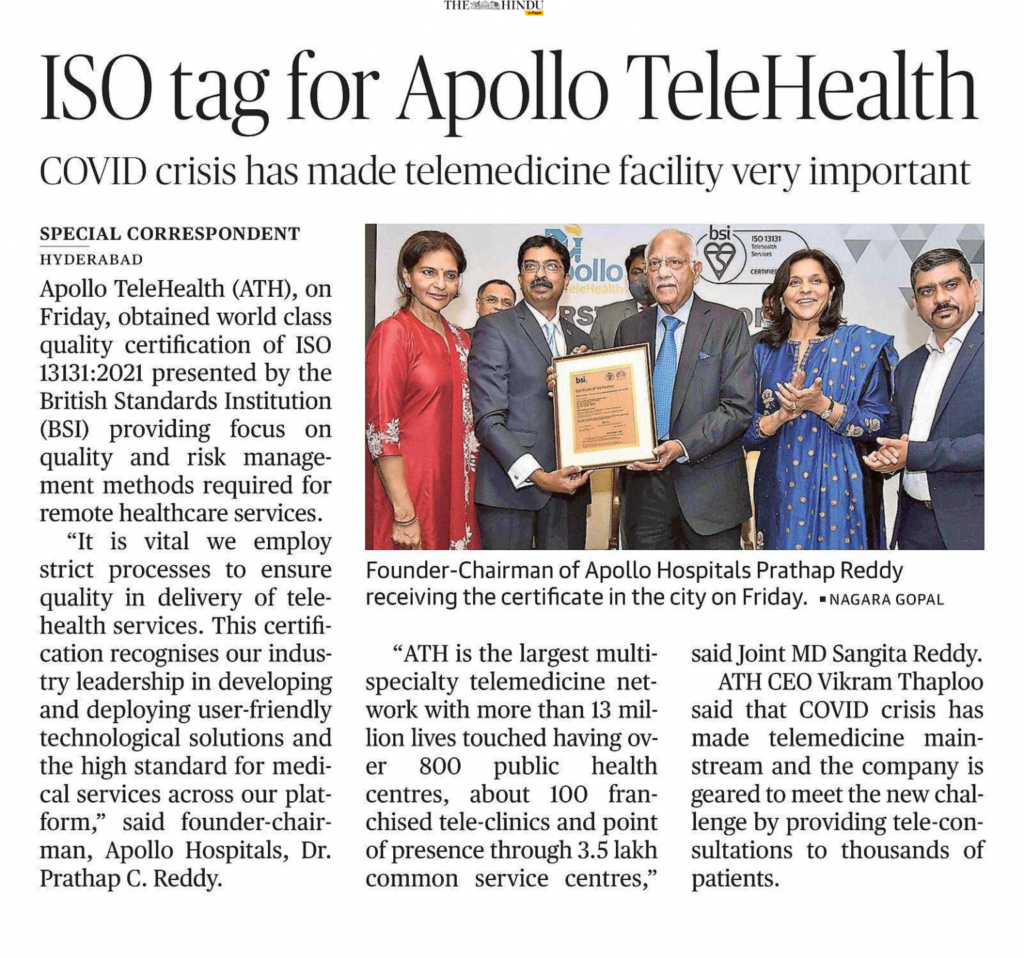
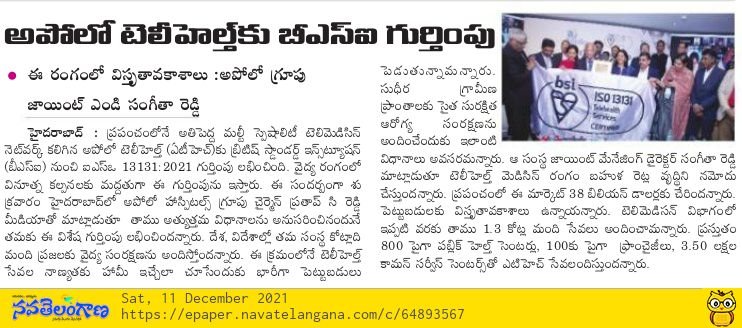
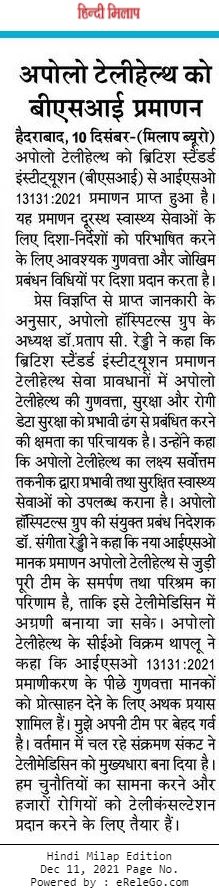
Apollo TeleHealth Attains the Standard of ISO 13131:2021

This is to update you that we have garnered the following coverage for the Press Conference entitled “Apollo TeleHealth Attains the Standard of ISO 13131:2021″ organized on 10th Dec’21 in Hyderabad. Please find below the details of the coverage for your perusal. All the major mainlines, financials and regional publications have covered the same, including wires like PTI  & UNI.

Press Trust of India (PTI)


United News of Inidia (UNI)
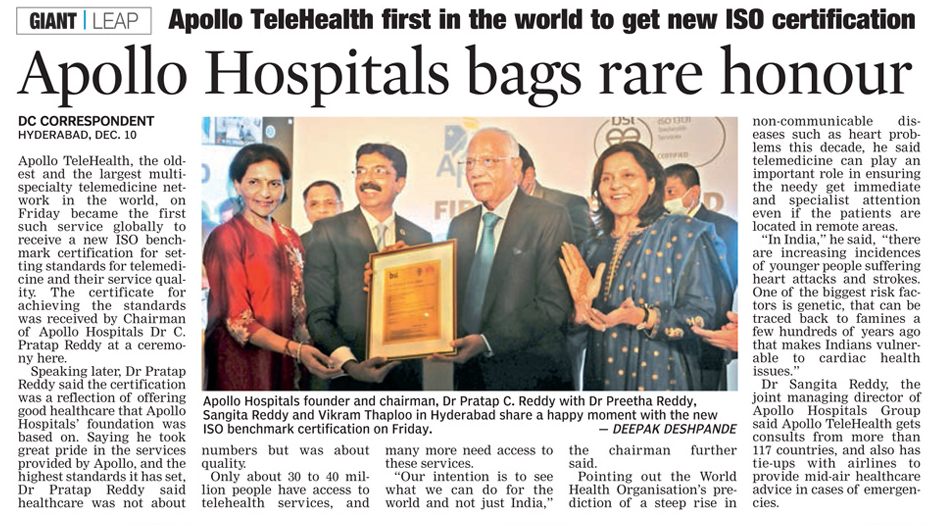

Mainlines and Others
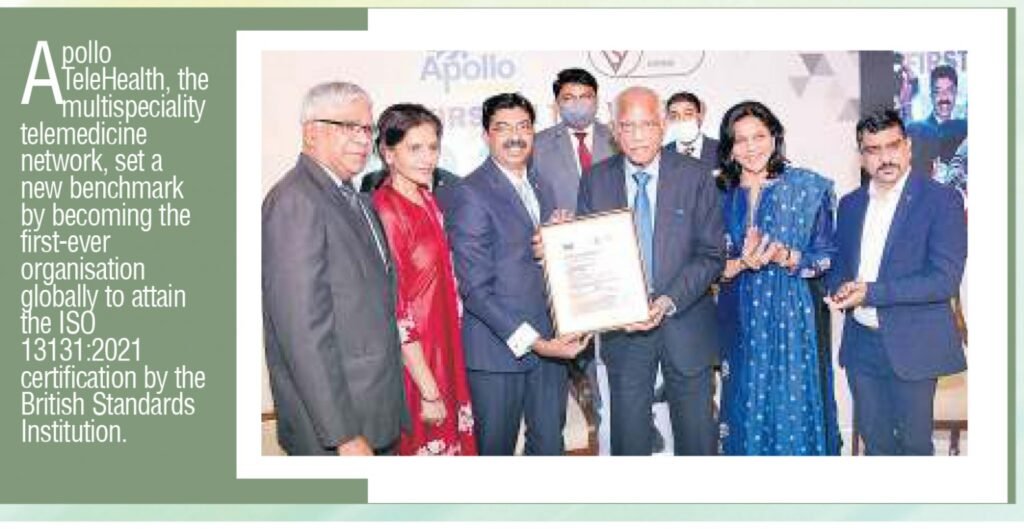

Apollo TeleHealth is the world’s first organization to attain ISO 13131 certified status

Apollo TeleHealth, a multi-specialty telemedicine network, has become the first-ever organisation in the world to attain the certification of ISO 13131:2021 presented by the British Standards Institution (BSI).

Digital Healthcare: Saving lives in a time of crisis

The HP government’s flagship telemedicine programme with Apollo Telehealth successfully saves the lives of a mother and her newborn child at a 12,000 feet Himalayan village in the Spiti Valley. Apollo Telehealth rendered its services through emergency teleconsultation with specialists facilitated by their telemedicine staff on the ground

Telemedicine is said to be the next big thing in healthcare. It’s hot right now (and not over-hyped as sceptics term it) simply because digital health dramatically enhances traditional means of treatment and care delivery, as evidenced from this real-life example. In a distinct feat of emergency delivery at an altitude of more than 12,000 feet in Kaza, the Himachal Pradesh government’s telemedicine programme with Apollo Telehealth showcased its sheer dedication, commitment, humane approach, and capability to save two lives— a mother and a child in critical state. From providing detailed patient history to doctors thousands of miles away to diagnosing the condition of the patients to providing a line of treatment and round-the-clock monitoring, telemedicine eliminated the possibility of any sort of fatality.

The mother, a 27-year old female, was admitted to Community Health Centre (CHC), Kaza, diagnosed with Abruptio Placentae (premature separation of the placenta from the uterus). While a caesarean section was performed to deliver the baby, the mother developed complications of post-surgical bleeding. Alpha Khakhar, an obstetrician-gynecologist at Apollo Hospitals who was consulted to manage the complication said, “We obtained detailed patient history, performed thorough examination over telemedicine, and diagnosed the condition as post-partum haemorrhage. Following that, we advised the line of treatment for clinical management of the patient. Complications were also starting to show effects on the baby as the delivery was preterm and the baby was born with low body weight. In addition to that, the baby had bluish discolouration at birth. To stabilise the condition of the baby, cardio pulmonary resuscitation (CPR) was advised for two minutes followed by other emergency clinical management procedures. Following CPR and emergency care the baby was shifted to neonatal care unit. However, the baby continued to have intermittent low blood sugar levels.

As the condition of the baby continued to deteriorate, a teleconsultation with senior paediatrician Latha Vishwanathan, of Apollo Hospitals was organised. A detailed assessment of the baby was performed by the paediatrician and she advised the staff to administer IV fluid and NG (nasogastric) feeding; monitor oxygen saturation and random blood sugar (RBS) levels regularly and measure body weight daily. Round-the-clock monitoring was performed by Apollo and government staff to ensure oxygen administration based on saturation levels. However, the blood sugar levels of the baby continued to dip drastically and a teleconsultation with the paediatrician was again organised for clinical intervention. The government emergency duty doctor monitored the baby, under the guidance of a senior paediatrician from Apollo.

Vishwanathan said, “As both the mother’s and the baby’s condition were worsening, the block medical officer (BMO) at Kaza requested our telemedicine staff to accompany the mother and the baby. However, the roads were closed and it took time to organise transport to the higher centre. Till then, we maintained round-the-clock supervision on the baby. This was possible only because of tele-emergency that allowed access and support to the child or else, it could have been fatal.”

Evidence-based intervention in those crucial minutes improved long-term outcomes for these fragile patients. Using cameras and connective devices, healthcare staff at Kaza connected with attending physicians and child specialists to monitor vital signs, ask questions, validate diagnoses, examine x-rays together and have the doctors observe treatment progress. It was only after six days of round-the-clock monitoring via telemedicine services that the mother and the baby were shifted to Mission Hospital in Manali where they were admitted. The condition of the mother and baby stabilised a day after the initial treatment procedures.
“Apollo Hospitals Group is the pioneer of telemedicine in the country, and it is providing emergency healthcare services to people in remote parts of the country through Apollo Telehealth,” said Sangita Reddy, joint managing director, Apollo Hospitals Group. “It has saved lives in both urban and rural areas of the country amid the Covid-19 pandemic as well, and this incident in Kaza will be an inspirational story for the whole Apollo group for times to come.

Digital Dispensary Project in Jharkhand has been awarded Service Excellence by FICCI HEAL Awards 2021

We are delighted to announce that Digital Dispensary Project in Jharkhand has been awarded Service Excellence by FICCI HEAL Awards 2021. Through the 100 operational centres, we have been able to touch 300 million lives within a span of 2.5 years with 53% of the beneficiaries being females and 63% of the patients with NCDs.

Launch of Apollo TeleHealth Center, Meghalaya by Shri. Conrad Sangma, Chief Minister of Meghalaya

Apollo TeleHealth Center (Meghalaya Digital Dispensary) at Rongjeng, East Garo, Meghalaya was launched on 13th October 2021 by Shri. Conrad Sangma, Honourable Chief Minister of Meghalaya. Likewise, 4 more such centres have been opened to the public with a host of medical facilities like GP and Speciality Doctor Teleconsultations, Laboratory Investigations and Pharmacy.

Hyderabad: Spurt in heart problems post Covid

HYDERABAD: The impact of cardiovascular disease on the heart post Covid-19 is found to be severe in many cases and heart disease progresses quickly in existing patients.


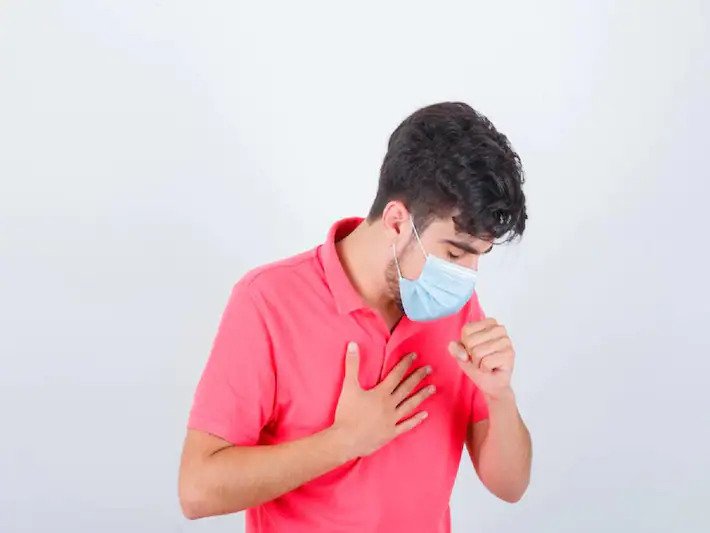
According to experts, there has been a steep rise in the number of Covid-recovered patients suffering from heart problems like sudden palpitation, chest pain, heart attack, heart failure, heart swelling, low pump capacity (low ejection fraction), blood clotting, etc.

“We are seeing increasing cases of patients developing heart disease after getting infected,” Dr Sai Ravi Shanker, head of department cardiology, Prathima Hospitals, said.


Most common cardiac disorders in Hyderabad and Telangana include acute coronary syndrome, myocardial infarction, hypertensive heart disease, valvular heart disease, cardiac failure, ischaemic heart disease, peripheral vascular disease and dysrhythmia. “High levels of inflammation in body is destroying healthy tissues post-Covid and causing heart ailments. Pandemic has also led to increased stress levels and imbalances which are affecting the heart,” said Vikram Thaploo, CEO, Apollo Tele Health.


“There’s been an increase in the number of cases of heart attacks, strokes and aggravation of deep vein thrombosis in patients who have recovered from Covid-19. It has been observed that 78 out of the 100 patients diagnosed with the infection reported symptoms of heart damage and inflammation,” he added.


With sedentary lifestyle fuelling the risk of heart diseases among youth, it is important to undergo preventive heart check ups for anyone above 40 years, say experts. “Nearly 70-80% heart diseases are preventable with regular heart check-ups and lifestyle changes,” said Dr Bharat Purohith, senior consultant cardiologist, Care Hospitals

Source : https://timesofindia.indiatimes.com/city/hyderabad/spurt-in-heart-problems-post-covid/articleshow/86591613.cms

जनजातीय क्षेत्र के लिए वरदान साबित हो रहा है Apollo टेलीमेडीसन सेंटर, जानें वजह

बर्फबारी से छह महीने तक ढके रहने वाले जनजातीय क्षेत्र स्पिति के लोगों को बेहतर स्वास्थ्य सुविधाएं मुहैया करवाने में हिमाचल सरकार और अपोलो के सहयोग से चल रहे टेलीमेडीसन सेंटर काफी मददगार साबित हो रहा है.

संदीप सिंह/काजा, लाहौल स्पितिः बर्फबारी से छह महीने तक ढके रहने वाले जनजातीय क्षेत्र स्पिति के लोगों को बेहतर स्वास्थ्य सुविधाएं मुहैया करवाने में हिमाचल सरकार और अपोलो के सहयोग से चल रहे टेलीमेडीसन सेंटर काफी मददगार साबित हो रहा है. हाल ही में काजा में गर्भवती महिला के प्रसव करवाने में सेंटर ने काफी अहम भूमिका निभाई है.

बता दें कि 11 अगस्त 2021 को क्यामो गांव की रहने वाली 27 साल की तेंजिन लामो प्रसव पीड़ा से कहरा रही थी. उसके परिजन उसे काजा अस्पताल में ले आए. लेकिन, रास्ते में पीड़िता को काफी ब्लीडिंग शुरू हो गई.  पीड़िता को सामुदायिक स्वास्थ्य केंद्र (CHC), काजा अस्पताल में भर्ती कराया गया.

इसी दौरान यहां पर मिशन अस्पताल मनाली की ओर से कैंप भी चल रहा था. स्थानीय चिकित्सकों, मिशन अस्पताल और अपोलो टेलीमेडीसन सेंटर ने संयुक्त प्रयास से पीड़िता को सही उपचार मिल पाया. पीड़िता का सिजेरियन काजा में करवाया गया. बता दें कि पहली बार काजा में सिजेरियन सर्जरी हुई है.

बच्चे को छह दिनों तक काजा में अपोलो टेलीमेडीसन सेंटर ने निगरानी में रखा था. तो वहीं, अपोलो हॉस्पिटल्स एमडी और MBBS ने बताया कि टेलीमेडिसिन पर पूरी तरह से जांच की और पोस्ट-पार्टम हैमरेज के रूप में स्थिति का निदान किया. उन्होंने आगे बताया कि बच्चे पर जटिलताएं भी दिखाई देने लगी थी.

क्योंकि प्रसव समय से पहले था और बच्चा कम शरीर के वजन के साथ पैदा हुआ था. इसके अलावा, जन्म के समय बच्चे का रंग नीला पड़ गया था. बच्चे की स्थिति को स्थिर करने के लिए, कार्डियो पल्मोनरी रिससिटेशन (PCR) को 2 मिनट के लिए सलाह दी गई और उसके बाद अन्य आपातकालीन नैदानिक प्रबंधन प्रक्रियाओं की सलाह दी गई.

Source : https://zeenews.india.com/hindi/zeephh/health/apollo-telemedicine-center-proving-born-for-the-tribal-area-know-the-reason-nchp/982191

काजा में पहली बार सिजेरियन, 6 दिन तक निगरानी में रहे बच्चा और मां

हिमाचल के ट्राइबल क्षेत्र काजा पहली बार सिजेरियन विधि से शिशु का जन्म हुआ है। बर्फबारी से छह महीने तक ढके रहने वाले जनजातीय क्षेत्र स्पीति के लोगों को बेहतर स्वास्थ्य सुविधाएं मुहैया करवाने में टेलीमेडीसन सेंटर मददगार साबित हो रहा है। हॉल ही में काजा में गर्भवती महिला के प्रसव करवाने में सैंटर ने काफी अहम भूमिका निभाई। 11 अगस्त 2021 को क्यामो गांव की रहने वाली 27 वर्षीय तेंजिन लामो प्रसव पीड़ा से कराह रही थी। परिजन उसे काजा अस्पताल ले आए। लेकिन रास्ते में पीड़िता से काफी ब्लीडिंग शुरू हो गई।    

पीड़िता को सामुदायिक स्वास्थ्य केंद्र (सीएचसी), काजा में भर्ती कराया गया था। इसी दौरान यहां पर मिशन अस्पताल मनाली की ओर से कैंप भी चल रहा था। स्थानीय चिकित्सकों, मिशन अस्पताल और अपोलो टेलीमेडीसन सैंटर ने संयुक्त प्रयास से पीड़िता को सही उपचार मिल पाया। पीड़िता का सिजेरियन काजा में करवाया गया। पहली बार काजा में सिजेरियन हुआ है। असल में काजा में सामान्य प्रसव ही करवाया जाता है। लेकिन अगर उक्त पीड़िता को रैफर करते तो मां और बच्चे दोनों की जान को खतरा था। शिशु को छह दिनों तक काजा में अपोलो टेलीमेडिसिन सेंटर ने निगरानी में रखा। 

डॉ अल्फा खाखर (एमडी) अपोलो अस्पताल ने बताया कि टेलीमेडिसिन पर पूरी तरह से जांच की, और पोस्ट-पार्टम हैमरेज के रूप में स्थिति का निदान किया। उसके बाद, हमने सलाह दी रोगी के नैदानिक प्रबंधन के लिए उपचार की रेखा। बच्चे पर जटिलताएं भी दिखाई देने लगी थीं, क्योंकि प्रसव समय से पहले था और बच्चा कम शरीर के वजन के साथ पैदा हुआ था। इसके अलावा, जन्म के समय बच्चे का रंग नीला पड़ गया था। बच्चे की स्थिति को स्थिर करने के लिए, कार्डियो पल्मोनरी रिससिटेशन (सीपीआर) को 2 मिनट के लिए सलाह दी गई और उसके बाद अन्य आपातकालीन नैदानिक प्रबंधन प्रक्रियाओं की सलाह दी गई।

सीपीआर और आपातकालीन देखभाल के बाद बच्चे को नवजात देखभाल इकाई मेंस्थानांतरित कर दिया गया। हालांकि, बच्चे को रुक-रुक कर कम रक्त होता रहा। जैसे-जैसे बच्चे की स्थिति बिगड़ती गई तो  अपोलो हॉस्पिटल्स’ ने ’वरिष्ठ बाल रोग विशेषज्ञ, डॉ. लता विश्वनाथन (एमबीबीएस, डीसीएच, डीएनबी), (बालरोग) के साथ टेली-परामर्श का आयोजन किया गया।टैलीमेडिसन सेंटर काजा मेंतैनात स्टाफ नर्स तेंजिन डोल्कर ने कहा कि उक्त पीड़िता और बच्चा छह दिनों तक हमारी निगरानी में रहा। हमारा स्टाफ चौबीस घंटे उसके लिए तैनात था। अब बच्चा काफी स्वस्थ है और मां भी। हमारा सैंटर बेहतरी सुविधा जनजातीय क्षेत्र के लोगों को मुहैया करवा रहा है।

बीएमओ तेंजिन नोरबू ने कहा कि 11 अगस्त को गर्भवती महिला को लेकर परिजन अस्पताल जाए थे। लेकिन ब्लीडिंग काफी हो रही थी। ऐसे में मिशन अस्पताल केसहयोग से यहां पर सिजेरियन करना पड़ा। इसके बाद अपोलो टेलीमेडीसन सैंटर की निगरानी में महिला और बच्चा रहे।

Source : https://mbmnewsnetwork.com/himachal-pradesh/356958/himachal-caesarean-for-the-first-time-in-kaza-baby-and-mother-under-observation-for-6-days

स्पीति के लिए वरदान बना टेलीमेडिसन सेंटर, काजा में पहली बार हुई सिजेरियन डिलीवरी

बीएमओ तेंजिन नोरबू ने कहा कि 11 अगस्त को गर्भवती महिला को लेकर परिजन अस्पताल जाए थे. लेकिन ब्लीडिंग काफी हो रही थी. ऐसे में मिशन अस्पताल के सहयोग से यहां पर सिजेरियन करना पड़ा. इसके बाद अपोलो टेलीमेडीसन सेंटर की निगरानी में महिला और बच्चा रहे.

हिमाचल प्रदेश में बर्फबारी से छह महीने तक ढके रहने वाले जनजातीय क्षेत्र स्पिति के लोगों को बेहतर स्वास्थ्य सुविधाएं मुहैया करवाने में हिमाचल सरकार और अपोलो केसहयोग से चल रहे टेलीमेडिसन सेंटर काफी मददगार साबित हो रहा है. अभी हॉल ही में काजा में गर्भवती महिला के प्रसव करवाने में सैंटर ने काफी अहम भूमिका निभाई. 11 अगस्त 2021 को क्यामो गांव की रहने वाली 27 वर्षीय तेंजिन लामो प्रसव पीड़ा से कहरा रही थी.

उसके परिजन उसे काजा अस्पताल में ले आए. लेकिन रास्ते में पीड़िता से काफी ब्लीडिंग शुरू हो गई. पीड़िता को सामुदायिक स्वास्थ्य केंद्र (सीएचसी), काजा में भर्ती कराया गया था. इसी दौरान यहां पर मिशन अस्पताल मनाली की ओर से कैंप भी चल रहा था. स्थानीय चिकित्सकों, मिशन अस्पताल और अपोलो टेलीमेडीसन सेंटर ने संयुक्त प्रयास से पीड़िता को सही उपचार मिल पाया.

मां और बच्चे को खतरा
पीड़िता का सिजेरियन ऑपरेशन काजा में करवाया गया और पहली बार काजा में सिजेरियन तरीके से डिलीवरी करवाई गई. असल में काजा में सामान्य प्रसव ही करवाया जाता है, लेकिन अगर उक्त पीड़िता को रेफर करते तो मां और बच्चे दोनों की जान को खतरा था. बच्चें को छह दिनों तक काजा में अपोलो टेलीमेडीसन सैंटर ने निगरानी में रखा था. डॉ अल्फा खाखर (एमडी, एमबीबीएस) अपोलो हॉस्पिटल्स ने बताया कि टेलीमेडिसिन पर पूरी तरह से जांच की, और पोस्ट-पार्टम हैमरेज के रूप में स्थिति का निदान किया. बच्चे पर जटिलताएं भी दिखाई देने लगी थीं, क्योंकि, प्रसव समय से पहले था और बच्चा कम शरीर के वजन के साथ पैदा हुआ था. इसके अलावा, जन्म के समय बच्चे का रंग नीला पड़ गया था. बच्चे की स्थिति को स्थिर करने के लिए, कार्डियो पल्मोनरी रिससिटेशन (सीपीआर) को 2 मिनट के लिए सलाह दी गई और उसके बाद अन्य आपातकालीन नैदानिक प्रबंधन प्रक्रियाओं की सलाह दी गई.

Source : https://hindi.news18.com/news/himachal-pradesh/keylong-himachal-news-first-time-in-kaza-women-baby-through-cijerean-hpvk-3732845.html

काजा में हुआ पहला सिजेरियन प्रसव

जागरण संवाददाता, काजा : जनजातीय जिला लाहुल-स्पीति के काजा में पहली बार सिजेरियन से शिशु का जन्म हुआ है। इसमें टेलीमेडिसिन के माध्यम से विशेषज्ञों ने मदद की। जिले में सामान्य प्रसव करवाए जाते हैं।

प्रसव के दौरान जटिलताएं होने के कारण टेलीमेडिसिन के माध्यम से पहली बार लोसर गांव की 27 वर्षीय तेंजिन लामो का सिजेरियन प्रसव करवाया गया। अपोलो अस्पताल दिल्ली व मिशन अस्पताल मनाली के विशेषज्ञों ने इसमें मदद की। बर्फबारी से छह माह तक ढके रहने वाले जनजातीय क्षेत्र स्पीति के लोगों को बेहतर स्वास्थ्य सुविधाएं मुहैया करवाने टेलीमेडिसिन सेंटर वरदान साबित हो रहा है। 11 अगस्त को लोसर गांव की 27 वर्षीय तेंजिन लामो प्रसव पीड़ा हुई। स्वजन उसे काजा अस्पताल लाए, लेकिन रास्ते में रक्तस्राव ज्यादा होने के कारण सामुदायिक स्वास्थ्य केंद्र काजा में भर्ती कराया गया। यहां मिशन अस्पताल मनाली की ओर से कैंप भी चल रहा था। स्थानीय चिकित्सकों, मिशन अस्पताल और अपोलो टेलीमेडिसिन सेंटर के संयुक्त प्रयास से गर्भवती को सही उपचार मिल पाया।

चिकित्सकों की मानें तो गर्भवती को रेफर करना खतरनाक साबित हो सकता था। इससे मां और बच्चे दोनों की जान को खतरा था। नवजात को छह दिन तक काजा में अपोलो टेलीमेडिसिन सेंटर में निगरानी में रखा गया। अपोलो अस्पताल की डा. अल्फा खाखर ने बताया कि टेलीमेडिसिन पर पूरी तरह से जांच करने के बाद सिजेरियन की सलाह दी। जन्म के समय बच्चे का रंग नीला पड़ गया था। वरिष्ठ बाल रोग विशेषज्ञ डा. लता विश्वनाथन की सहायता ली गई। टेलीमेडिसिन सेंटर काजा में तैनात स्टाफ नर्स तेंजिन डोल्कर ने बताया कि जच्चा-बच्चा छह दिन तक उनकी निगरानी में रहे। अब दोनों स्वस्थ हैं।

बीएमओ काजा डा. तेंजिन नोरबू ने बताया कि 11 अगस्त को गर्भवती को लेकर स्वजन अस्पताल आए थे। रक्तस्राव काफी हो रहा था। मिशन अस्पताल के सहयोग से सिजेरियन करना पड़ा। अपोलो टेलीमेडिसिन सेंटर की निगरानी में रहे जच्चा-बच्चा दोनों स्वस्थ हैं।

Source : https://www.jagran.com/himachal-pradesh/kullu-first-segerian-delivery-in-kaza-22003195.html

COVID has been the Chief Transformation Officer for Telehealth: Dr K Ganapathy

In an exclusive interview with ETHealthworld, Dr K Ganapathy, former president of the Telemedicine Society of India, and member of the board of directors of Apollo Telemedicine Foundation shares how the COVID-19 pandemic led to the massive transition in doctors accepting telehealth. Dr Ganapathy has been working relentlessly since 1999, for the growth and development of telemedicine in India and was also a member of the National Task Force on Telemedicine.

Source: https://health.economictimes.indiatimes.com/videos/covid-has-been-the-chief-transformation-officer-for-telehealth-dr-k-ganapathy/83977084

Covid-19 and herd immunity: Everything you need to know

According to Dr Rajeev Boudhankar, internal medicine (MD) and CEO-Bhatia Hospital, “in India, given the present status of the pace of vaccination and availability of vaccines, it is still a long way to develop herd immunity”

Even as India’s effective reproduction number (R) for Covid, an indicator of how fast the viral infection is spreading, has hit a record low of 0.78 according to reports, many experts say that India may be far from achieving herd immunity or indirect protection or population immunity against the disease — a situation when most of the population is immune to the virus. To understand more, we reached out to health experts.

Here is what they had to say:

How is herd immunity achieved?

The term herd immunity refers to community, population, or mass-level immunity against a particular infectious disease. Herd immunity with safe and effective vaccines makes diseases rarer and saves lives.

We can get herd immunity in two ways. One is naturally, when everyone tends to develop antibodies against the disease. That is when most of the population gets infected or sick by the virus and thus acquires natural immunity by producing antibodies against that pathogen. Another way is through mass vaccination of people which provides artificial immunity, explained Dr HK Mahajan, anaesthesiologist, Indian Spinal Injuries Centre, Vasant Kunj.

“There are T memory cells in our bodies that can recognise the virus and protect against that by producing antibodies in future. The vaccine produces artificial immunity so that when an infection occurs, our body can recognise the virus and start producing antibodies. In case of coronavirus, however, many mutations and new variants are happening frequently and causing agonising health problems and complications,” he said.

Herd immunity is usually achieved for viruses that do not mutate and are stable. “Since we do not have deep insights into the Covid-19 virus right now we can only hope that there will be herd immunity built into the system when around 50-60 per cent of people are infected and recovered,” said Dr Shuchin Bajaj, founder and director, Ujala Cygnus Group of Hospitals.

Stating that in Delhi, 24 per cent of people infected and recovered have developed immunity and antibodies, Dr Bajaj mentioned that it is being hoped that in “another one or two months”, herd immunity may develop. “But if the antibodies disappear or the virus mutates, then this herd immunity will not be there any longer. This myth that herd immunity will always be present may not work here, as we see it in cases of influenza virus to which people fall prey every year and catch a common cold, because the virus mutates very quickly and presents as a new version every time,” he said.

However, research is still ongoing into how strong that protection is and how long natural immunity lasts. World Health Organization (WHO) states on its website that it is also looking into whether the strength and length of immune response depend on the type of infection a person has: without symptoms (‘asymptomatic’), mild or severe. Even people without symptoms seem to develop an immune response.

WHO supports herd immunity through vaccination, not by allowing disease to spread through any segment of the population, as this would result in “unnecessary cases and deaths”.

According to Dr Nanditha C N Gowda, consultant- General Medicine, Apollo TeleHealth, “Vaccinated people are protected from getting the disease in question and passing on the pathogen, breaking any chains of transmission”. “The SARS-CoV-2 virus is a highly transmissible virus. If you allow this to happen naturally, it will take a long time, of course, but more importantly, it’s going to do a lot of collateral damage. This is an important area of research and will likely vary according to the community, the vaccine, the populations prioritised for vaccination, and other factors,” noted Dr Gowda.

According to Dr Mahajan, in our country at least “80 per cent of the population needs to be vaccinated in order to achieve herd immunity”. “We have to observe which vaccines remain more effective — for example, Pfizer or Moderna vaccines in the US are said to be 90 to 95 per cent effective. In India, we are getting Covishield, Covaxin, and Sputnik which are said to be effective on mutants and variants. But with the new Delta plus variant and an anticipated third wave in future we need to find out ways and means to achieve herd immunity by focusing on mass vaccination,” he said.

As per Dr Rajeev Boudhankar, internal medicine (MD) and CEO-Bhatia Hospital, “in India, given the present status of the pace of vaccination and availability of vaccines, it is still a long way to develop herd immunity”.

What are the parameters?

We have to achieve immunity through vaccination, stated Dr Mahajan. “As we all are foreseeing that the third wave will be dangerous for children, we need to protect the parents also. The Uttar Pradesh Government, for example, is focusing on vaccinating parents so that children may get protection. This means that we have to develop herd immunity indirectly too for the health of our children and elderly. This battle can be won by public sensitisation and community vaccination only,” he said.

With just about four per cent of the population vaccinated, it is expected that the “third wave is no more a guesswork but a definite event expected”, said Dr Boudhankar. “Moreover, the vaccination program has still not reached our rural population on a large scale, where 70 per cent of our people live. This makes the situation grimmer not only for the development of herd immunity but also for the third wave,” he added.

Until herd immunity is achieved, what can help?

Till that time, we need to observe Covid-appropriate behaviour. Use of face masks, social distancing, and hand hygiene is of utmost importance. “And then on the side, be able to detect rapidly those who are infected in the community, making sure that enough testing is available so that you’re able to detect and diagnose people, be able to isolate them, then test their contacts and quarantine them. These are the measures that have been shown to be successful. Only through vaccination, healthcare availability and strict regulations, we will be able to achieve the required goal,” said Dr Gowda.

Source: https://indianexpress.com/article/lifestyle/health/covid-19-herd-immunity-achievable-india-experts-who-7368526/

JABBLED – Pioneer

Post Covid Syndrome: Recovered patients undergoing abnormal changes must consult doctors, say experts

Dr. Nanditha CN Gowda, Consultant- General Medicine, Apollo TeleHealth, informs that studies indicate PCS lasts for more than a year in some patients.

Sandeep Sharma*, 53, who was battling Covid, was relieved when his RT-PCR report came negative on May 15. But today, more than a month later, he still suffers from lack of sleep, and body ache, and experiences shortness of breath after a little physical activity.

Same is the case with Kusum Vasudev*, 24, who was declared Covid negative on May 02, but still suffers from recurring headaches, while her sense of taste has not returned fully.

“I even have problems remembering things. I really had to rack my brain to recollect the phone numbers of my parents and sister, which were earlier on my fingertips,” she says, adding that the doctor has told her it will take time for her to get rid of these issues.

Both Sharma and Vasudev are facing a condition that doctors call Post Covid Syndrome or Long Covid. First seen in social support groups, Long Covid or Post-Covid Syndrome (PCS) is not much understood.

Why? Because it impacts Covid survivors across all age groups, and does not depend on how severe or mild the disease has been for them.

Though symptoms like breathlessness, persistent cough, joint and muscle pain, tiredness, hearing and eyesight issues, headaches, memory problem, loss of smell and taste are visible, it is the effect on internal organs, gastro-intestinal and cardiac problems that present greater cause for concern.

“PCS can include signs of severe diseases like Multisystem Inflammatory Syndrome (MIS) and Guillain-Barré syndrome (GBS). So, none of the symptoms should be taken lightly,” says Dr Ashish Gupta, Senior Consultant, Critical Care Medicine and Infectious Diseases, Apollo Spectra Karol Bagh, Delhi.

Stating that ignoring any symptom can be fatal, Dr Gupta advises that a Covid recovered patient experiencing any abnormal change in the body must immediately consult a doctor.

“Some post-Covid conditions may happen as an after-effect of treatment or hospitalisation, such as post-intensive care syndrome (PICS), including severe weakness and post-traumatic stress disorder (PTSD). The treatment is largely based on the particular condition and we are yet to gather enough evidence to tell how long these may persist,” says Dr Gyan Bharti, Pulmonologist, Columbia Asia Hospital, Ghaziabad. So far, the hospital has received over 300 PCS patients.

“During the second wave, people below 40 were found to be more affected by PCS,” says Dr Bharti.

Dr Nanditha CN Gowda, Consultant- General Medicine, Apollo TeleHealth, informs that studies indicate PCS lasts for more than a year in some patients.

“The worst thing is that everyone, young or old, is susceptible to it. So far, we have seen more than 20 patients with post-Covid syndrome at our hospital,” says Dr Gowda.

Agreeing that it can affect any age group, Dr Bhumesh Tyagi, Senior Consultant, General Medicine, Sharda Hospital, Greater Noida, points out that people with co-morbidities, chronic lung, heart, kidney diseases or those who suffer from malignancies are more prone to PCS.

“We see around 8-10 patients of PCS in our OPD daily,” he says, adding that even those who did not have symptoms when infected can have PCS. Also, the symptoms may appear immediately after or several weeks later, he adds.

“Studies are underway to understand the complete profile of PCS. As of now, each Covid-recovered patient must keep a close watch on the body and consult a doctor if faced with any discomfort to avoid any further complications,” says Dr Gowda.

So, getting a negative RT-PCR is not a reason to throw caution to wind, say doctors. All recovered patients must also strictly adhere to Covid protocol of masking, social distancing, hand sanitizing and stay away from crowded places to avoid Post Covid Syndrome (PCS).

(*Names changed to protect identity)

Source: https://www.newindianexpress.com/cities/delhi/2021/jun/19/post-covid-syndrome-recovered-patients-undergoing-abnormal-changes-must-consult-doctors-say-experts-2318450.html

Apollo TeleHealth’s TeleCovid Management, a lifeline for companies and employees in Covid times

Gurugram: As the whole country scrambles to navigate through the worst public health disaster in recent memory, a few organizations and companies are looking to contribute their bit by ensuring protection and treatment for their own employees. With a view to secure the health and lives of their employees, among several measures, these few companies are also taking recourse to Covid-focused telehealth solutions easing the load on the already struggling public health infrastructure and services in the country. And in this endeavor, Apollo Telehealth, India’s premier and pioneering telehealth solutions provider, has emerged as a significant partner of choice for these companies. Apollo Telehealth’s Tele-Covid Management, a notch above the popular doc-on-call telehealth solutions, being a one of its kind offering, is proving to be a lifeline for these companies with several more queuing up to deploy this service.

“Today, our public health infrastructure is being tested to its limits with the sheer ferocity of the new wave with newer mutants and variants of the virus striking mortal fear in most of us even impacting motivation and productivity at work. At this juncture, our Tele-Covid Management solution that we put in place last year has proved to be a godsend for organisations and companies. We understand that despite the imposition of mobility restrictions and lockdowns, there are several sectors of the economy where physical movement of a part of the workforce is unavoidable and keeping social distancing nearly impossible. And the energy sector is one such sector where a substantial number of employees would have to be, willy-nilly, involved in functions which would necessitate outdoor activity and mingling. It is very likely that these employees while in the line of duty would fall prey to the deadly virus. And here it is but natural that the responsibility would lie with the companies themselves for the safety and health of their employees. With Tele-Covid Management solution, Apollo Telehealth has made an effort to share that responsibility of these companies towards their staff,” said Mr. Vikram Thaploo, CEO, Apollo TeleHealth.

“With our existing healthcare systems struggling to provide adequate services and facilities in these trying times when a shortage of ICU beds and oxygen supplies have become an everyday experience for most people, Tele-Covid Management ensures that end-to-end treatment and solutions is provided for all corporate employees enrolled for the programme. With provision for separate isolation wards, tele-ICUs, tele-emergency and tele-specialist services – also accounting for comorbidities – offered as part of a comprehensive Tele-Covid Management module, we have ensured that these employee-patients receive continuous consultation and care by some of the best practitioners and doctors in the country. The programme runs until these patients get completely cured of the deadly disease and rejoin work with fresh energy and vigour. It has been a great help especially for companies having their operational facilities in remote locations,” further said Mr Thaploo.

So far, running from more than 10 locations, the programme has catered to 1400 plus employee-patients spread across the states of Chhattisgarh, Uttar Pradesh, Bihar and Madhya Pradesh and Orissa delivering in excess of 10,000 consultations. Among the two PSU’s who have already adopted Apollo Telehealth’s Tele-Covid Management solutions, NTPC Limited (National Thermal Power Corporation Limited) is one, which is engaged in the business of generation of electricity and allied activities.It is being anticipated thatmany more companies are likely to follow their footsteps in the coming weeks and months to ensure that their employees get the required protection and treatment amid these uncertain times. 

Source:

INBRIEF

As the whole country scrambles to navigate through the worst public health disaster in recent memory, a few organisations and companies are looking to contribute their bit by ensuring protection and treatment for their own employees. With a view to secure the health and lives of their employees, among several measures, these few companies are also taking recourse to COVID-focused telehealth solutions easing the load on the already struggling public health infrastructure and services in the country. And in this endeavor, Apollo Telehealth has emerged as a significant partner of choice for these companies. Apollo Telehealth’s Tele-Covid Management, a notch above the popular doc-on-call telehealth solutions, being a one of its kind offering, is proving to be a lifeline for these companies.

“With our existing healthcare systems struggling to provide adequate services and facilities in these trying times when a shortage of ICU beds and oxygen supplies have become an everyday experience for most people, Tele-COVID Management ensures that end-to-end treatment and solutions is provided for all corporate employees enrolled for the programme. With provision for separate isolation wards, tele-ICUs, tele-emergency and tele-specialist services offered as part of a comprehensive module, we have ensured that these employee-patients receive continuous consultation and care,” said Vikram Thaploo, CEO, Apollo TeleHealth.

Source: https://www.dailypioneer.com/2021/pioneer-health/inbrief-inbrief-2021-06-15.html

Exclusive: Mixing of COVID-19 vaccines not unsafe and can give better immunity, says doctor

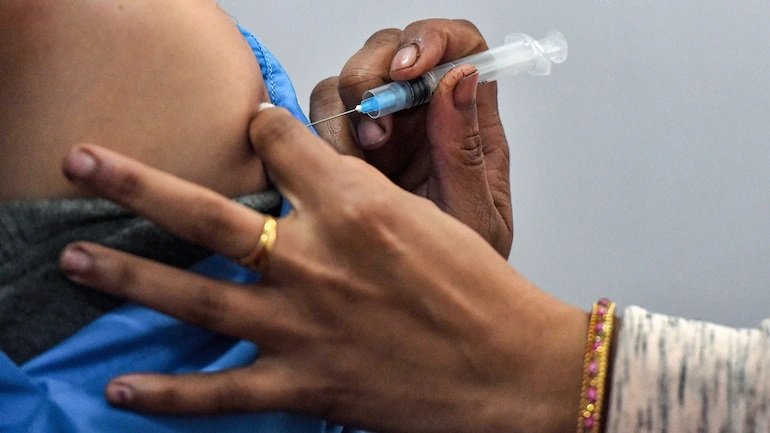
India is planning to do a study on the efficacy of COVID-19 vaccination if two different coronavirus vaccines are administered to a patient for their two doses. This comes after several reports of a massive shortage of COVID-19 vaccines in the country.

New Delhi: India is planning to do a study on the efficacy of COVID-19 vaccination if two different coronavirus vaccines are administered to a patient for their two doses. This comes after several reports of a massive shortage of COVID-19 vaccines in the country.

“India may in few weeks start testing the feasibility of a regimen that mixes two different doses of COVID vaccines to see if it helps boost the immune response to the virus,” said Dr N K Arora, Chairman of COVID-19 working group under the National Technical Advisory Group on Immunisation (NTAGI).

Earlier, in Uttar Pradesh’s Siddharthnagar district, due to medical negligence, 20 people were administered the first dose of Coveshield and the second dose of Covaxin.

Talking about this incident, Dr Mubasheer Ali, Senior Consultant – Intensive Care Specialist, Apollo TeleHealth says, “It is not dangerous. That being said, the WHO has stated that in truly exceptional situations, in which the first-dose vaccine cannot be determined or is no longer available, either vaccine may be given to complete the vaccination series. But in normal circumstances, you should receive the same vaccine product for both doses.”

Mixing of different COVID-19 vaccines might actually be a good idea, according to Dr Chandrashekhar T, Chief Intensivist, Fortis Hiranandani Hospital Vashi.

“Mixing and cocktailing of vaccines as per studies is not dangerous. This technique is being tried and tested in some countries, and even in India, there are some experts who vouch for the mixing and cocktailing of vaccines. However, there is no evidence or study on the effects of mixing Covishield and Covaxin in India,” says Dr Chandrashekhar.

Talking about similar experiments in other parts of the world, Dr Chandrashekhar shares, “In countries like Canada, Finland, Norway, etc., the mixing of vaccines has been done between Covishield and Pfizer-Biotech vaccine.”

Dr Chandrashekhar further believes that cocktailing of vaccines might actually give better immunity. More study on it however is needed to ascertain it.

“There are several studies that indicate that mixing and cocktailing of vaccines help in covering a broader spectrum of mutations and so helps in providing a broader immunity to people.”

Possible side-effects of mixing different COVID-19 vaccines are headache, body ache, and fever.

Source: https://zeenews.india.com/health/exclusive-mixing-of-covid-19-vaccines-not-unsafe-and-can-give-better-immunity-says-doctor-2365827