
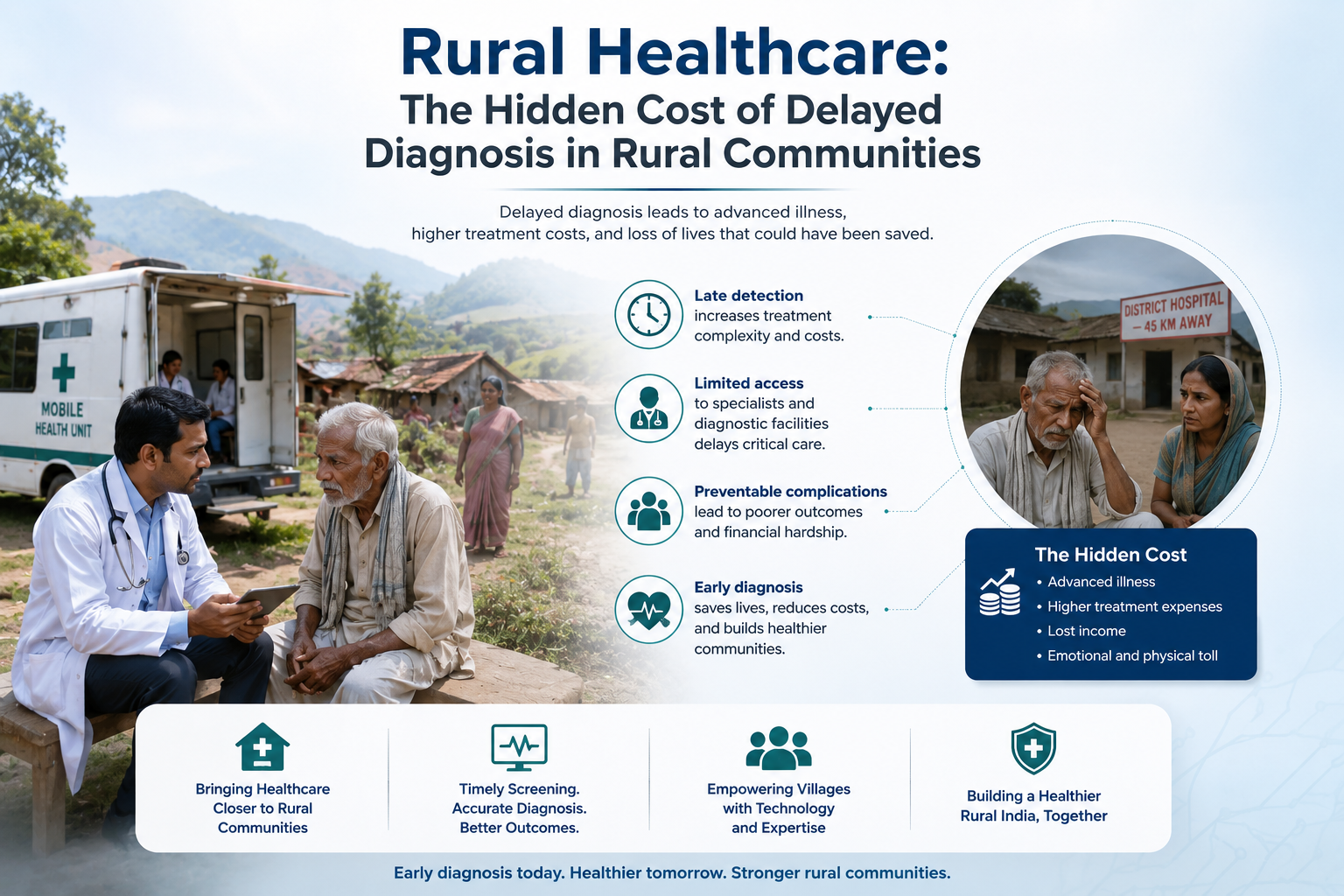
For millions of people, access to healthcare is not just about reaching a hospital—it’s about reaching one in time. In many underserved regions, delayed diagnosis continues to be one of the biggest yet least visible challenges in Rural Healthcare. What often begins as a manageable condition can quickly progress into a life-threatening illness simply because it wasn’t detected early.
The true cost of delayed diagnosis isn’t measured only in medical expenses. It is reflected in lost livelihoods, avoidable complications, emotional distress, and, in many cases, preventable deaths.
Why Delayed Diagnosis Remains a Challenge
Limited access to healthcare facilities, long travel distances, shortage of specialists, and low awareness often prevent people from seeking medical attention at the right time. Many individuals ignore early symptoms, hoping they will resolve on their own, while others postpone consultations due to financial or logistical barriers.
As a result, conditions such as diabetes, hypertension, tuberculosis, cardiovascular diseases, and certain cancers are frequently diagnosed at advanced stages, when treatment becomes more complex, expensive, and less effective.
This is where strengthening Rural Healthcare systems becomes critical—not only to provide treatment but to identify health risks before they escalate.
The Power of Early Disease Detection
Timely intervention can significantly improve health outcomes. Early Disease Detection enables healthcare providers to diagnose illnesses before symptoms become severe, allowing patients to receive appropriate treatment sooner and reducing the risk of long-term complications.
Advancements in digital health, telemedicine, artificial intelligence, and point-of-care diagnostics are making Early Disease Detection increasingly accessible, even in geographically remote communities. When combined with trained frontline health workers and connected care models, these technologies help bridge long-standing gaps in healthcare access.
Why Disease Screening Matters
Regular Disease Screening plays a vital role in identifying health conditions that may otherwise go unnoticed. Community-based screening programmes for non-communicable diseases, tuberculosis, eye health, and cancer are helping detect illnesses earlier, enabling timely referrals and better continuity of care.
Beyond improving individual health, Disease Screening also strengthens public health by reducing the burden of advanced disease, lowering healthcare costs, and supporting healthier communities.
Building Stronger Rural Healthcare Systems
The future of Rural Healthcare depends on shifting from reactive treatment to proactive prevention. This means expanding access to screening programmes, integrating technology-enabled healthcare delivery, and ensuring that quality medical expertise reaches every community—regardless of location.
No one should have to wait until a disease becomes critical to receive care.
By investing in Early Disease Detection and accessible Disease Screening, we can reduce preventable complications, improve clinical outcomes, and create a healthcare system where early diagnosis is the norm rather than the exception. Because when healthcare reaches people sooner, healthier lives and stronger communities follow.


