
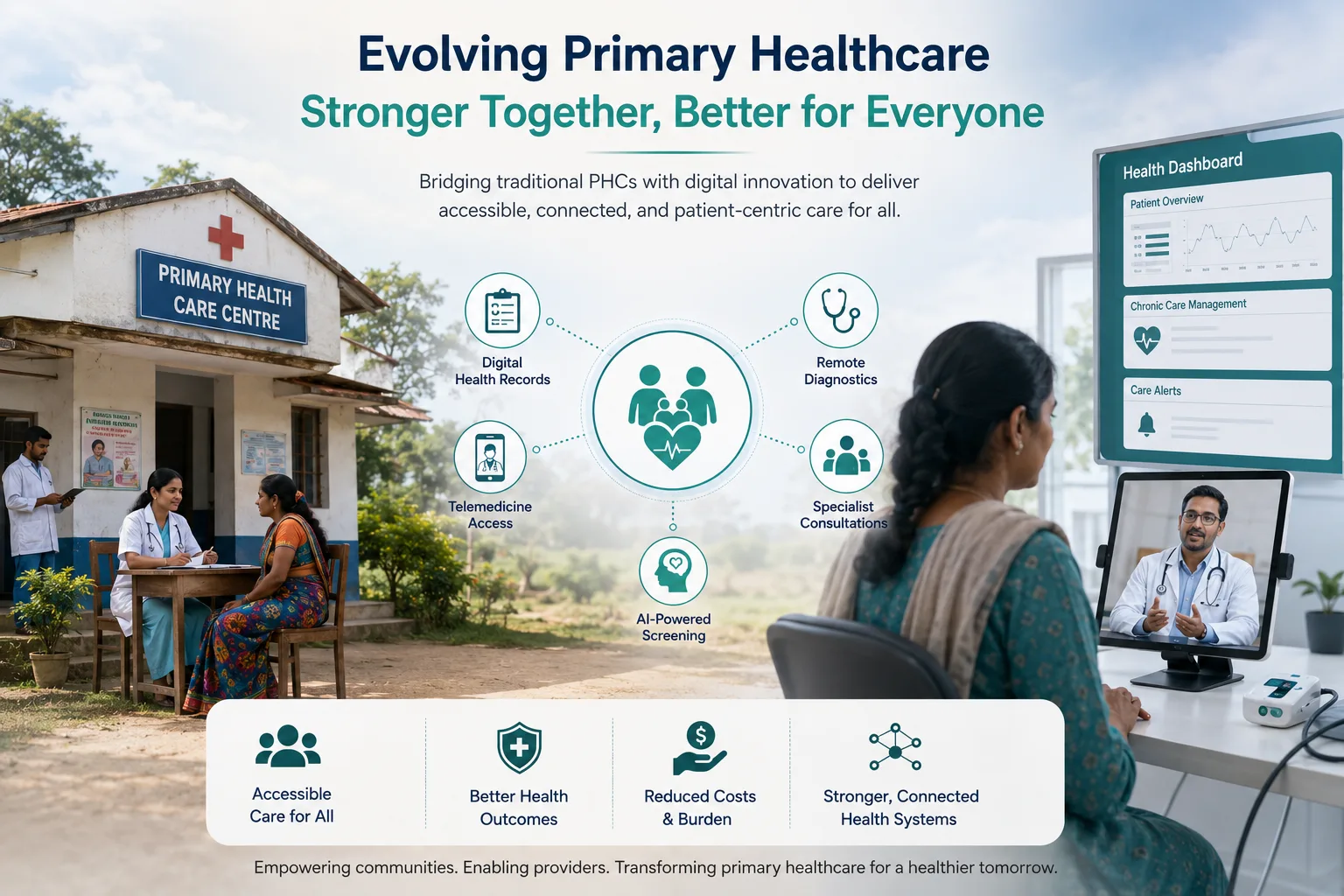
For decades, the primary healthcare system has been the first point of contact for millions seeking essential medical care. Traditional PHCs (Primary Health Care Centres) have played a critical role in delivering preventive, promotive, and basic curative services, particularly in rural and underserved areas. However, as healthcare needs become more complex and patient expectations evolve, the conventional model alone is no longer sufficient.
Today, primary health requires a more connected, technology-enabled approach that brings quality care closer to communities while improving accessibility, continuity, and efficiency.
The Evolution of Primary Healthcare
Significant pressure on traditional PHCs comes from rising cases of chronic diseases, an ageing population, and increasing demand for timely medical interventions. Many centres continue to face challenges such as limited specialist access, workforce shortages, fragmented patient records, and geographical barriers that prevent people from receiving timely care.
This is where digital primary healthcare is redefining the future.
By integrating telemedicine, digital health records, remote diagnostics, and connected care pathways, Digital Primary Healthcare enables patients to consult qualified doctors without travelling long distances. Healthcare providers can monitor chronic conditions, maintain continuity of care, and ensure timely referrals when advanced treatment is needed.
Beyond Infrastructure – Building Connected Care
The future of primary healthcare is not about replacing traditional PHCs but strengthening them.
Technology empowers frontline healthcare workers with clinical decision support, digital patient records, AI-enabled screening tools, and seamless access to specialists. This integrated model improves clinical outcomes while reducing unnecessary referrals and out-of-pocket expenses for patients.
More importantly, digital primary healthcare enables healthcare systems to proactively manage non-communicable diseases, maternal and child health, mental health, and preventive screenings through continuous patient engagement rather than episodic visits.
A Patient-Centric Future
Healthcare should not depend on where a person lives. Whether someone resides in a metropolitan city or a remote village, access to quality primary health services should remain consistent.
The evolution of PHC – primary health care into digitally connected, patient-centric ecosystems ensures that care becomes more accessible, efficient, and responsive to community needs. It strengthens healthcare delivery by combining trusted local infrastructure with technology that extends the reach of qualified medical professionals.
As healthcare systems continue to evolve, investing in digital primary healthcare is no longer an option – it is a necessity. By transforming traditional primary healthcare into intelligent, connected networks, we can create a future where quality healthcare is available to everyone, everywhere, exactly when it is needed.